Khairul Manazil, New Delhi
© SoumenNath/E+/Getty Image
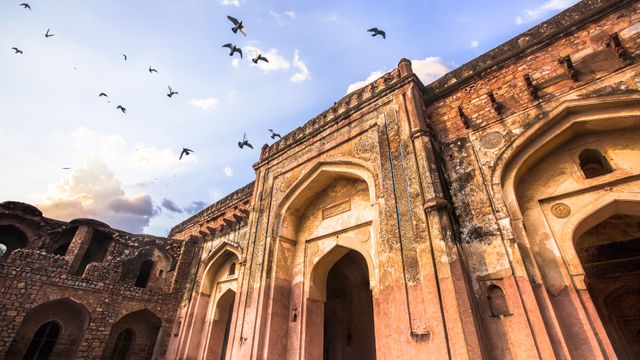
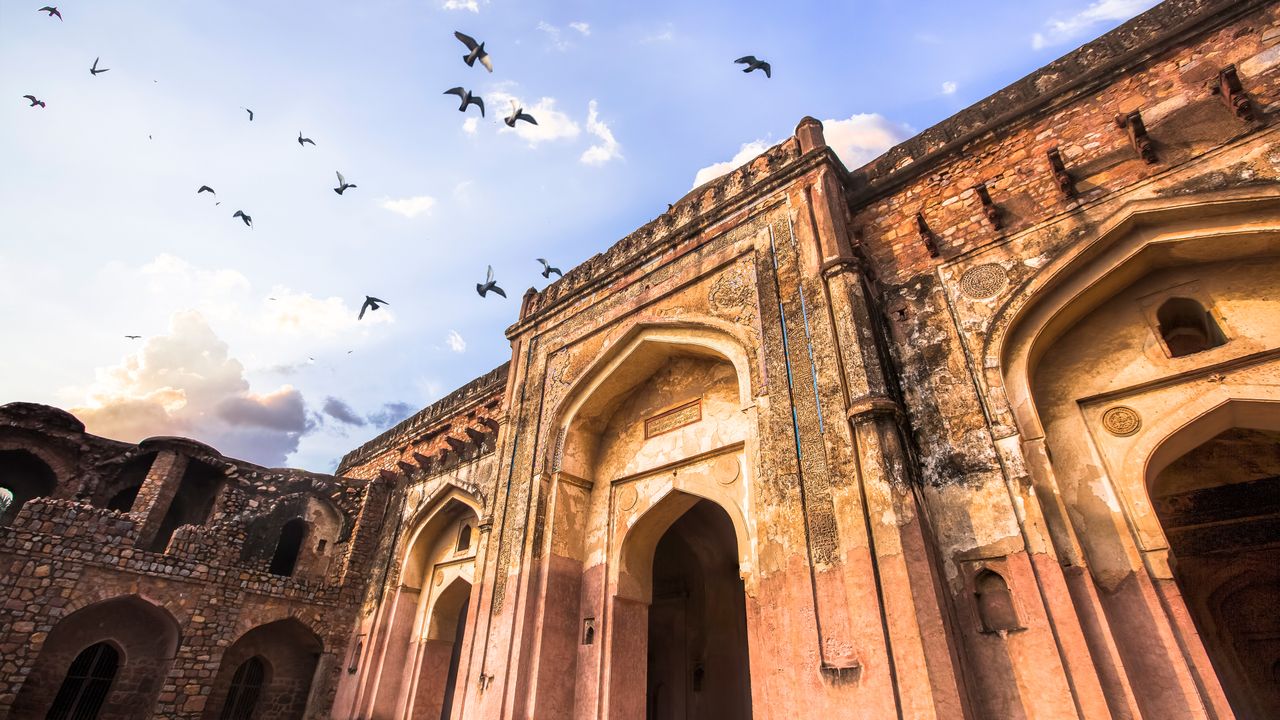
Where Mughal echoes linger. Khairul Manazil, New Delhi
Delhi has no shortage of monuments built by emperors. But opposite Purana Qila stands one that tells a different story. Built in 1561–62, Khairul Manazil was commissioned by Maham Anga, Emperor Akbar's powerful foster mother and wet nurse. Its name, meaning 'the most auspicious of houses,' has a clever hidden detail. The Persian letters of Khairul Manazil form a chronogram corresponding to 969 AH, the Islamic calendar year of its completion.
This monument captures a shift in architectural styles. Its grand red sandstone gateway reflects emerging Mughal tastes, while the prayer hall and other elements retain influences from Delhi Sultanate architecture. The complex served both as a mosque and a madrasa (Islamic centre of learning). Historical accounts record that an assassination attempt was made on Akbar near the mosque in 1564, as he returned from Nizamuddin.
Today, it is a centrally protected monument under the Archaeological Survey of India, quietly preserving the story of a woman who wielded power at the Mughal court.
Related Images
 Pantropical spotted dolphins off the coast of Ixtapa, Mexico
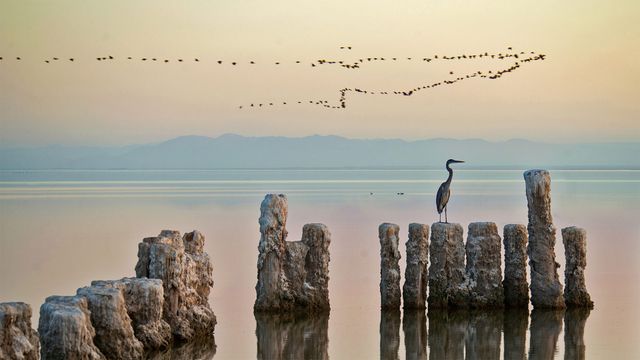 A heron perches on a piling at the Salton Sea in California, USA
 Whooping cranes taking off during spring migration in South Dakota
 Humpback whales off the coast of Massachusetts
 Sandhill cranes taking flight over the Platte River near Kearney, Nebraska, USA
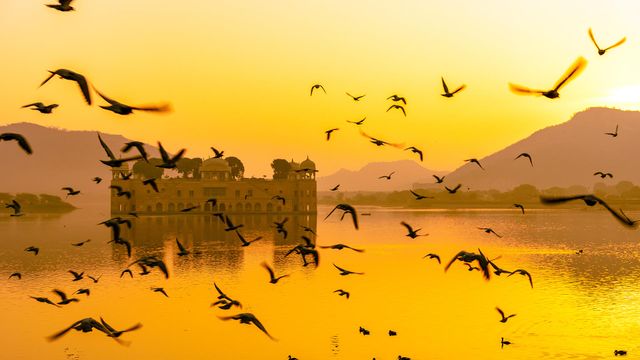 Jal Mahaal water palace at lake Man Sagar, Jaipur
 Trumpeter swans at Kelly Warm Springs, near Kelly, Wyoming
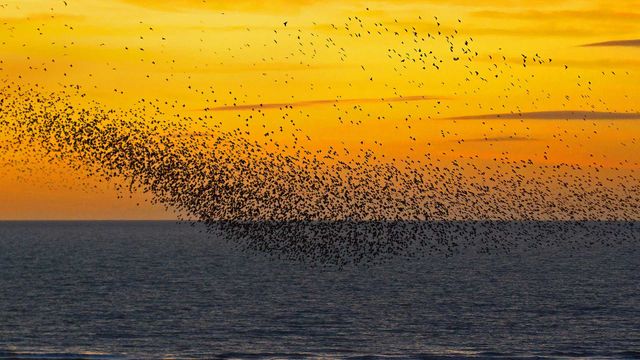 Starlings at sunset in Blackpool, England
Bing Today Images