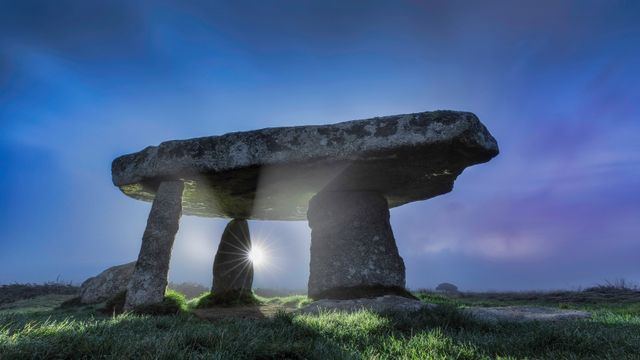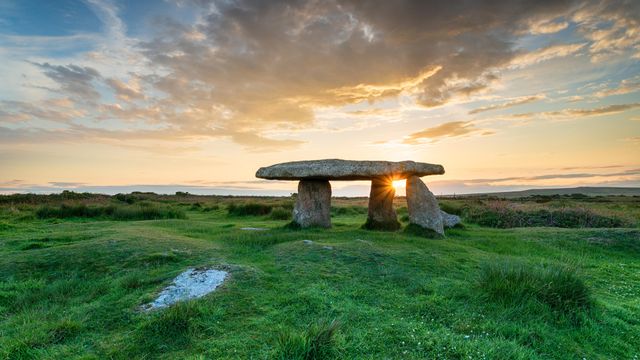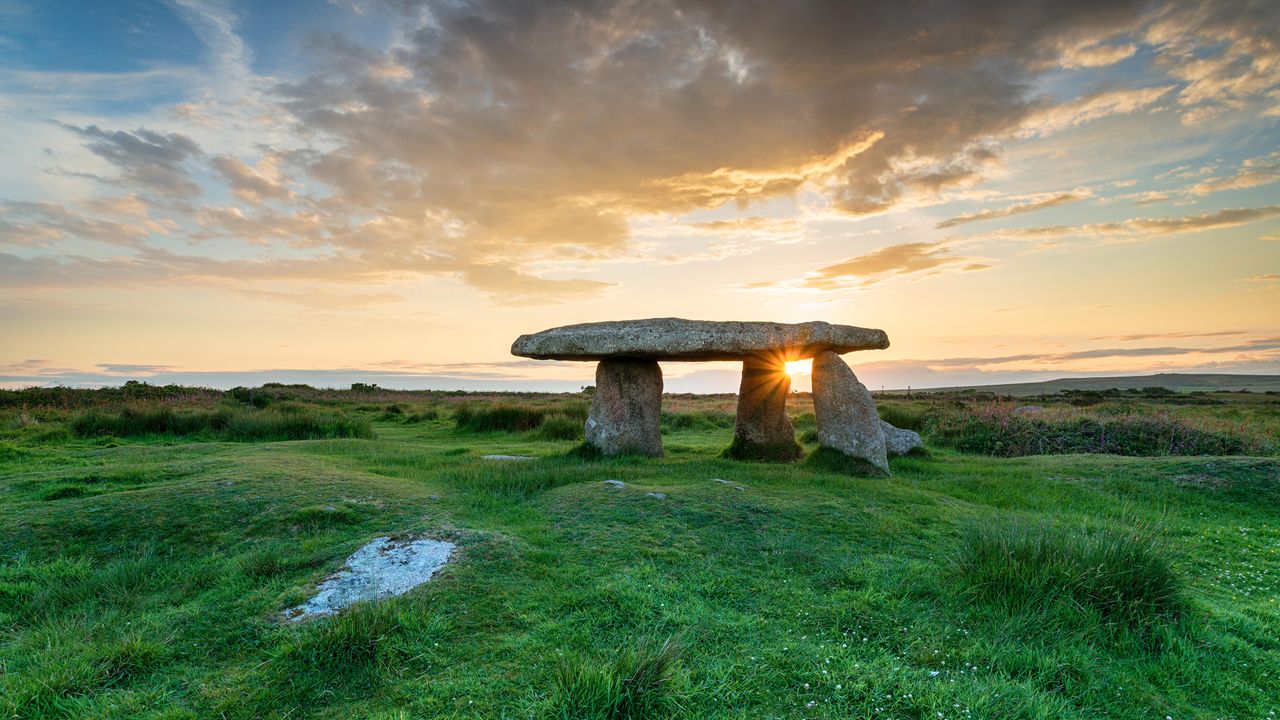
Lanyon Quoit, a Neolithic dolmen in Cornwall, England
© Helen Hotson/Alam
An ancient angle on Pi. Celebrating Pi Day
Long before pi had a name, people were drawn to its mystery. Every year on March 14, Pi Day highlights one of math's most recognisable constants. The date reflects the first three digits of pi (π), the ratio of a circle's circumference to its diameter: 3.14. Pi's infinite, nonrepeating decimal has fascinated thinkers for a long time. The modern celebration began in 1988, when physicist Larry Shaw marked the day with a fitting tribute: serving pie.
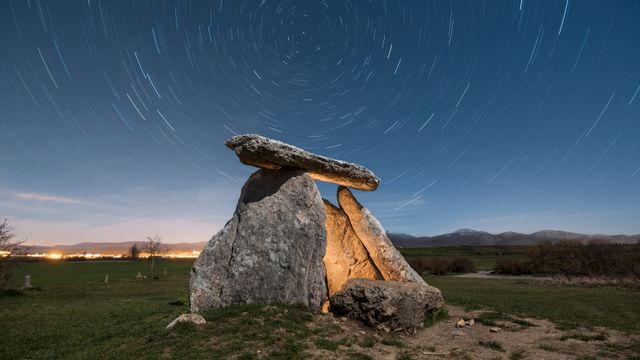
Today's image takes us to Cornwall in southwestern England, where Lanyon Quoit—in the shape of π—rises from open moorland. Built between 3,500 and 2,500 BCE, this Neolithic dolmen once stood as part of a larger structure. Raising its massive capstone required knowledge of balance and proportion. These early concepts helped builders work with shape and scale long before written mathematics existed.
On Pi Day, sites like this remind us that mathematical thinking evolved from practical challenges. Even before symbols appeared on chalkboards, ideas about measurement were already shaping the world in stone.
Related Images
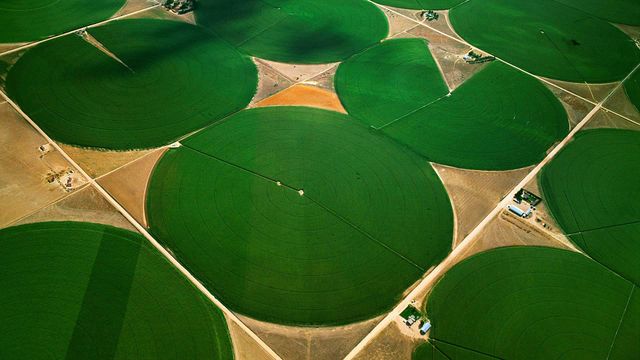 Circular agricultural fields in Morgan County, Colorado, USA
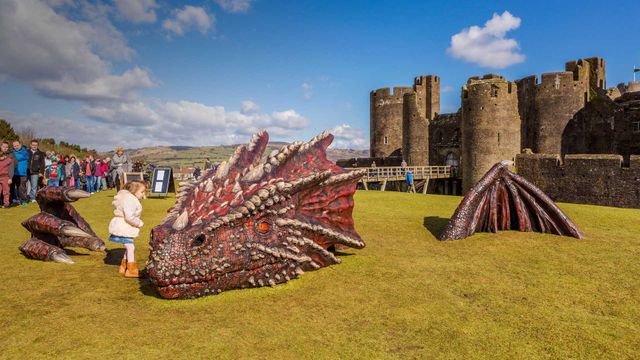 A red dragon sculpture at Caerphilly Castle for St David's Day
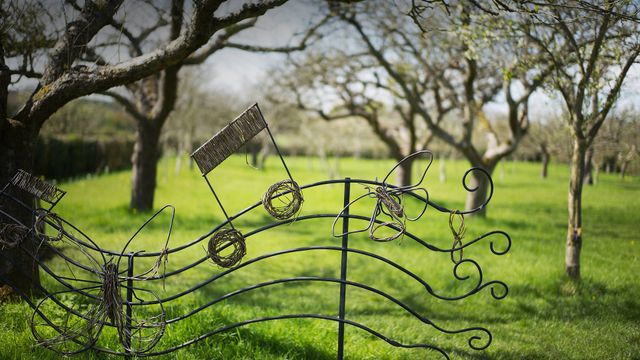 A musical note in the garden of Anne Hathaway's Cottage, Stratford-upon-Avon
 Chital deer in misty grassland at dawn, Kanha National Park, India
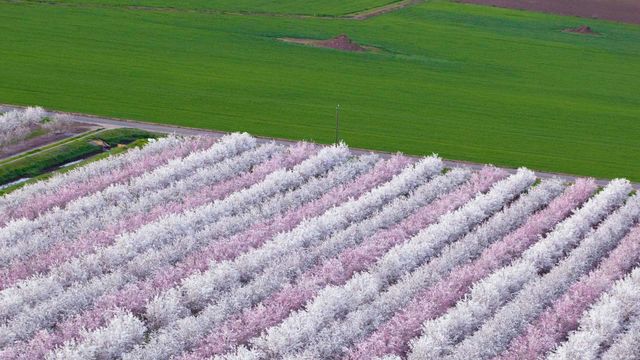 Almond orchards in bloom, Sacramento Valley, California, USA
 Lake Dobson in Mount Field National Park of Tasmania, Australia
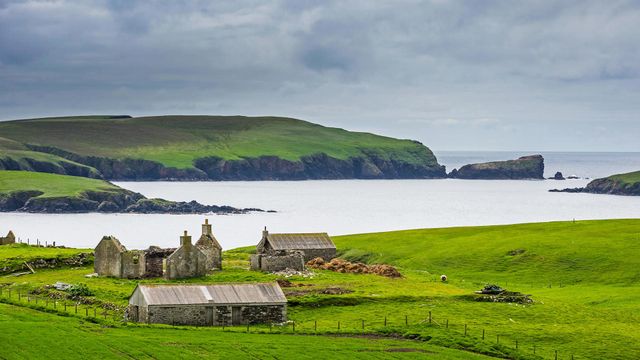 An old farm in the Shetland Islands, Scotland
 Water wheel in the Tashkurgan Grassland, Tashkurgan Tajik Autonomous County, Xinjiang, China
Bing Today Images