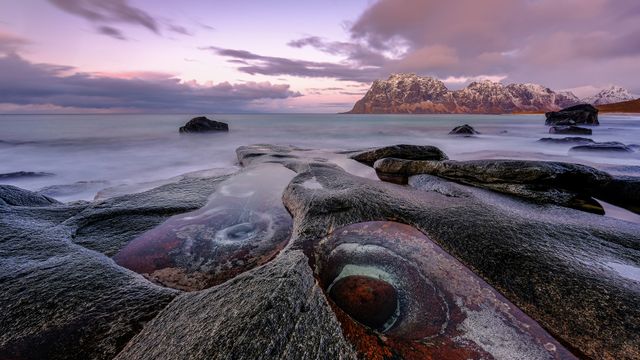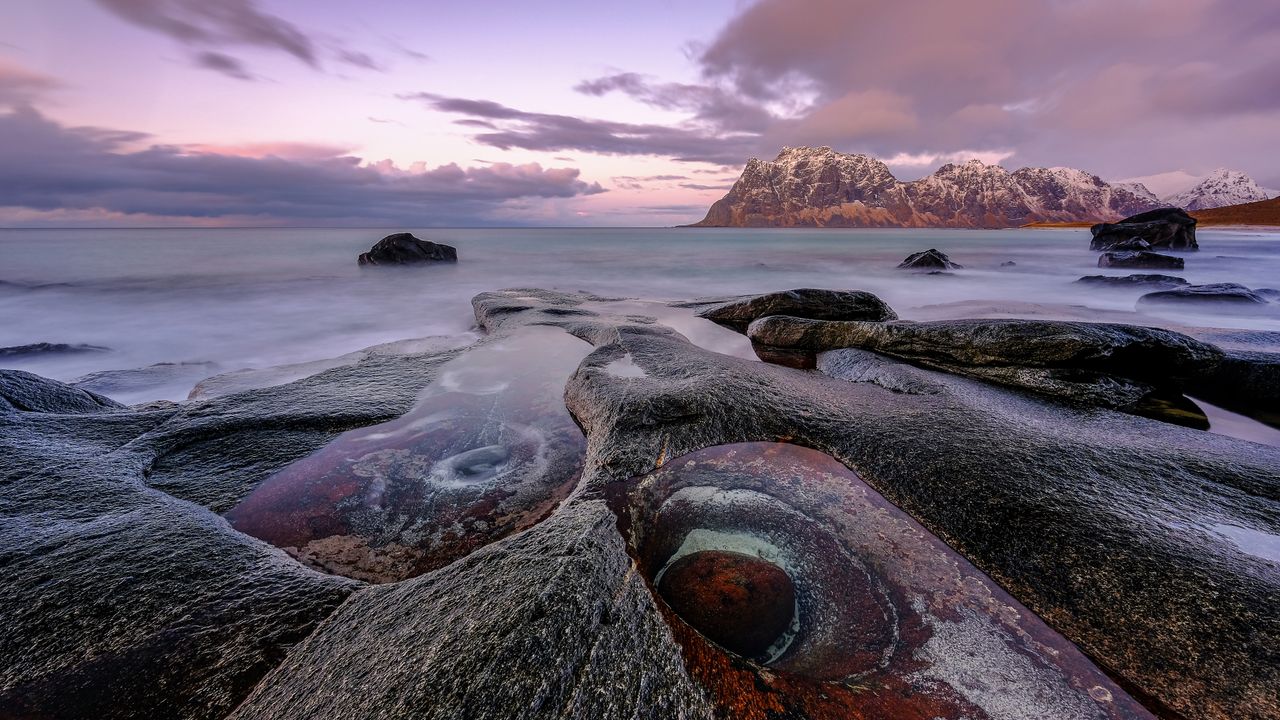
The Dragon's Eye rock formation at Uttakleiv Beach, Norway
© reisegraf/Getty Image
Where the land stares back. Dragon's Eye, Uttakleiv Beach, Norway
Dragon's Eye sounds like something pulled from legend, and standing on Norway's Uttakleiv Beach in the Lofoten Islands, it's easy to see why. The formation, carved into ancient rock and framed by sand and sea, looks uncannily alive, as though the land itself is watching you. Shaped over thousands of years by ice and water, it has become one of the region's most captivating sights.
Despite its mythic name, the Dragon's Eye is actually a glacial pothole. It is a circular hollow sculpted into metamorphic rocks by turbulent meltwater flowing beneath the vast Fennoscandian Ice Sheet around 20,000 years ago. Under intense pressure, water carrying sand and stones ground into the bedrock, gradually eroding smooth-walled depressions. When the ice retreated roughly 16,000 years ago, these features were revealed, leaving behind formations like the Dragon's Eye, complete with a boulder—or 'pupil'—settled at its centre.
Today, the Eye continues to shift with the elements. Depending on the tide, waves flood the hollow or strip it bare, while algae and light constantly reshape its expression, blurring the line between legend and landscape.
Related Images
 Mount Fuji and twin rocks (Ushitukiiwa) in Matsuzaki, Japan
 View from the Great Ocean Road with the Milky Way, Victoria, Australia
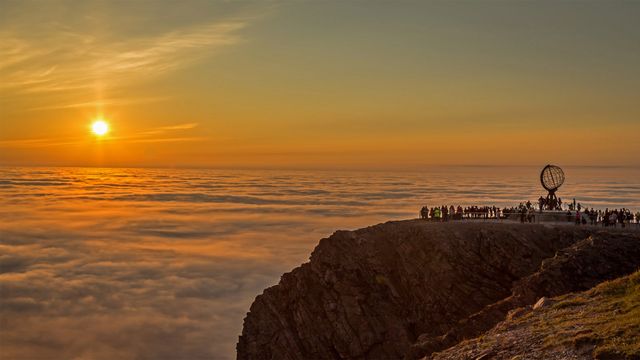 Midnight sun at North Cape, Norway
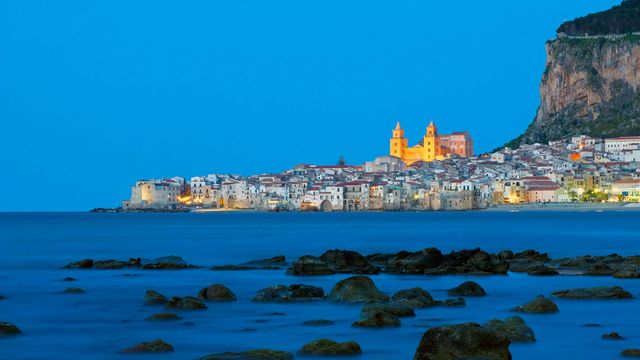 Cefalù on Mediterranean Sea in Sicily, Italy
 Spring ice along the shore of Lake Winnipeg, Manitoba
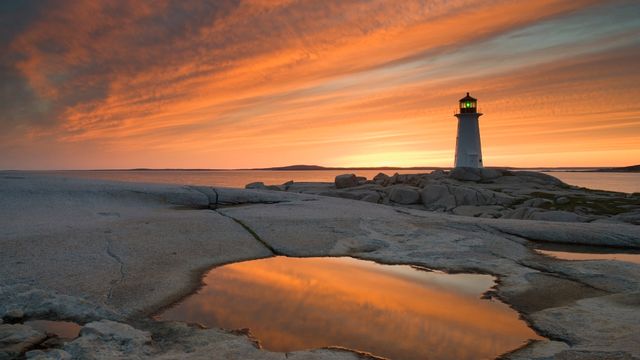 Peggy's Cove Lighthouse at dusk, Nova Scotia
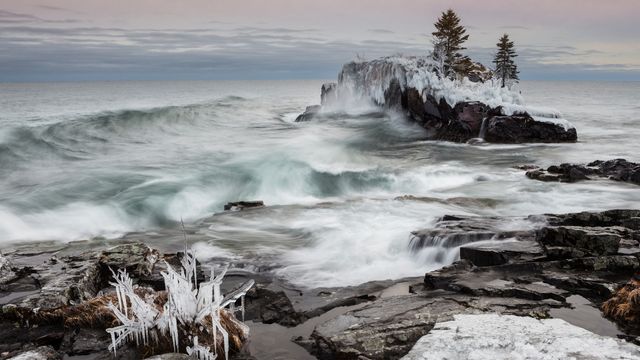 Snow and ice along the shoreline of Lake Superior in winter; Thunder Bay, Ontario
 Acadia National Park in Maine
Bing Today Images