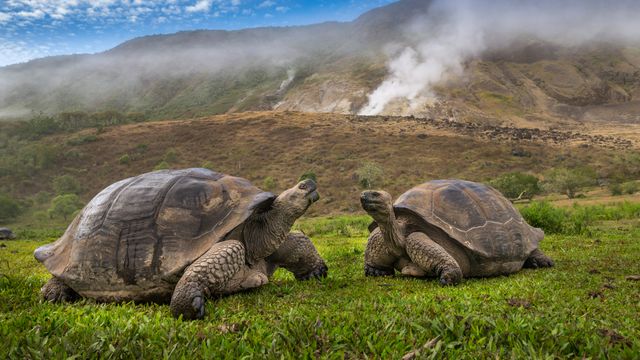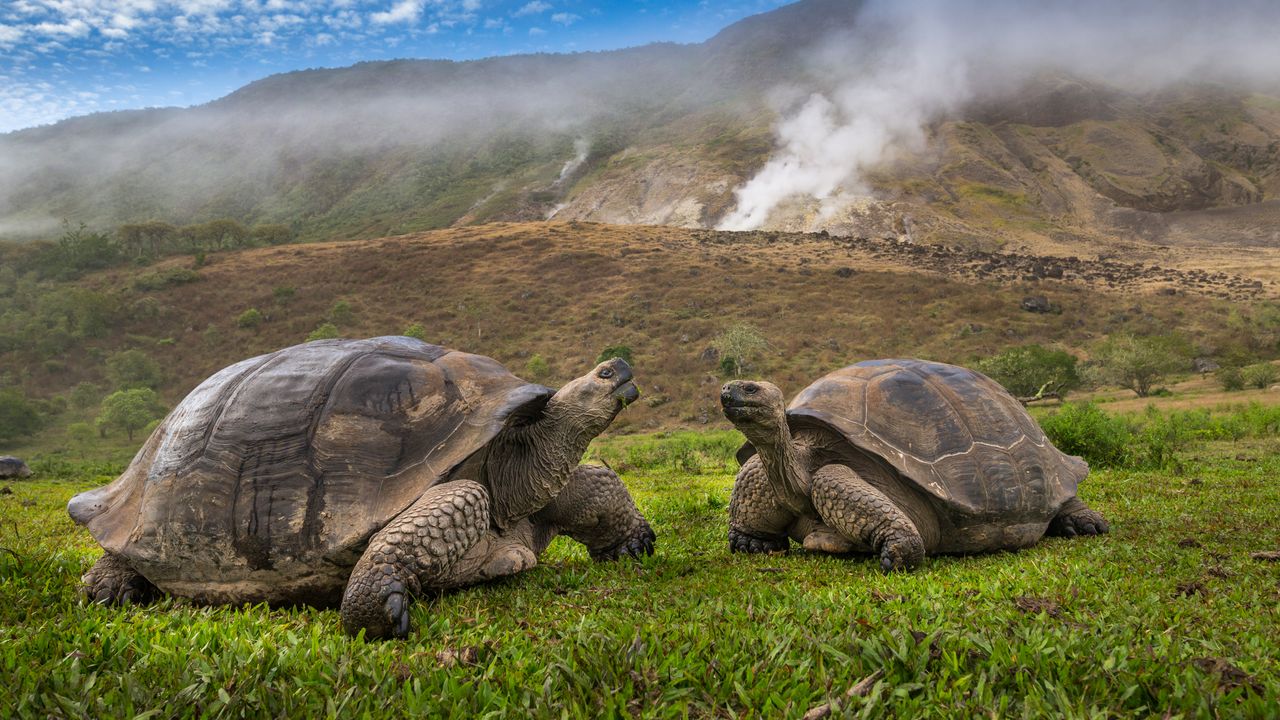
Volcán Alcedo giant tortoises, Isabela Island, Galápagos, Ecuador
© Tui De Roy/Minden Picture
Home sweet volcano. Darwin Day
In 1835, British naturalist Charles Darwin explored the volcanic Galápagos Islands in the eastern Pacific Ocean. While studying the islands' creatures, he concluded that a diverse array of animal species hailing from South America, primarily reptiles and birds capable of traversing the vast expanse of water, had migrated to the Galápagos and gradually adapted to their surroundings. These observations eventually formed the foundation for Darwin's theory of evolution through natural selection. One of the species examined in the study was the Galápagos giant tortoise, a tortoise only found on the Galápagos Islands, that can grow up to 2 metres long. In fact, the islands are named after these magnificent creatures: 'galápago' means tortoise in Spanish. Today, on International Darwin Day, let's celebrate these gentle giants, which contributed to one of the great scientific discoveries of the 19th century.
Related Images
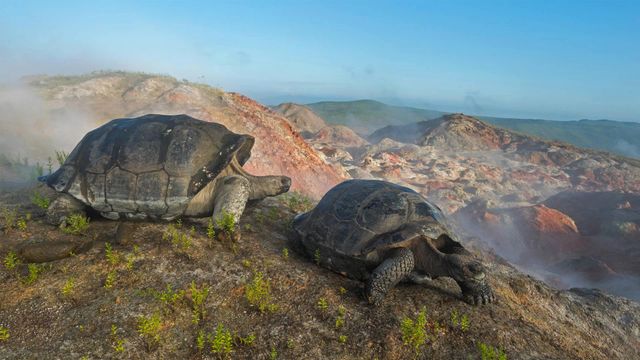 Giant tortoises on Alcedo Volcano in the Galápagos Islands
Bing Today Images