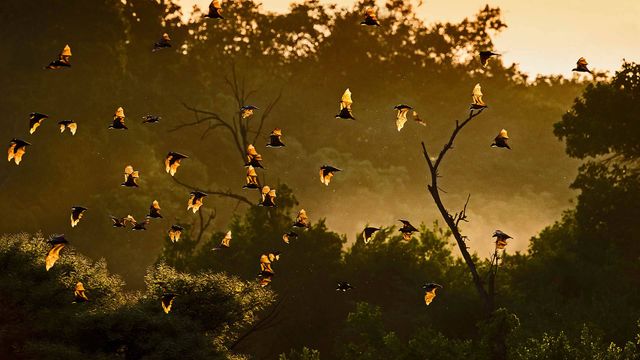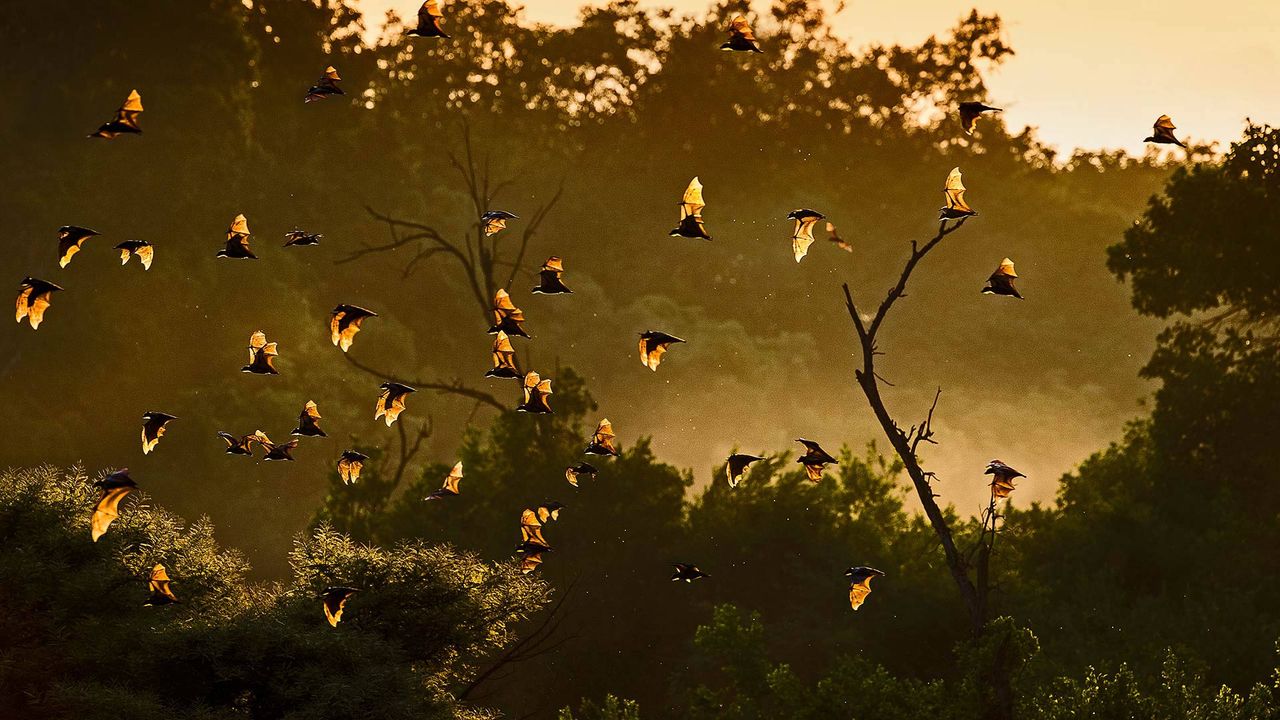
Straw-coloured fruit bats in Kasanka National Park, Zambia
© Nick Garbutt/Minden Picture
And the skies filled with bats…. And the skies filled with bats…
As if right on cue for Halloween, this is the time of year when millions of straw-coloured fruit bats begin to descend on Zambia's Kasanka National Park. They come in such vast numbers that it’s thought to be one of the largest concentrations of mammals in the world. From the end of October to mid-December, these large fruit-eating bats pack into a small area in the forest to roost. But when the sun begins to set, they start to swarm, darkening the skies as they head out to gorge on fruit in the Mushitu swamp forest. Experts believe their migration starts about 3,200 kilometres north, in Congo.
There are over 1,000 species of bats, but they all fit neatly into one of two categories: microbats or megabats. The straw-coloured fruit bat, if you didn't guess, is of the mega-variety. They are the most widely distributed of all African fruit bats and have adapted to a variety of habitats. Because their habitat extends to such great distances, straw-coloured fruit bats play a critical role as pollinators and dispersers of seeds. They're highly social, too, living in large groups called colonies that can number from the thousands upward to a million. But don't worry, they do not drink blood. For them, fruit is life.
Related Images
 Thousands of runners take part in the annual City2Surf road race on August 12, 2018
 Aurora Australis over the Halley VI Research Station in Antarctica
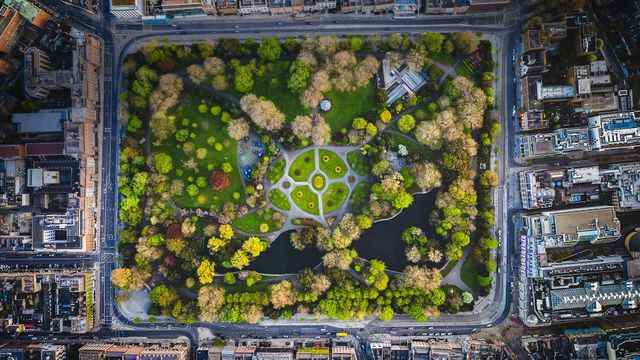 St. Stephen's Green in Dublin, Ireland
 Whitsunday Island, Whitehaven beach, Queensland
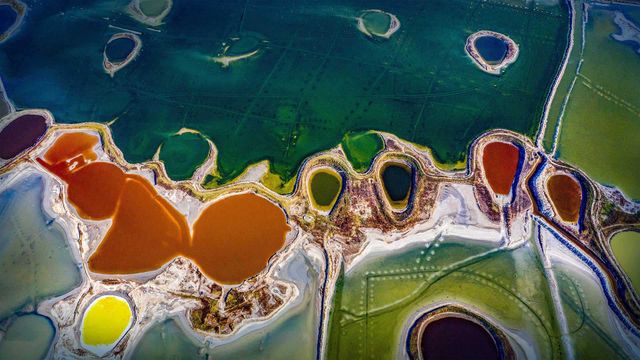 Yuncheng Salt Lake in Yuncheng, Shanxi Province, China
 Close-up of a microchip
 Artist Laura Buckley with her video installation 'Fata Morgana', Saatchi Gallery, London
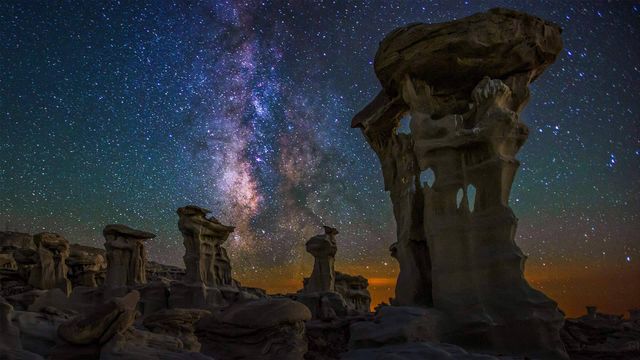 Milky way over the Bisti/De-Na-Zin Wilderness in New Mexico
Bing Today Images