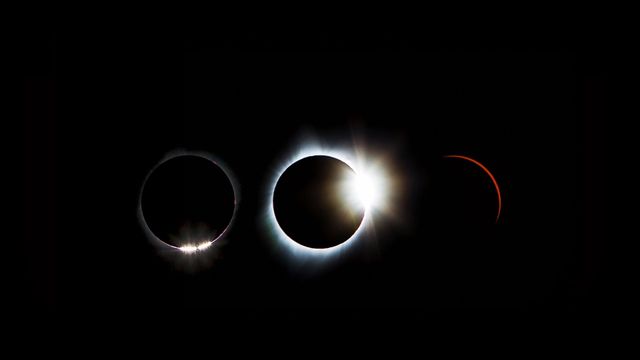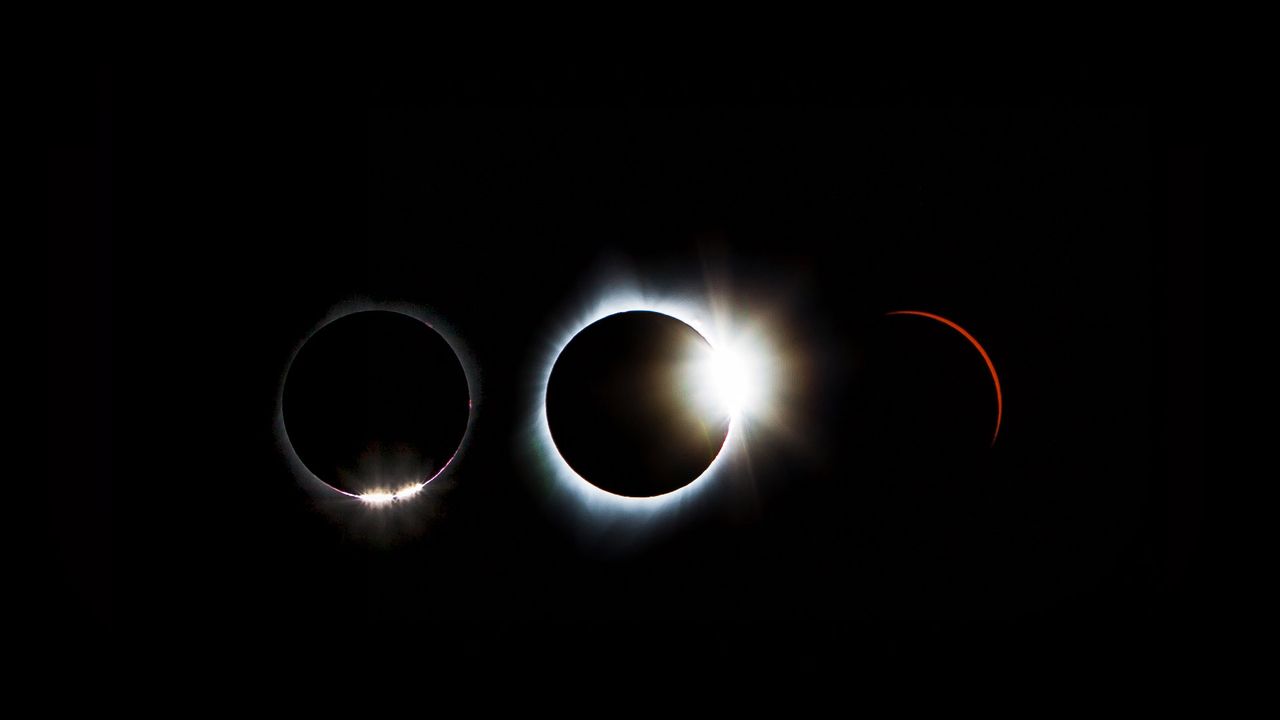
Solar eclipse sequence from August 21, 2017
© Lindsay Daniels/Tandem Stills + Motio
A diamond ring around the moon. Sequential images of a total solar eclipse
A total solar eclipse is visible today across northern Chile and Argentina. To those lucky observers in South America, this awesome event will look much as it does in our homepage image today, which is a composite of images taken during the Great American Eclipse of 2018.Just how does the moon perfectly blot out the sun? Through an amazing coincidence, the sun is both 400 times larger than the moon, and also 400 times further away. Therefore, periodically, when the sun, moon, and Earth are aligned just right, the moon can perfectly obscure the sun as seen from the surface of Earth in a total eclipse. But, unlike the sun, the moon is not a smooth sphere; therefore, in the last few moments before the eclipse reaches totality, we see Baily's Beads. In 1836, English astronomer Francis Baily was the first to explain that the phenomenon is created by sunlight passing between the mountains and through the canyons of the moon. Some folks also refer to it as the diamond ring effect. But whatever you call it, it’s undeniably brilliant.
Related Images
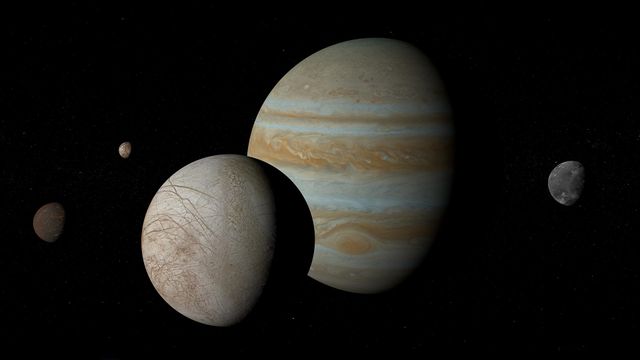 Moons of Jupiter—Io, Europa, Ganymede, and Callisto
 Climbing Athabasca Glacier in Jasper National Park, Alberta, Canada as the Aurora Borealis glows
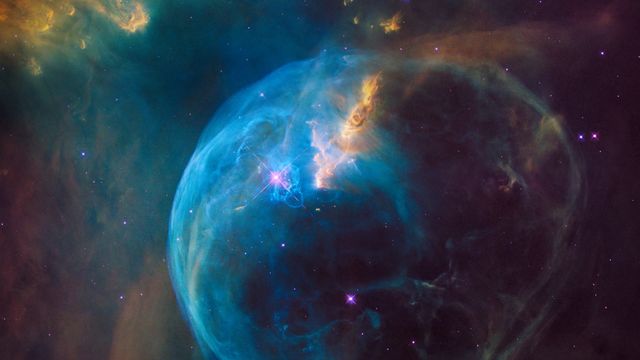 Bubble Nebula (NGC 7635)
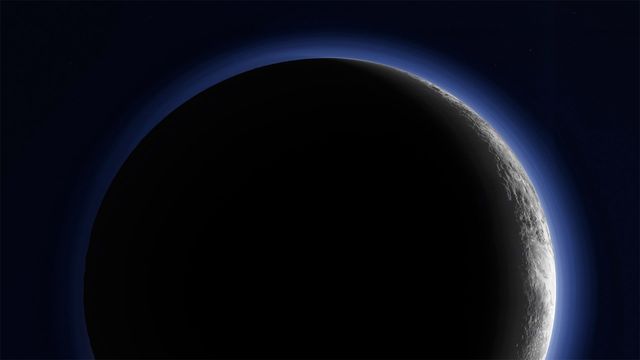 Pluto's crescent imaged by NASA's New Horizons interplanetary space probe
 A view of Uranus taken from spacecraft Voyager 2 in 1986
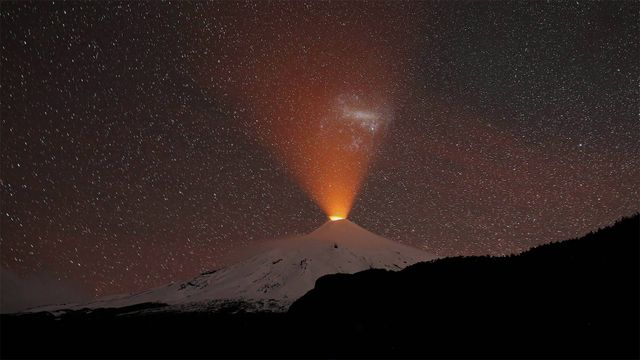 The Villarrica volcano in Chile on September 2, 2018
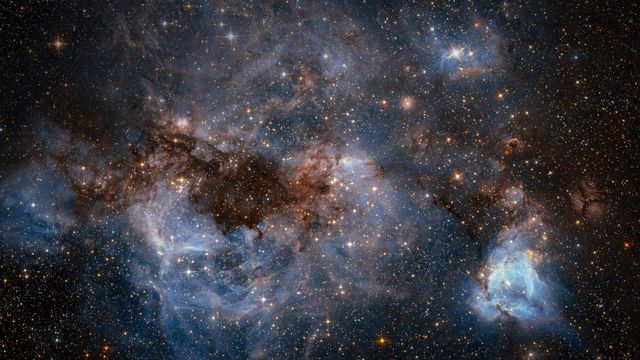 The Large Magellanic Cloud, photographed by the Hubble Space Telescope
 Earthrise across Mare Smythii on the moon
Bing Today Images