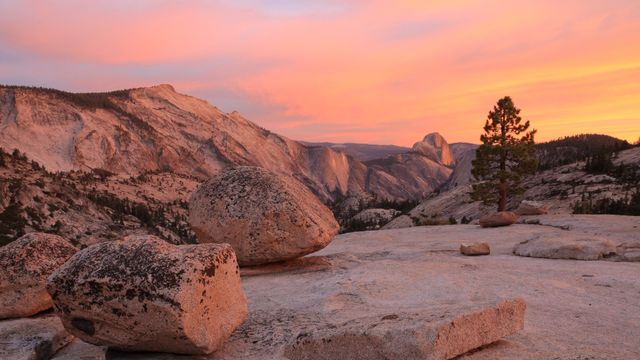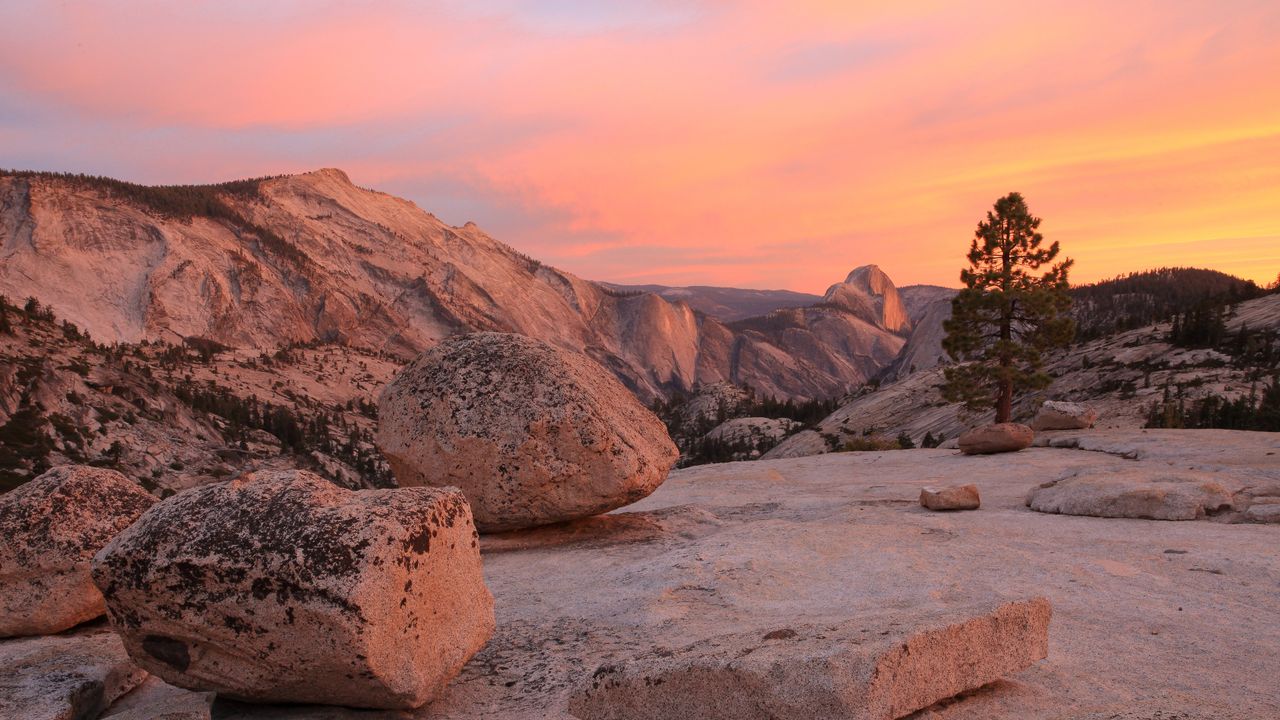
Sunset from Olmsted Point, Yosemite National Park, California, USA
© Robb Hirsch/Tandem Stills + Motio
Reading time in granite. Yosemite National Park anniversary
On October 1, 1890, Yosemite became the nation's third national park. More than a century later, it still feels like a place that operates on geological time rather than human schedules. From Olmsted Point, the overlook in today's image, that timescale is impossible to miss. The smooth granite underfoot was sculpted by glaciers, while scattered boulders known as glacial erratics were carried here by ice and abandoned when it melted.
The view also turns some of Yosemite's most famous landmarks inside out. Half Dome, usually seen rising above Yosemite Valley, reveals its sheer north face from here, making the familiar icon look almost unfamiliar. Beyond it lie Tenaya Canyon, Clouds Rest, Tenaya Lake, and pale stone that records millions of years of uplift, erosion, and ice. Named for landscape architect Frederick Law Olmsted and his son, Frederick Law Olmsted Jr., whose conservation work helped shape America's park movement, Olmsted Point offers a reminder that Yosemite is not just scenic; it is a landscape still telling its story in stone.
Related Images
 Horseshoe Bend, Arizona
 Roques de Benet, Els Ports Natural Park, Catalonia, Spain
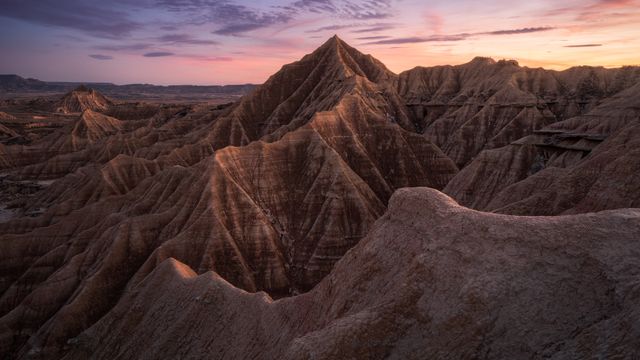 Bardenas Reales Biosphere Reserve and Natural Park, Bardenas, Navarra, Spain
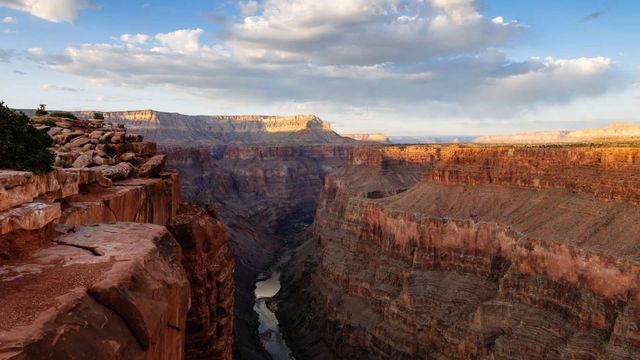 Grand Canyon and Colorado River from Toroweap Overlook, Grand Canyon National Park, Arizona
 Sandstone rock formations, Vermilion Cliffs National Monument, Arizona
 Kachina Bridge, Natural Bridges National Monument, Utah
 Mummy Cave ruins, Canyon de Chelly National Monument, Arizona
 The Nankoweap Granaries of the Grand Canyon in Arizona
Bing Today Images