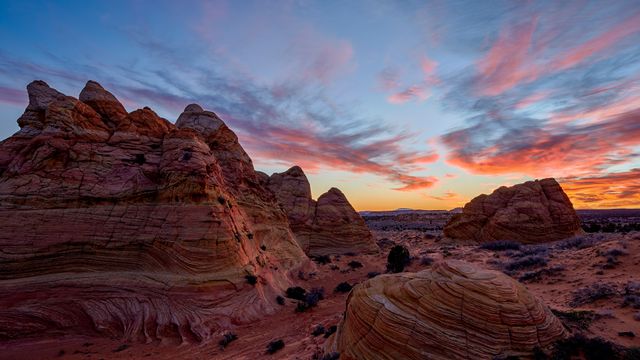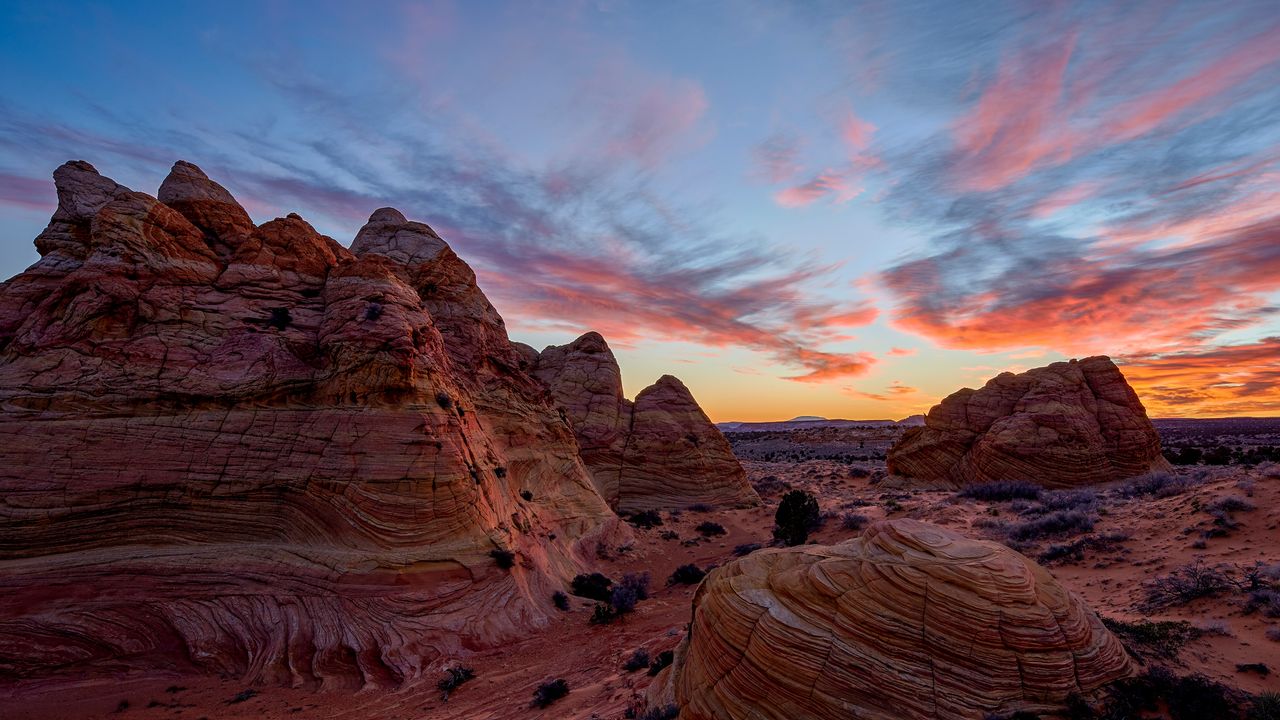
Coyote Buttes, Vermilion Cliffs National Monument, Arizona, United States
© James Hager/Getty Image
An act of wilderness. Coyote Buttes, Arizona, United States
Waves usually belong to the ocean. In northern Arizona, United States, they rise from the desert instead. The swirling sandstone formations of Coyote Buttes, part of Vermilion Cliffs National Monument, were shaped by ancient dunes and millions of years of erosion, creating a landscape that seems to ripple even while standing still.
Places like this are one reason the Wilderness Act of 1964 was signed into law on 3 September, a milestone commemorated today. Concerned that an expanding nation could transform nearly every corner of the country, Congress established the National Wilderness Preservation System to protect lands that retain their natural character and offer opportunities for solitude, exploration and discovery.
The act initially safeguarded 54 wilderness areas covering 9.1 million acres (3.68 million hectares). More than six decades later, the system now encompasses over 110 million acres (44.5 million hectares) nationwide. From remote forests to sculpted desert rock, these protected landscapes invite visitors to experience a side of America shaped not by blueprints, but by time itself.
Related Images
 Mua Caves in the Ninh Bình province of Vietnam
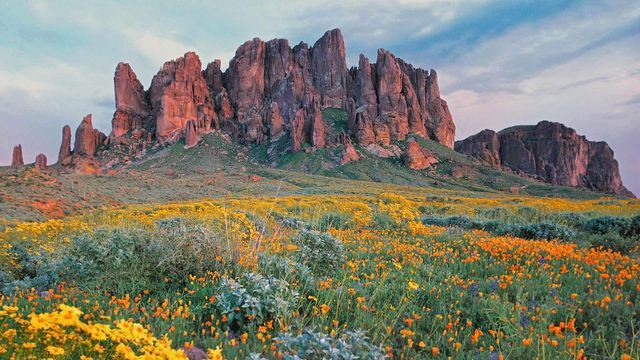 Wildflowers in bloom at Lost Dutchman State Park in Arizona, USA
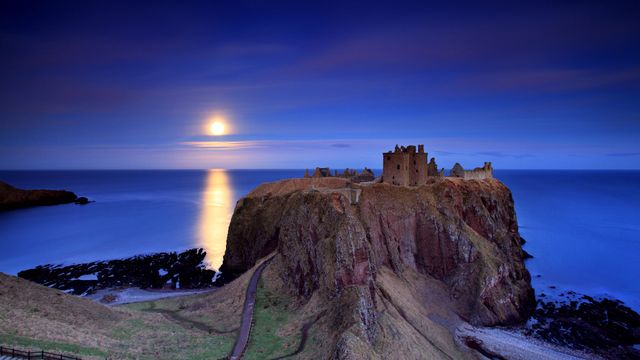 Full moon rising over Dunnottar Castle near Stonehaven on the north-east coast of Scotland
 Cefalù on the Tyrrhenian coast of Sicily, Italy
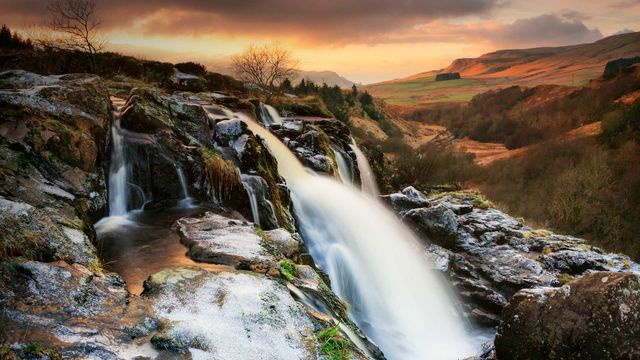 Loup of Fintry waterfall on the River Endrick, Scotland
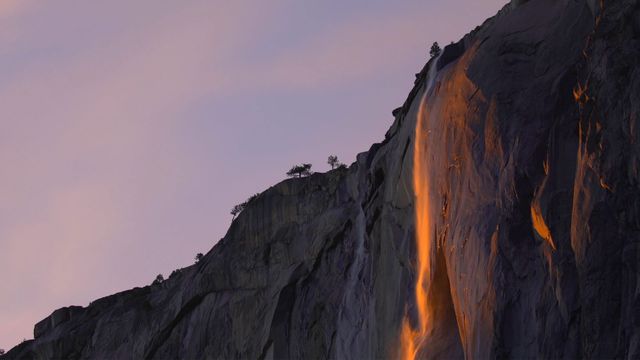 Firefall at Horsetail Fall, Yosemite National Park, California, USA
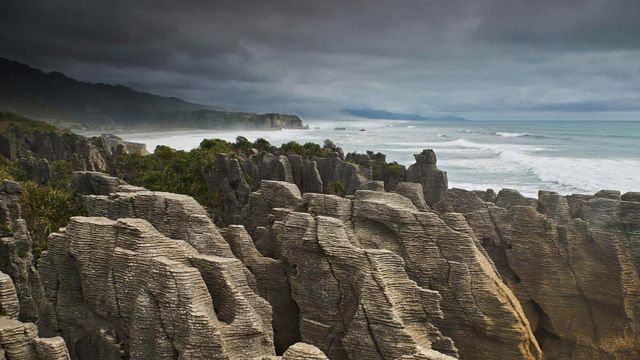 For Waitangi Day, the Pancake Rocks on New Zealand’s South Island
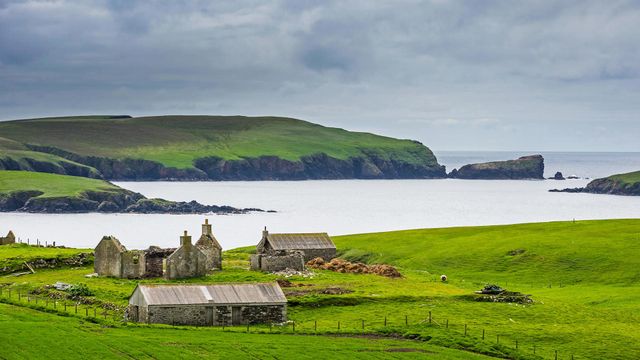 An old farm in the Shetland Islands, Scotland
Bing Today Images