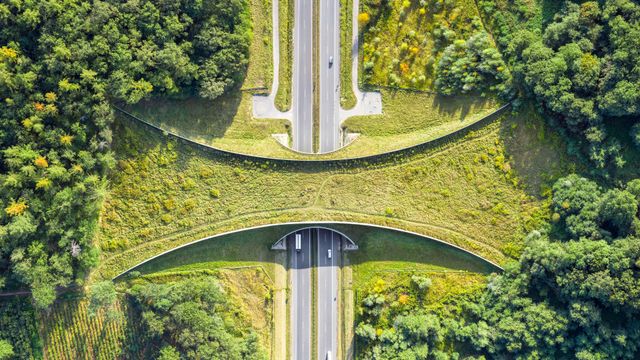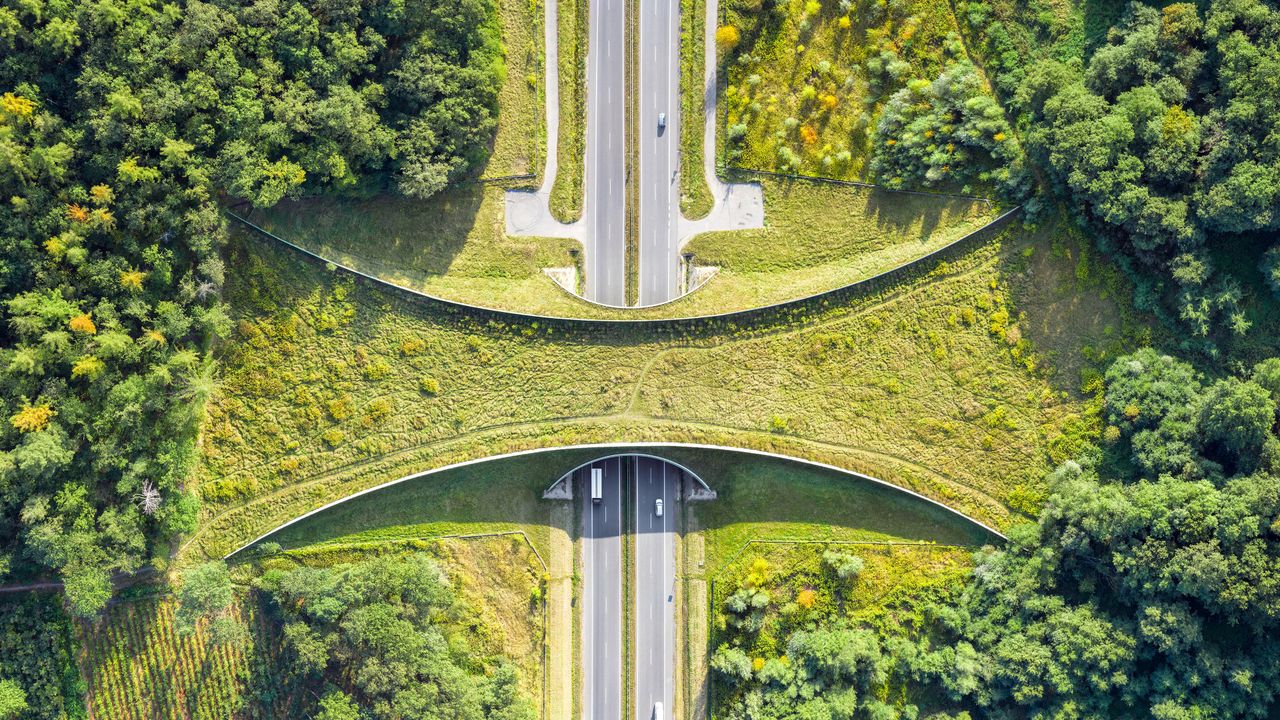
Aerial view of a wildlife crossing near Zakrzów, Poland
© bbsferrari/Getty Image
Wildlife crossing near Zakrzów, Poland
Roads have made travel faster for people but created new challenges for wildlife. Highways often cut across their regular migration routes, increasing collisions, fragmenting habitats and isolating animal populations. Wildlife crossings, also known as ecoducts, were developed to reconnect these landscapes. They include vegetated bridges over roads and tunnels beneath them, allowing animals to cross safely while reducing the risk of vehicle collisions. Some of the earliest modern examples appeared in France during the 1950s, while the Netherlands later expanded the idea with wide, green bridges designed to blend into the surrounding landscape.
Today, wildlife crossings can be found around the world and are used by species ranging from frogs and turtles to elephants and bears. Many are carefully monitored with motion-sensing cameras, which have recorded thousands of successful crossings by a variety of animals. By restoring safe movement between habitats, these structures help maintain healthy ecosystems and remind us that thoughtful engineering can benefit both people and wildlife.
Related Images
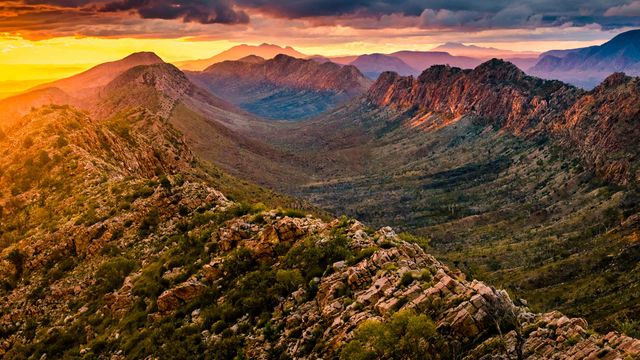 Sunset at Counts Point in West MacDonnell Ranges, Northern Territory, Australia
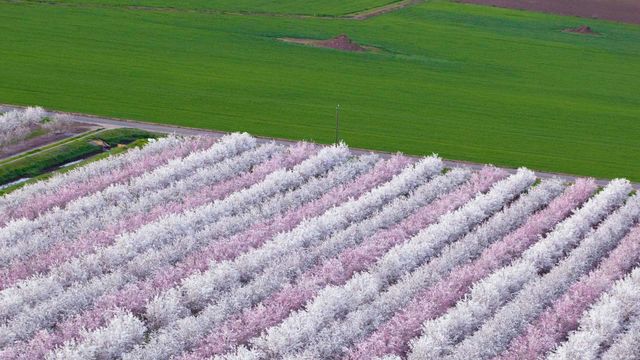 Almond orchards in bloom, Sacramento Valley, California
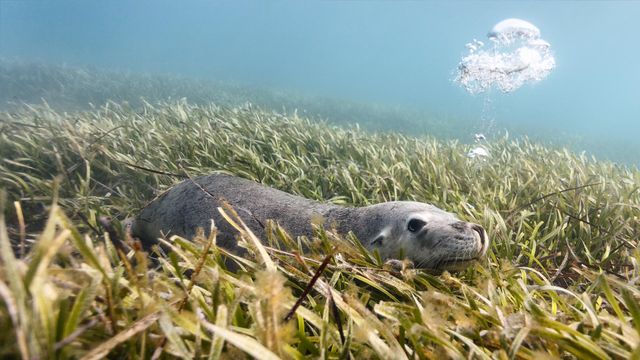 Australian sea lion (Neophoca cinerea) lying on a bed of sea grass in Carnac Island, Western Australia
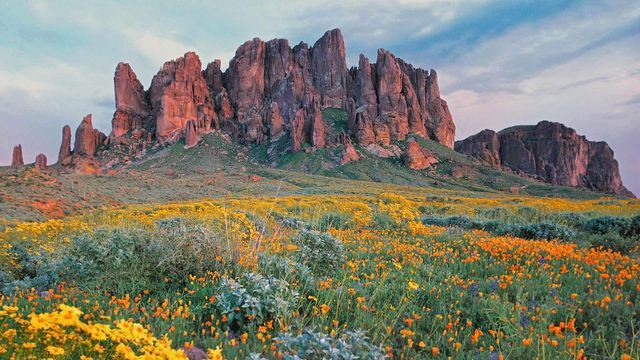 Wildflowers in bloom at Lost Dutchman State Park in Arizona
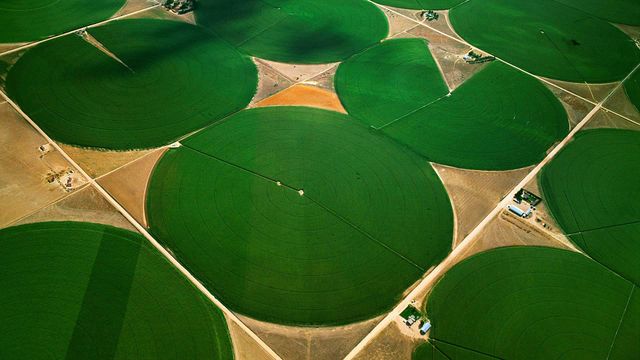 Circular agricultural fields in Morgan County, Colorado
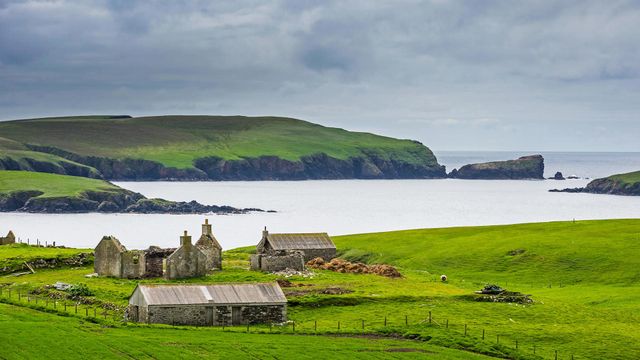 An old farm in the Shetland Islands, Scotland
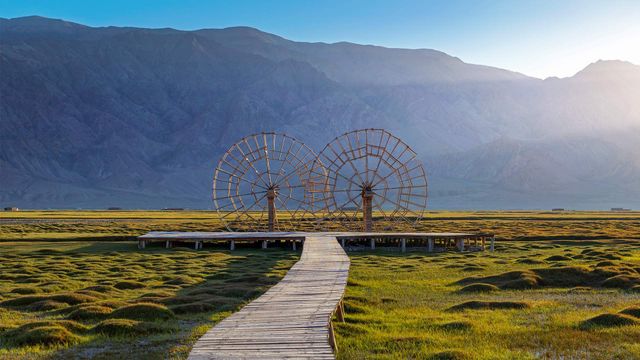 Water wheel in the Tashkurgan Grassland, Tashkurgan Tajik Autonomous County, Xinjiang, China
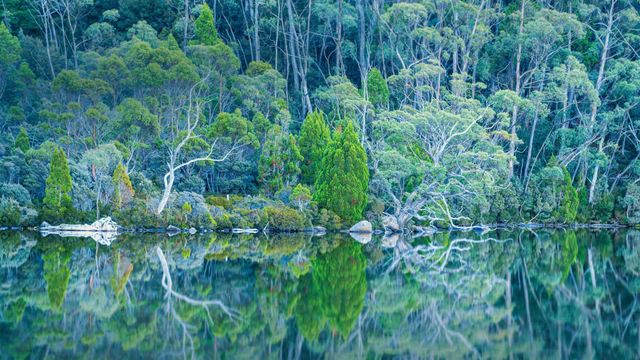 Lake Dobson in Mount Field National Park of Tasmania
Bing Today Images