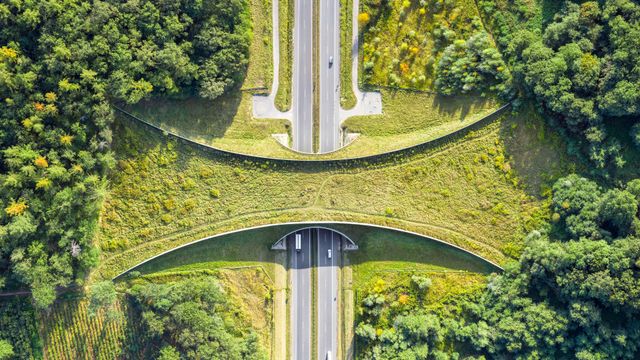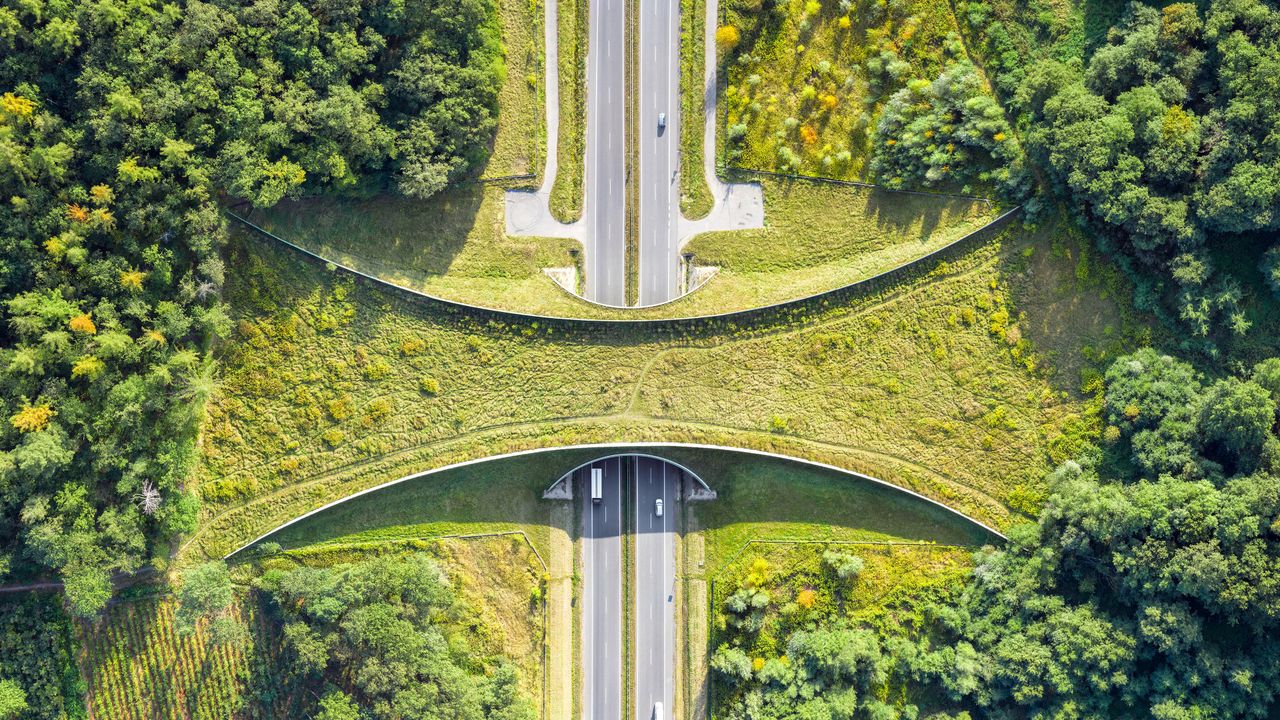
Aerial view of a wildlife crossing near Zakrzów, Poland
© bbsferrari/Getty Image
Built for paws, not people. Wildlife crossing near Zakrzów, Poland
Roads solved one problem but quietly created another. People could travel faster than ever, while wildlife faced highways cutting across routes they had followed for generations. The result was more collisions, fragmented habitats and isolated wildlife populations. That challenge led to wildlife crossings called ecoducts: bridges or tunnels designed to reconnect habitats and give animals a safe way across busy roads. Some of the earliest modern examples appeared in France during the 1950s, while the Netherlands later refined the concept with broad, green bridges covered in soil and native vegetation.
Today, countries around the world use these crossings. Canada is home to some of the best-known examples, including the wildlife overpasses and underpasses along the Trans-Canada Highway in Banff National Park, where they help species such as grizzly bears, wolves, elk and deer move safely through the landscape. Sometimes the smartest bridge is the one you barely notice—because wildlife sees it as part of the forest, not the highway.
Related Images
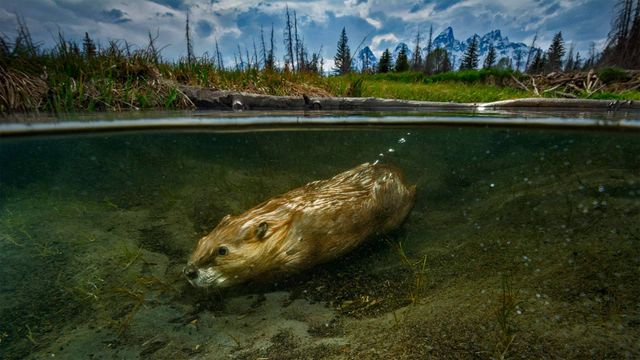 For International Beaver Day a beaver swimming in Grand Teton National Park
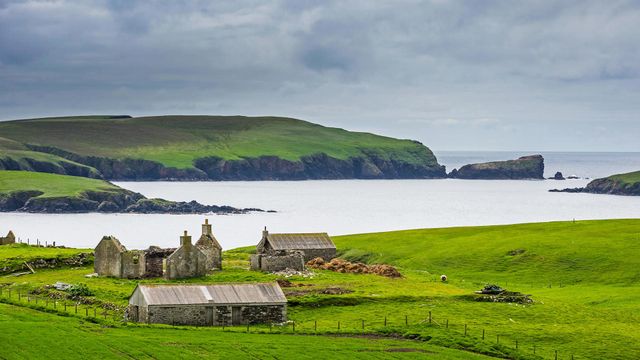 An old farm in the Shetland Islands, Scotland
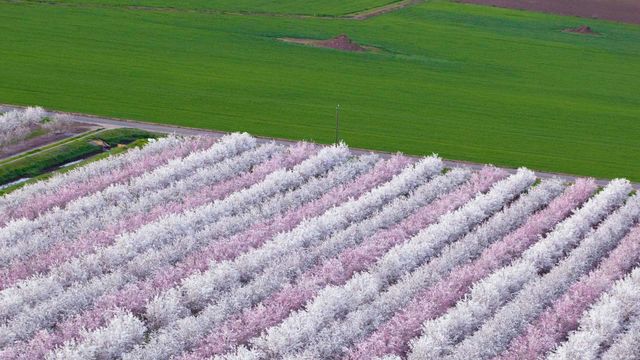 Almond orchards in bloom, Sacramento Valley, California
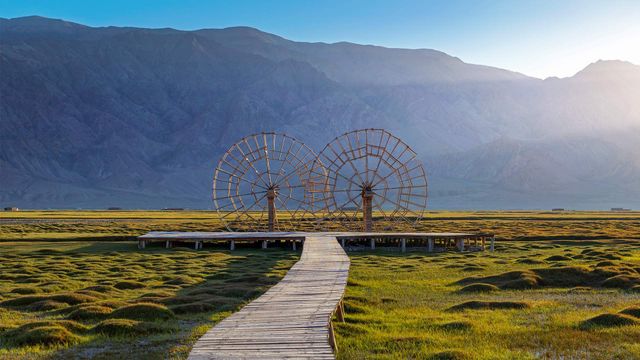 Water wheel in the Tashkurgan Grassland, Tashkurgan Tajik Autonomous County, Xinjiang, China
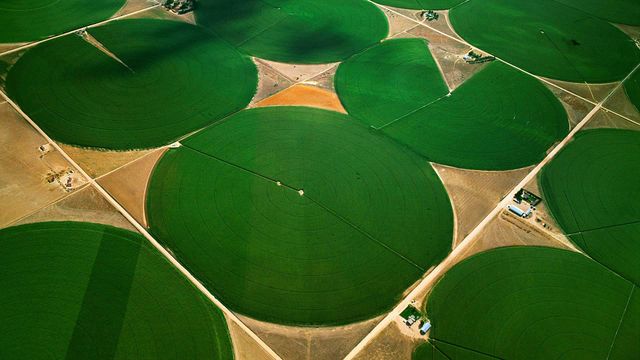 Circular agricultural fields in Morgan County, Colorado
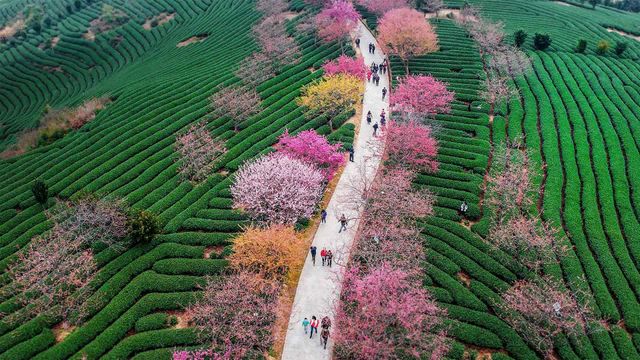 Blossoming cherry trees at a tea plantation in Longyan, China
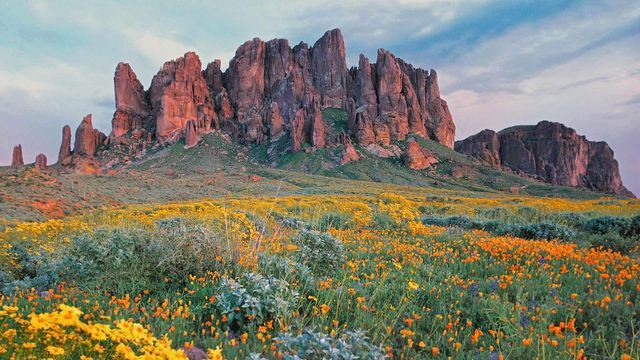 Wildflowers in bloom at Lost Dutchman State Park in Arizona
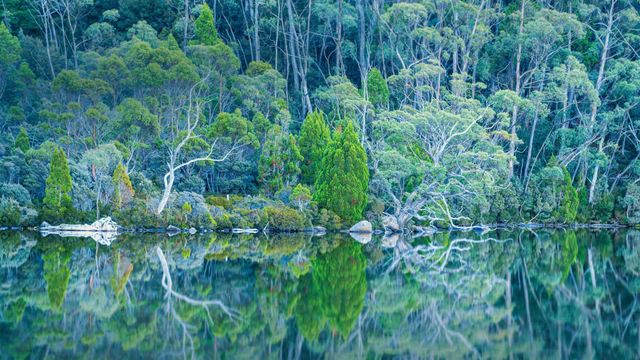 Lake Dobson in Mount Field National Park of Tasmania
Bing Today Images