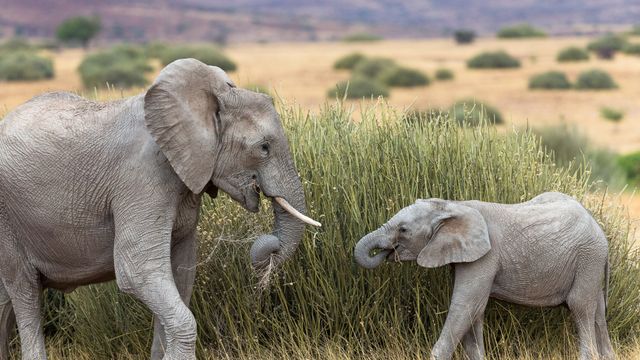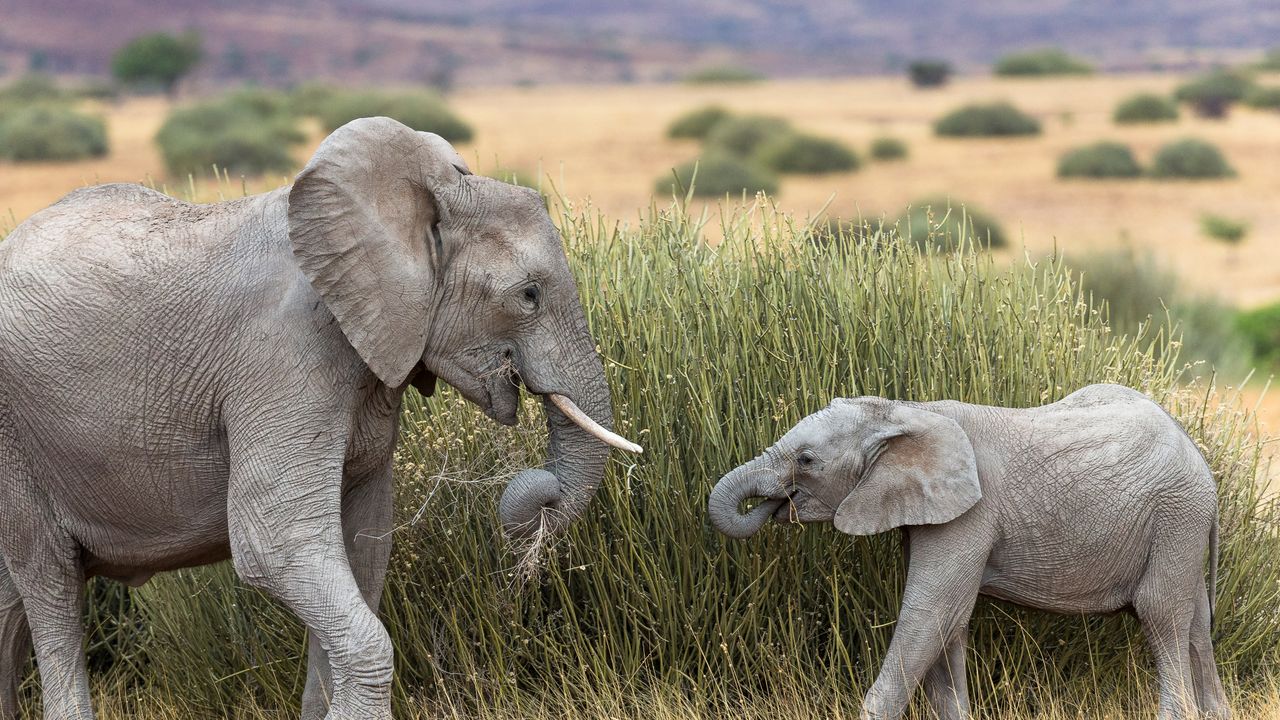
Desert elephant with calf feeding on tall grass, Namibia
© Christophe Courteau/Minden Picture
Tall grass feast. African elephants in Namibia
Desert elephants, found in Namibia and Mali, are African bush elephants that have adapted to the harsh conditions of the Namib and Sahara deserts. These extremely arid regions receive less than 7 centimetres of annual rainfall. Compared to other bush elephants, desert elephants have longer legs, broader feet and slightly smaller bodies. These resilient, herbivorous creatures migrate between waterholes, following ancient routes based on seasonal food and water availability. Male desert elephants often roam alone over vast areas, while female-led family groups stay near rivers, where food is more plentiful. Their incredible adaptability is showcased by their ability to travel long distances, sometimes more than 60 kilometres in a single night, to find their favorite myrrh bushes.
The Indian elephant, a subspecies of the Asian elephant, is native to mainland Asia and thrives in grasslands, dry and moist deciduous forests, as well as evergreen and semi-evergreen forests. As a megaherbivore, it consumes up to 150 kilograms of plant matter daily, adapting its diet to the habitat and seasons. Its meals range from fresh leaves, twigs and thorny shoots to flowering plants, fruits and grasses.
Related Images
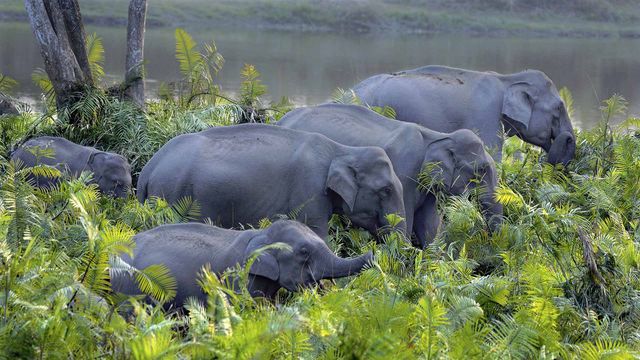 Asian Elephant (Elephas maximus indicus) herd in Kaziranga National Park, Assam
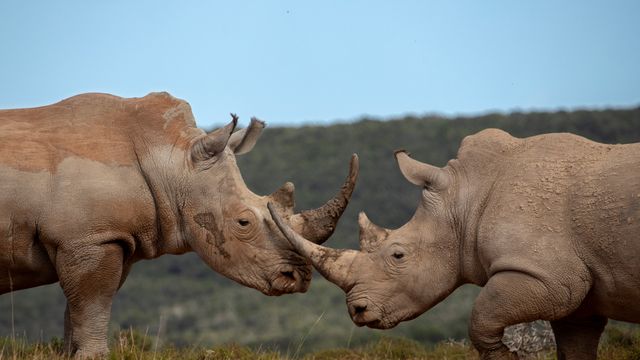 Southern white rhinoceros males, Shamwari Private Game Reserve, South Africa
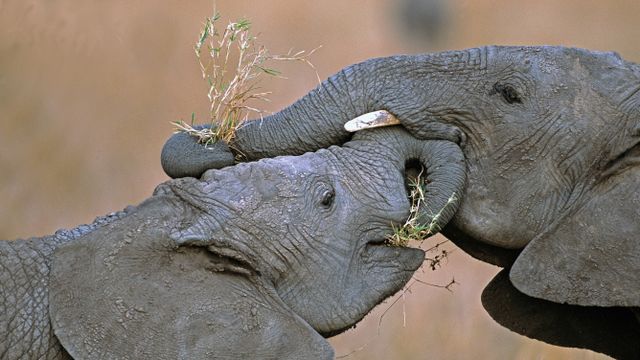 African bush elephants at Masai Mara National Reserve in Kenya
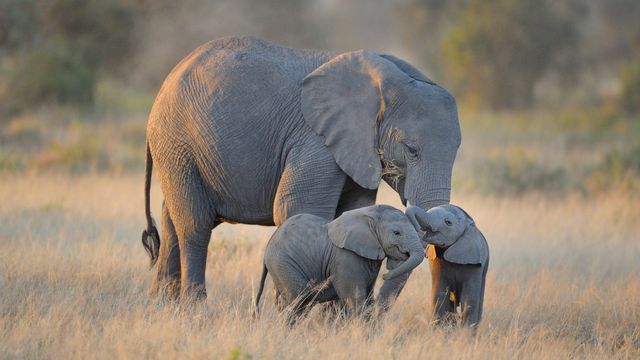 Elephant family in Amboseli National Park, Kenya
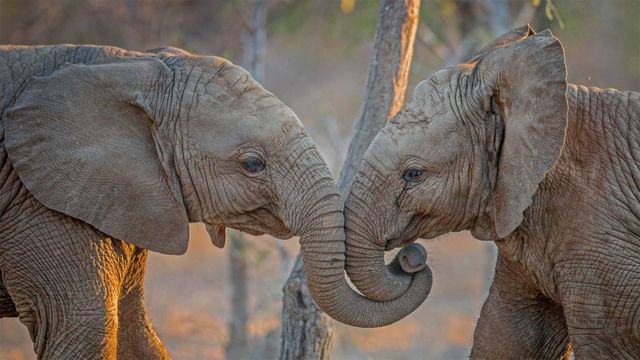 Elephants at Kapama Private Game Reserve in South Africa
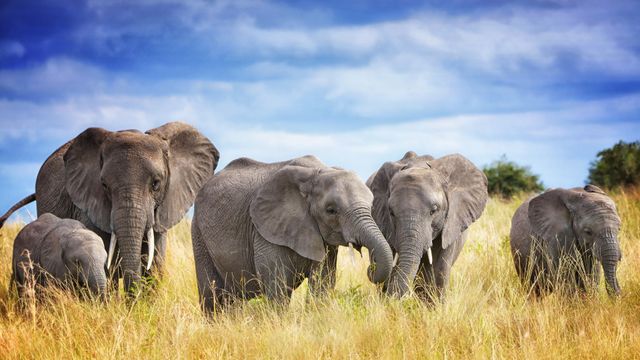 A family of African elephants in Tarangire National Park, Tanzania
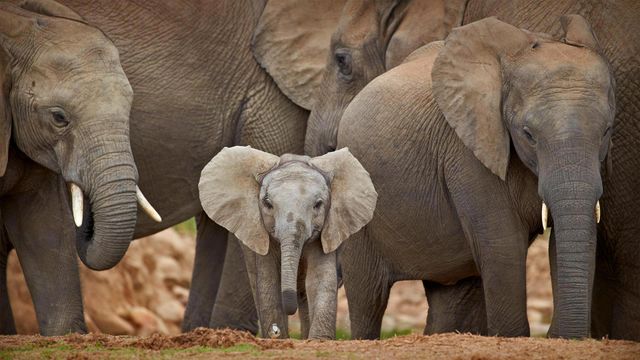 African elephants in Addo Elephant National Park in South Africa
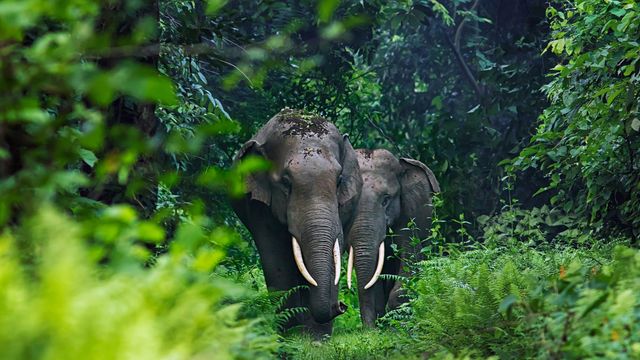 Asian elephants in West Bengal, India
Bing Today Images