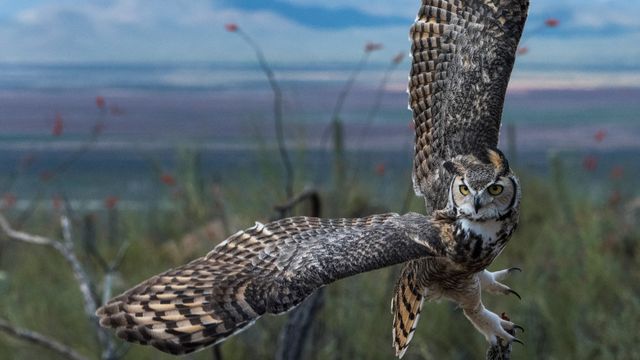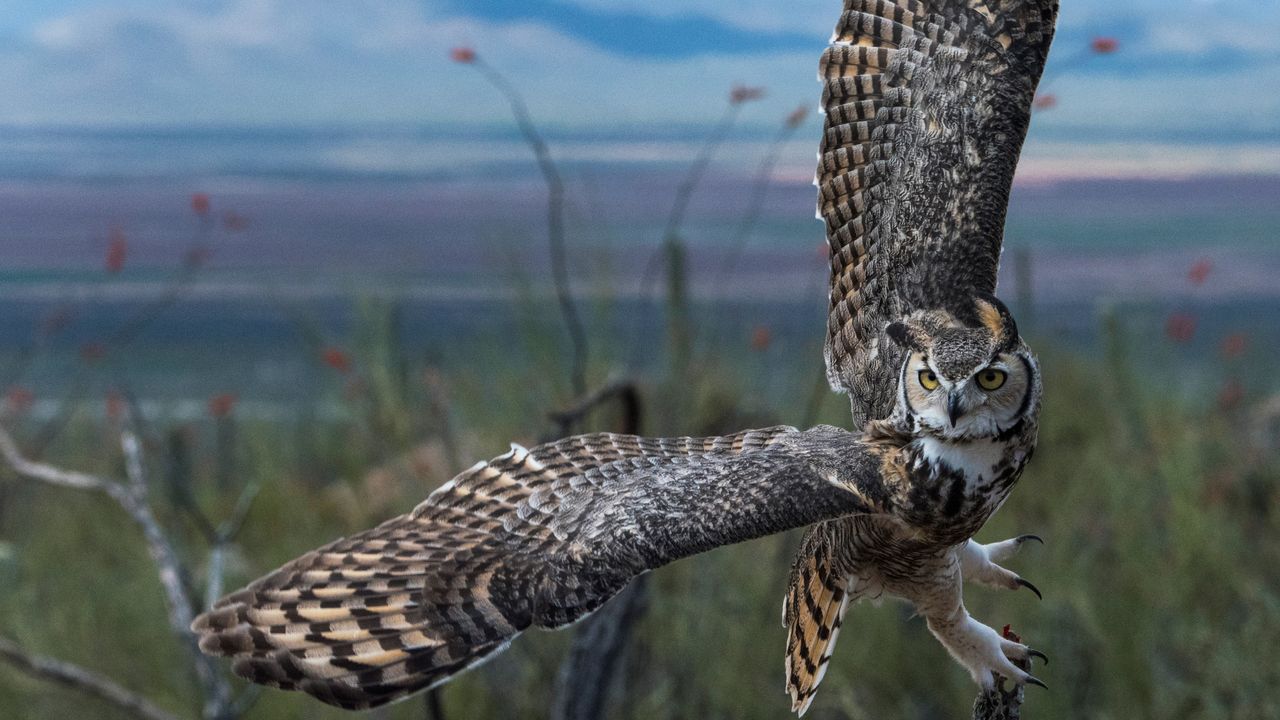
Great horned owl
© Mark Newman/Getty Image
Hoots and haunts. Great horned owl
The Halloween season is upon us, so let's meet one of the holiday's icons: the great horned owl. With its keen vision, eerie vocalizations, and silent flight, this owl has historically been revered and feared. In folklore and mythology, owls were considered symbols of wisdom and omens of death. On Samhain, the Celtic precursor to Halloween, the owl was believed to be the kin of roaming spirits.
The owl in today's image is far more than a character in ghostly tales. Often called the 'tiger of the air,' the great horned owl, named for its signature feathers that look like horns, is one of the most fearsome and adaptable predators in the ornithological world. Primarily active at night, the owl has large, powerful talons that exert around 300 pounds of pressure, which it uses to grab prey like small rodents and skunks. It has incredible night vision, but its eyes are fixed, so it must turn its head a whopping 270 degrees to see everything. So, whether you hear it hooting from treetops or see it flying in the night, this owl proves that not all scary apparitions are supernatural.
Related Images
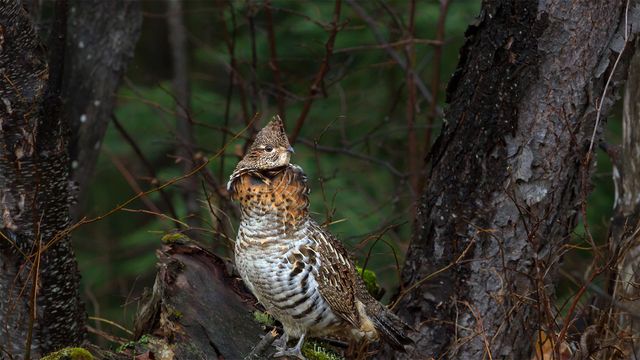 Ruffed grouse in Algonquin Provincial Park, Ontario, Canada
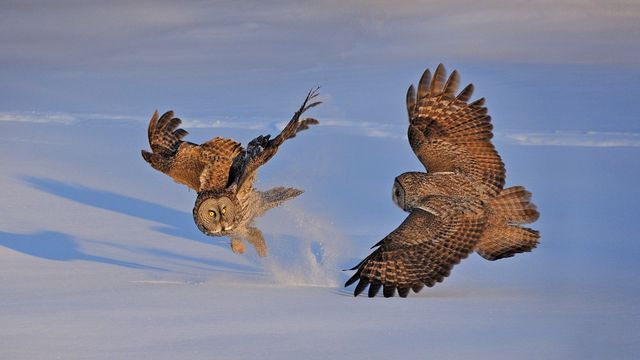 Great gray owls in Montreal, Canada
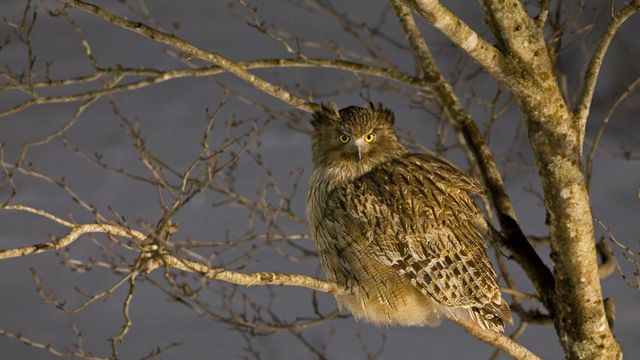 Blakiston's fish owl in Hokkaido, Japan
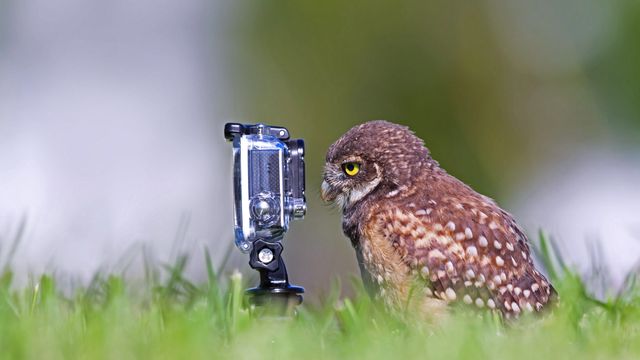 Burrowing owlet posing in Cape Coral, Florida
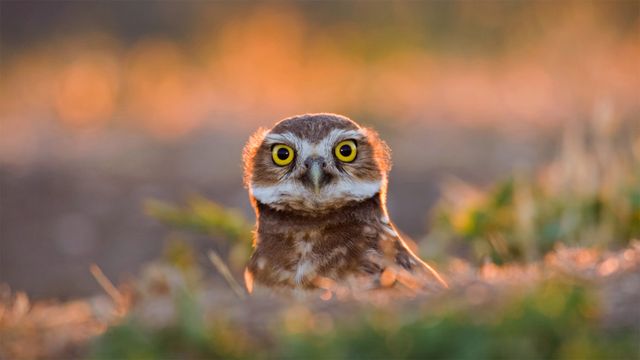 An adult burrowing owl emerges from its burrow at sunset in Davis, California
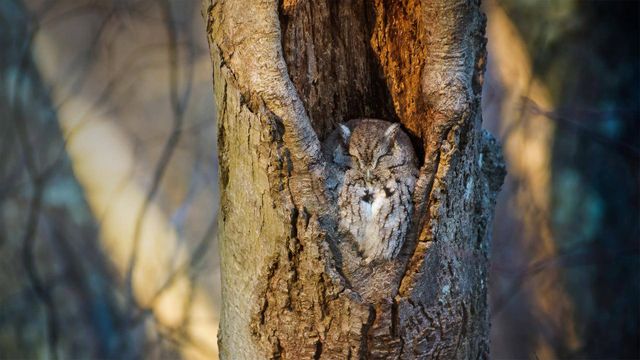 Screech owl resting in a tree cavity, Massapequa Preserve, Long Island, New York
 Bald eagle pair with a chick in their nest near the Yukon River, Yukon, Canada
 Bald eagles in Anchorage, Alaska
Bing Today Images