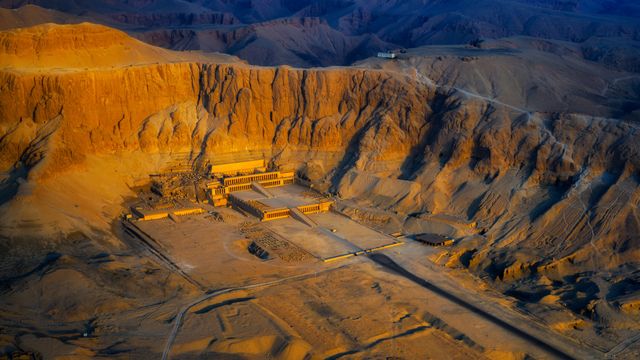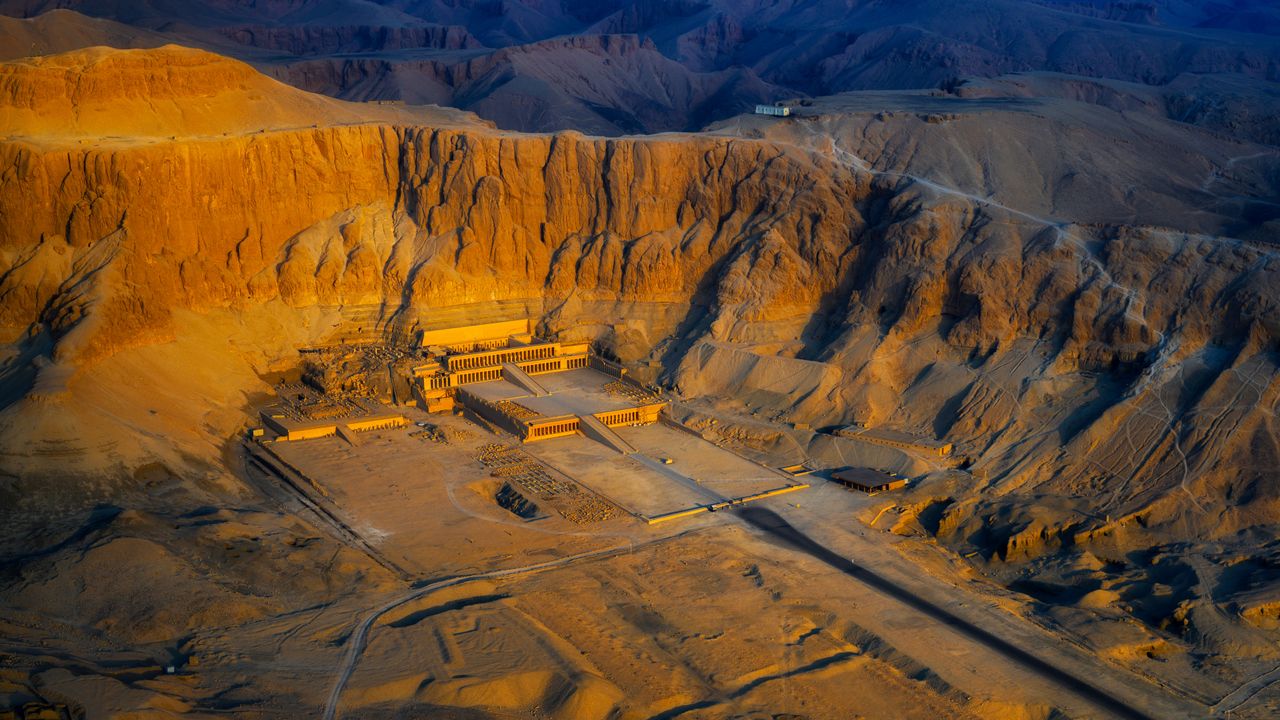
Aerial view of the Temple of Hatshepsut near Luxor, Egypt
© Ratnakorn Piyasirisorost/Moment/Getty Image
Unearthing a queen's lost tale
Almost 3,500 years ago under Queen Hatshepsut's reign, Egypt enjoyed decades of peace and flourishing culture, and this elegant temple is just one piece of her larger-than-life legacy. But the pharaoh who succeeded Hatshepsut forbade all mention of her rule, taking credit for her monuments and leaving her name all but unknown for millennia.
By the 19th century, many archaeologists had noticed a gap in the recorded succession of pharaohs. Through their efforts decoding hieroglyphics, cataloging artifacts, and finally excavating Hatshepsut's great temple in 1906, the greatest woman ruler of her time began reclaiming her place in the history books.
Isn't it lucky we have people willing to dirty their hands and dig up the truth? On International Archaeology Day, which happens every third Saturday of October, we're celebrating those who solve human history's mysteries – the archaeologists of the past, present, and future.
Related Images
 View of Orchha, Madhya Pradesh
 Wildflowers in bloom at Lost Dutchman State Park in Arizona, USA
 Mua Caves in the Ninh Bình province of Vietnam
 Bath, Somerset, England
 Firefall at Horsetail Fall, Yosemite National Park, California
 The village of Aguerd Oudad and the larger town of Tafraout in Morocco
 A walkway through a mountain peak in Chamonix, France
 hanging bridge near Manali
Bing Today Images