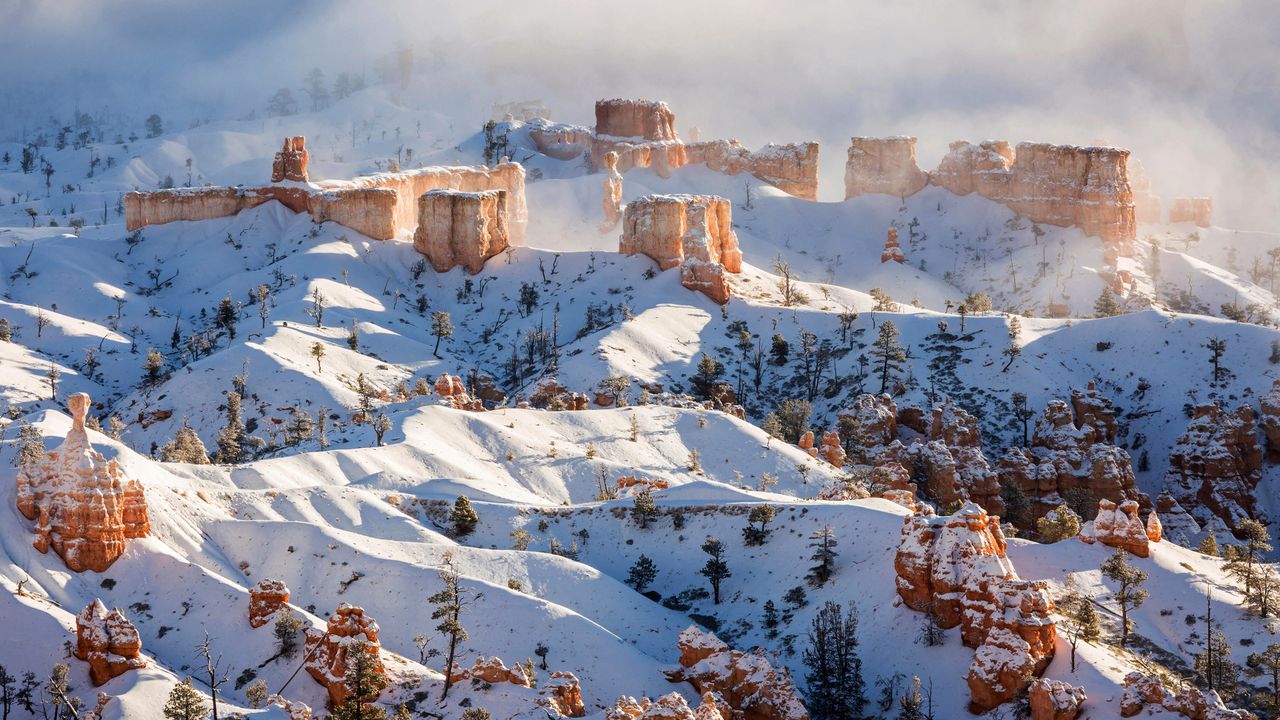
Sunset Point, Bryce Canyon National Park, Utah, USA
© Colin D. Young/Alam
When snow meets red rock. Bryce Canyon National Park, Utah
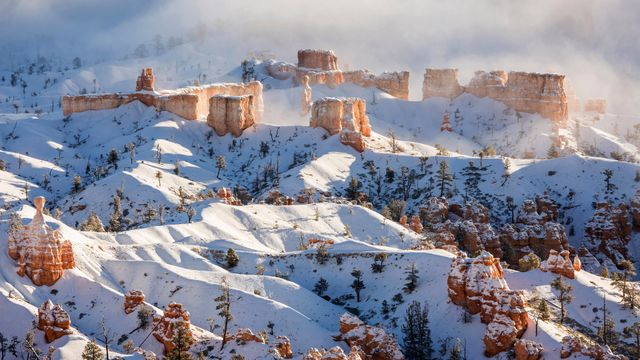
Snow transforms Bryce Canyon National Park, blanketing the landscape in white while its fiery orange-red hoodoos rise above the snowy terrain. Seen from Sunset Point, one of the park's most famous overlooks, these fantastical shapes are part of the Claron Formation, whose limestone was deposited about 50 million years ago and later shaped by weathering and erosion. Because much of the park rises above 2,440 metres, snow can arrive as early as October. In today's image, snow clings to the canyon's ridges and spires while mist drifts across the cliffs, creating an iconic winter scene in the American Southwest.
Winter drives the physical sculpting of these spires through frost wedging, propelled by roughly 200 freeze-thaw cycles across the Paunsaugunt Plateau each year. Daytime snowmelt seeps deep into fractures along the sedimentary beds, expanding as temperatures plunge at night to shatter rock walls into narrow fins. Rather than freezing the landscape in place, each winter season accelerates the retreat of the rim, steadily carving the amphitheater deeper into the high plateau.
Related Images
 A Komondor competes in the Westminster Kennel Club Dog Show in New York City
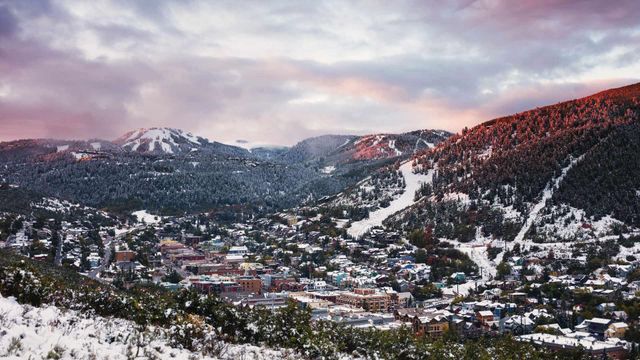 Park City, Utah, for the Sundance Film Festival, which begins today
 A ladybird hibernates in Tewin, England
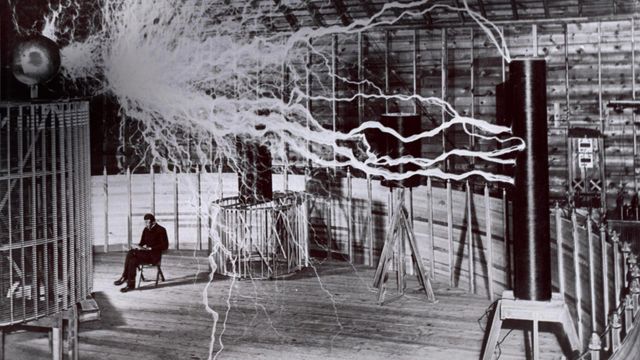 For Science Fiction Day, inventor Nikola Tesla and his ‘magnifying transmitter’
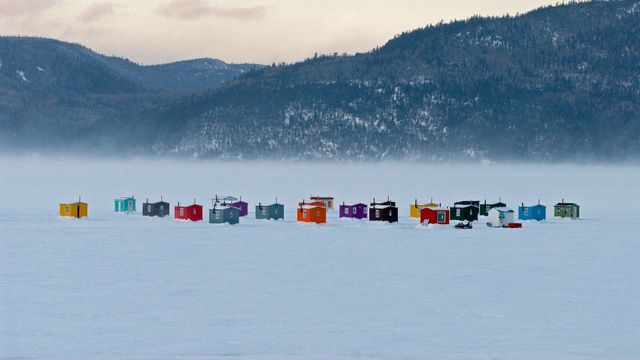 Ice-fishing village near L'Anse-Saint-Jean, Quebec, Canada
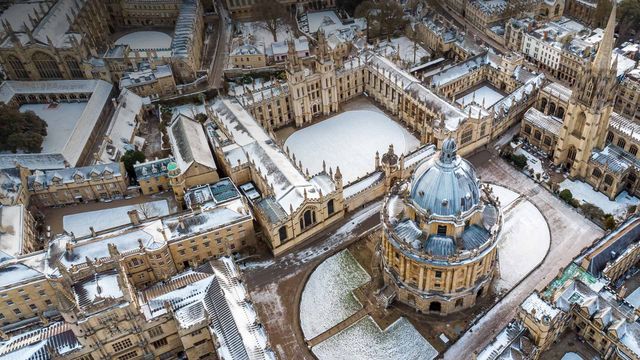 Aerial view of central Oxford, England
 Snowy owl
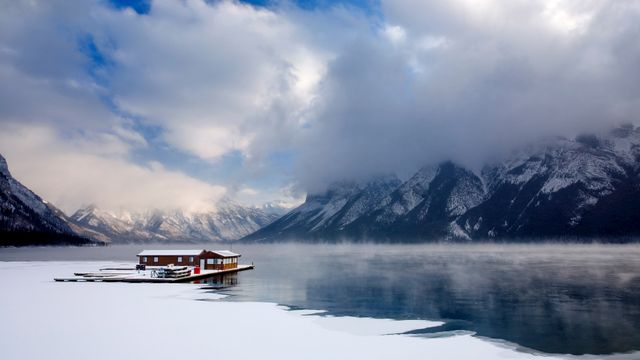 Boathouse on Lake Minnewanka in Banff National Park, Alberta
Bing Today Images