Red-and-green macaws
© markes51/Getty Image
Red-and-green macaws
Evolution occasionally favours maximalism. Just look at these red-and-green macaws with their scarlet plumage, vivid green wings and blue flight feathers. Their lives unfold across tropical South America, in a routine that connects fruit, seeds and soil in ways that are easy to miss from the ground.
Among the world's largest parrots, red-and-green macaws can reach about 90 centimetres from beak to tail. Oversized bills pry open tough fruits and nuts, while swallowed and discarded seeds help new plants take root. The plumage helps individuals communicate, recognise one another and stand out in the crowded rainforest.
Their social lives are just as colourful. Macaws mate for life and rarely stray far from their partners, communicating through calls that ring across the canopy. They're also among the bird world's brainiacs, pairing curiosity with the problem-solving skills parrots are known for. With bright feathers, formidable beaks, lifelong partnerships and a knack for turning lunch into reforestation, subtle was never the assignment.
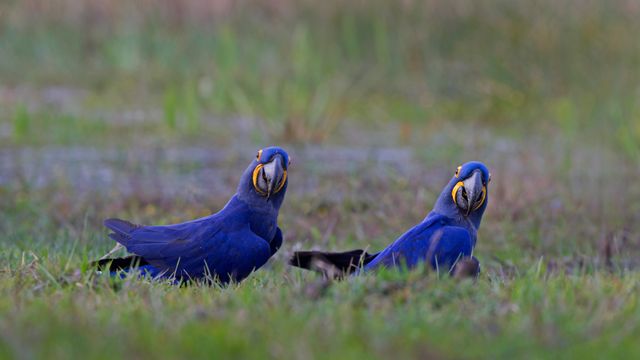 Hyacinth macaws, Pantanal, Brazil
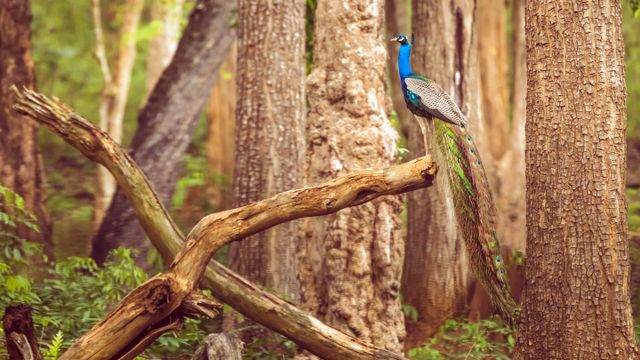 Indian peafowl, Nagarahole National Park, Karnataka, India
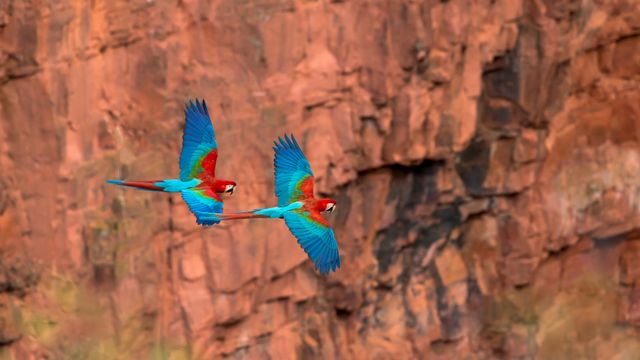 Red-and-green macaws, Mato Grosso do Sul, Brazil
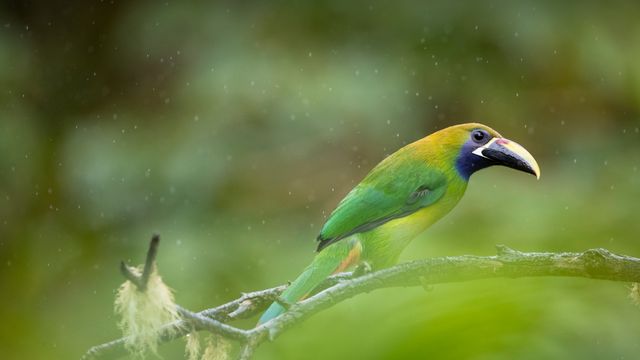 Blue-throated toucanet, Los Quetzales National Park, Costa Rica
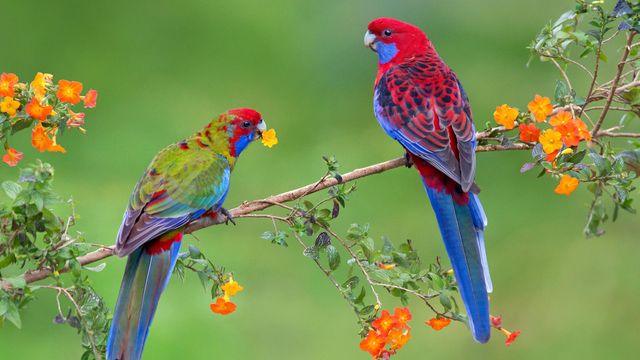 Crimson rosella with juvenile, Victoria, Australia
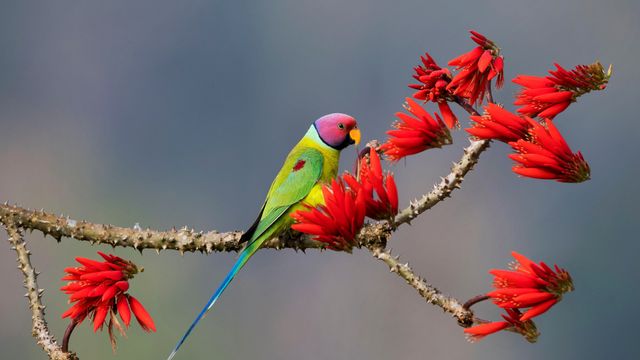 Plum-headed parakeet at Shimoga, Karnataka, India
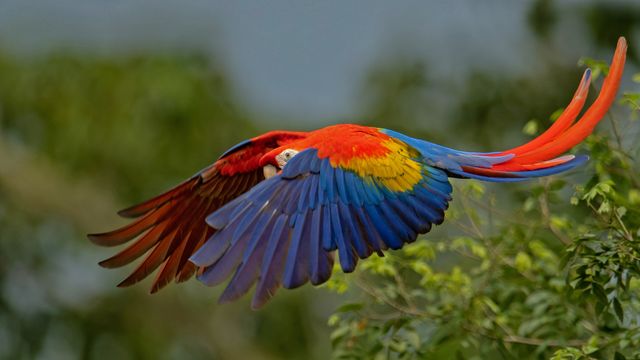 Scarlet macaw, Costa Rica
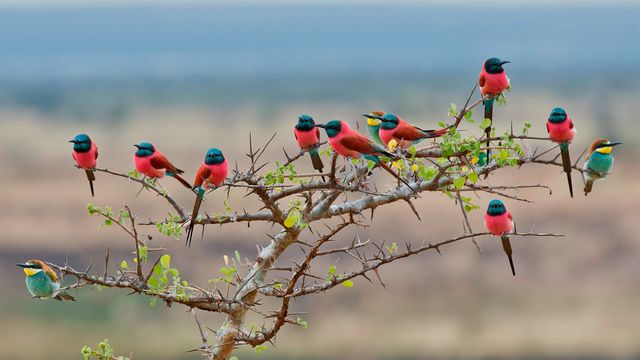 Northern carmine and European bee-eaters in Mkomazi National Park, Tanzania