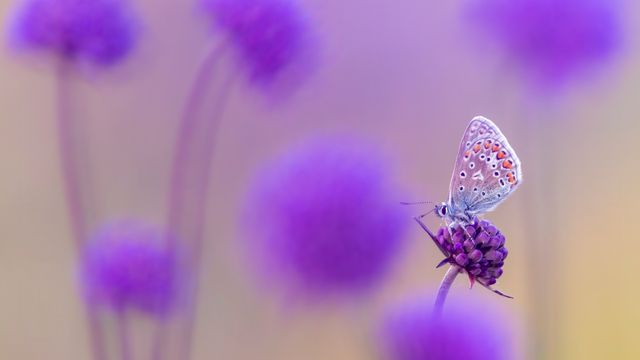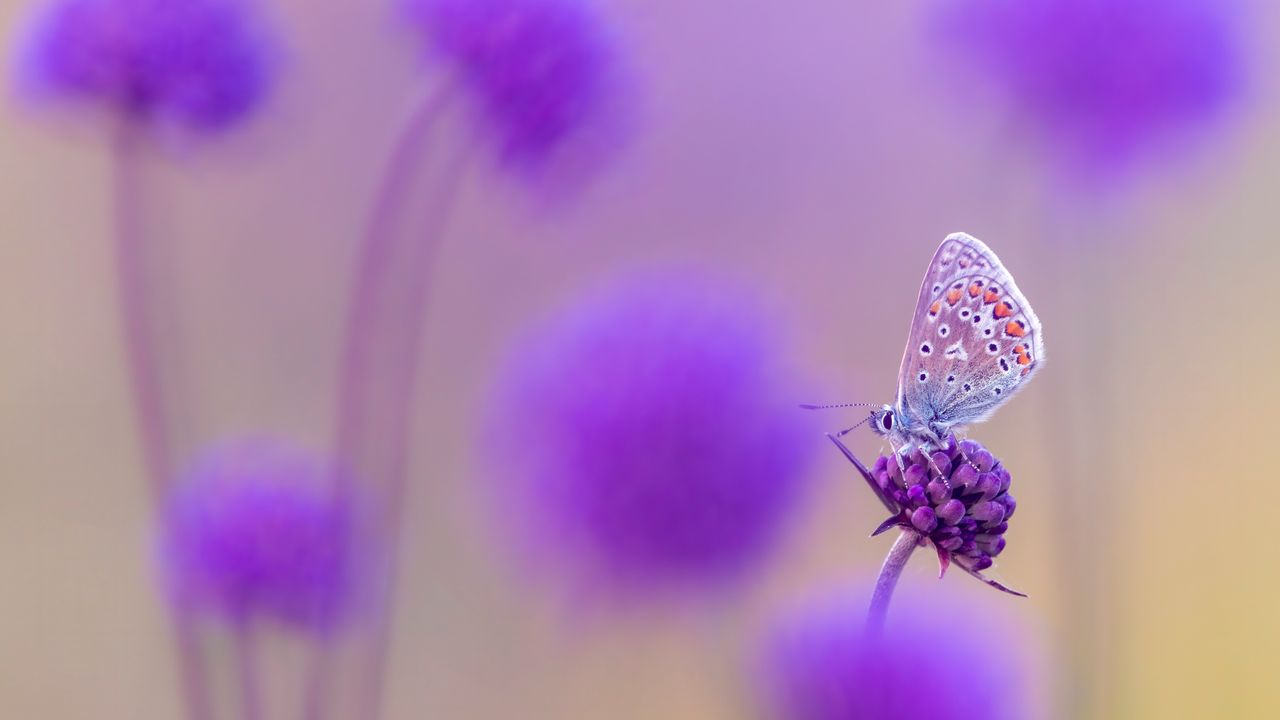
Common blue butterfly, Devon, England
© Ross Hoddinott/Nature Picture Librar
Sky tinted wings. Common blue butterfly
That quick glimpse of blue fluttering through a field has a story that begins much earlier, with a tiny caterpillar and an unexpected partnership. The common blue butterfly (Polyommatus icarus), named after Icarus, the figure from Greek mythology, is found across Europe, North Africa and parts of Asia. It begins life as an egg laid on host plants such as common bird's-foot trefoil. After hatching, the caterpillar feeds on the leaves before producing a sugary substance that attracts ants. In return for this sweet reward, the ants often protect the developing caterpillar from predators during one of the most vulnerable stages of its life. Depending on the climate, the species can produce two or three generations between spring and autumn.
When the adult butterfly emerges, males display brilliant sky-blue wings created by microscopic structures that reflect light, while females are usually brown with orange markings. The common blue's remarkable life cycle proves that even the smallest creatures can rely on extraordinary partnerships.
Related Images
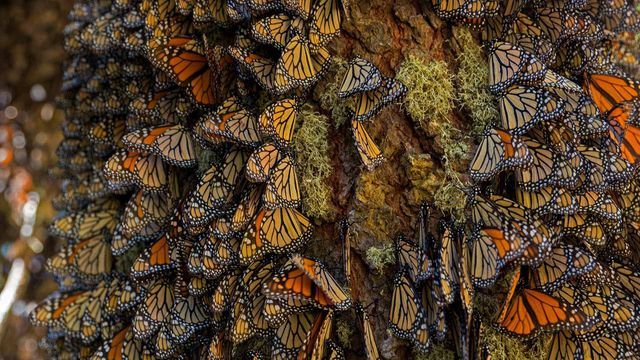 Monarch butterflies wintering in Michoacán, Mexico
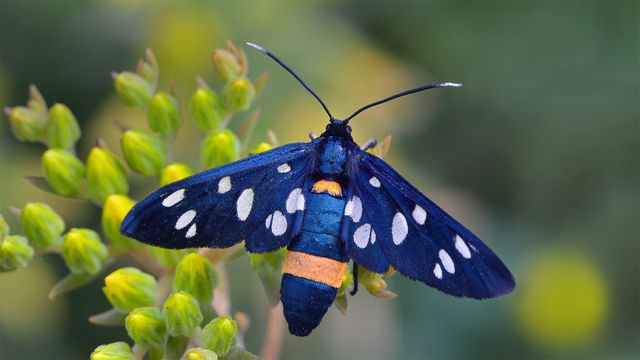 Nine-spotted moth in Switzerland
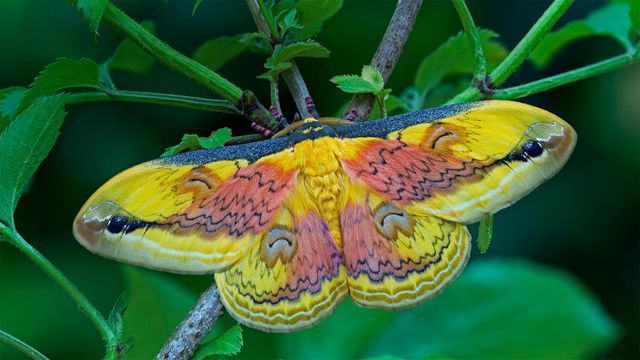 A Loepa oberthuri moth
 Monarch butterflies in the Monarch Butterfly Biosphere Reserve, Angangueo, Mexico
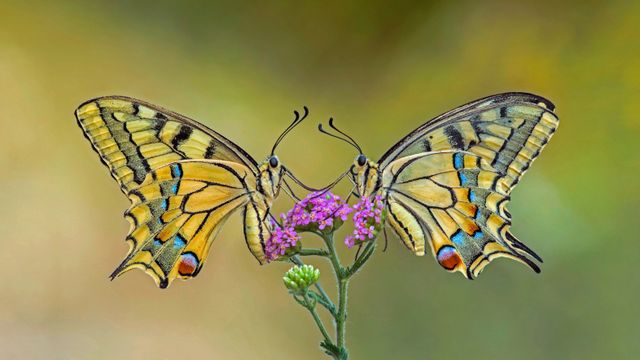 Two Old World swallowtail butterflies on a flower
 Ruby-throated hummingbird feeding on yellow bells in the Texas Hill Country, USA
 The festival of lights
 Half-painted Ganesha idol at a workshop in Bangalore
Bing Today Images