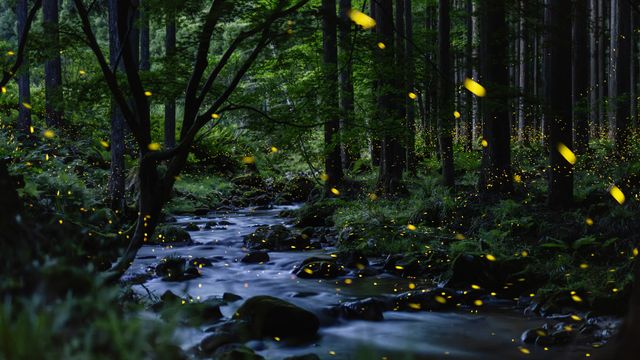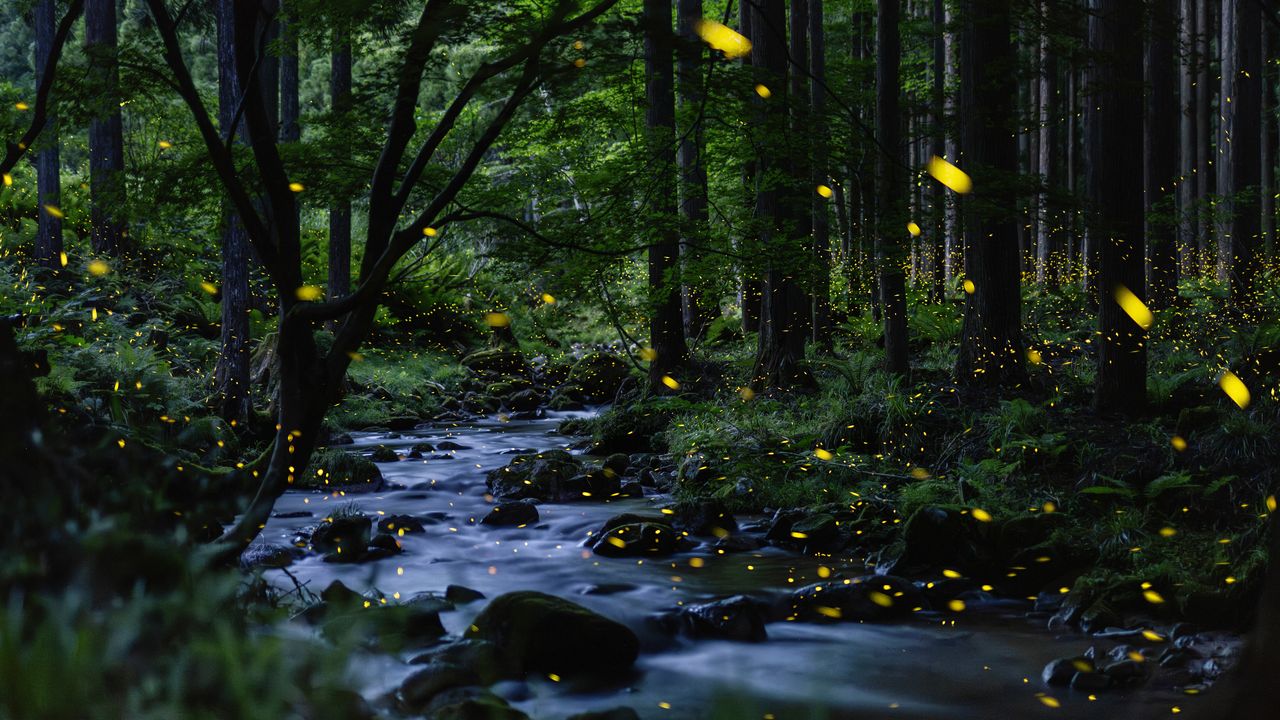
Fireflies glowing above a stream, Okayama Prefecture, Japan
© tdub303/Getty Image
The poetry of vanishing light. Fireflies glowing above a stream, Okayama Prefecture, Japan
In Okayama Prefecture, when humid air settles over a stream, hotaru—Japan's fireflies—begin signaling. On warm, windless evenings, they often start glowing about two hours after sunset under favorable conditions, inviting silence beside water.
Fireflies aren't flies but beetles, and most species stay near water—ponds, streams, marshes, and rivers. By day they hide low in the grass; after dark they climb vegetation and take flight, flashing to find a mate. Their light comes from a chemical reaction in the abdomen, and species-specific timing helps partners recognize the right signal. Their young live a quieter, hungrier life: larvae are carnivores that feed on soft-bodied prey such as snails and slugs. Adults may eat insects, nectar, or pollen.
In Japan, watching them—hotaru-gari—has deep roots. Heian-era (794–1185) writers like Sei Shōnagon wrote about fireflies, and later literature and ukiyo-e art—a traditional form of woodblock prints and paintings—used their brief light to evoke impermanence.
Related Images
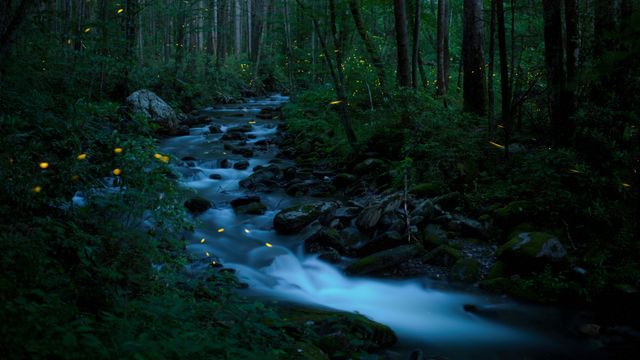 Synchronous fireflies, Great Smoky Mountains National Park, Tennessee
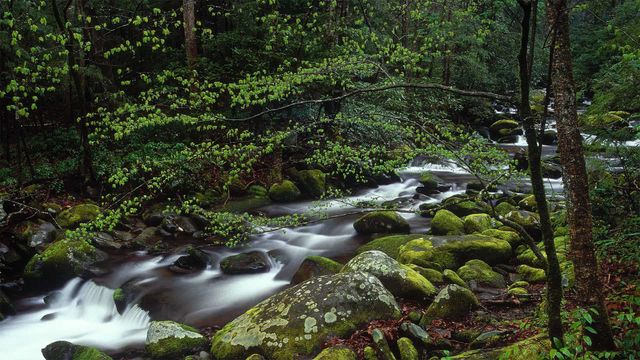 Roaring Fork in Great Smoky Mountains National Park, Tennessee
 Oxbow Bend on the Snake River, Grand Teton National Park, Wyoming
 Heather growing in Glen Brittle, Isle of Skye, Scotland
 Serpentine stairs of Dunquin Pier, County Kerry, Ireland
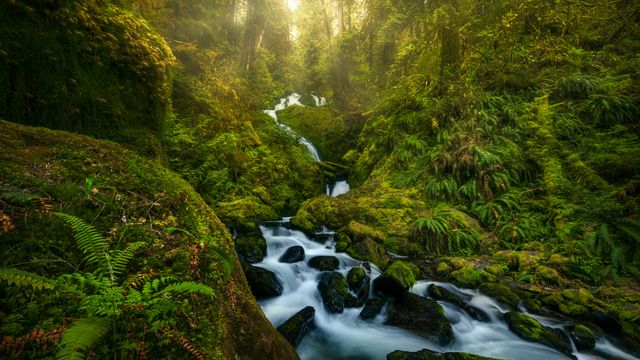 A waterfall in Olympic National Park, Washington
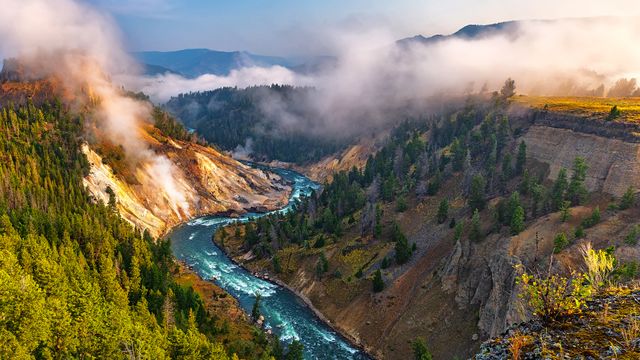 Calcite Springs Overlook and Yellowstone River, Yellowstone National Park, Wyoming
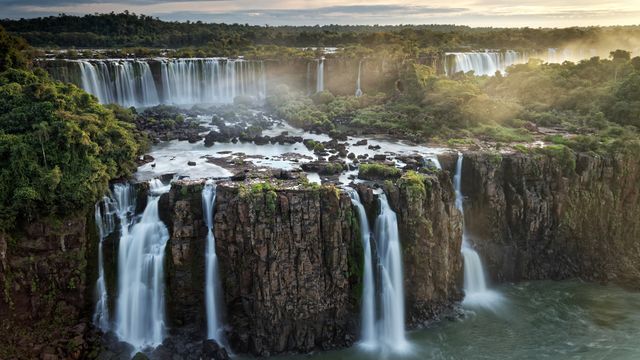 Three Musketeers Falls at Iguazú Falls, Argentina
Bing Today Images