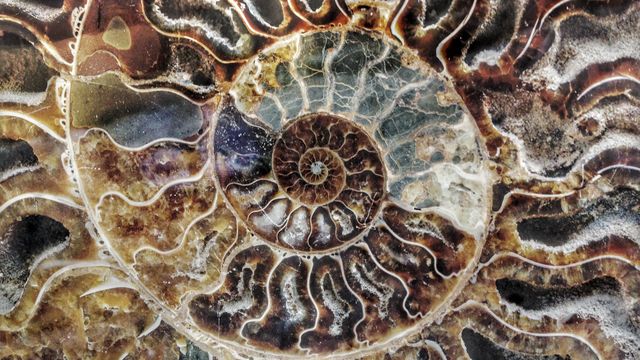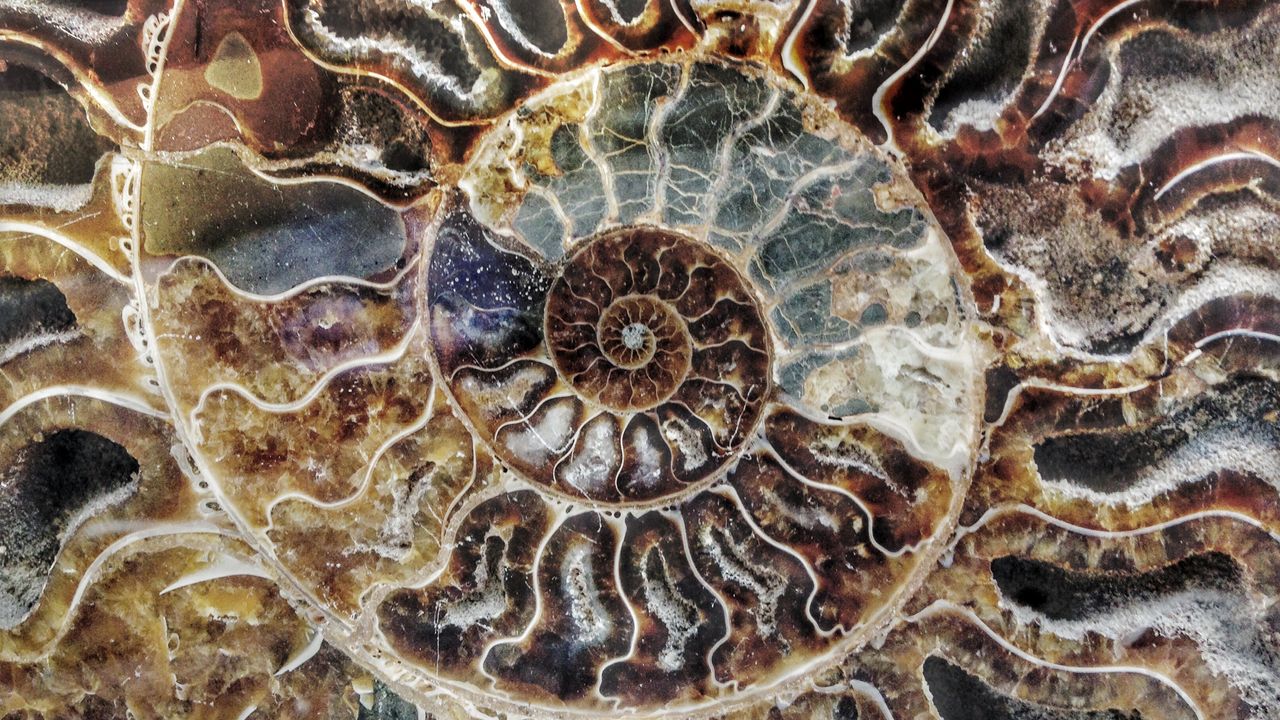
Ammonite fossil from Madagascar
© ThomasLENNE/Shutterstoc
Ammonite fossil from Madagascar
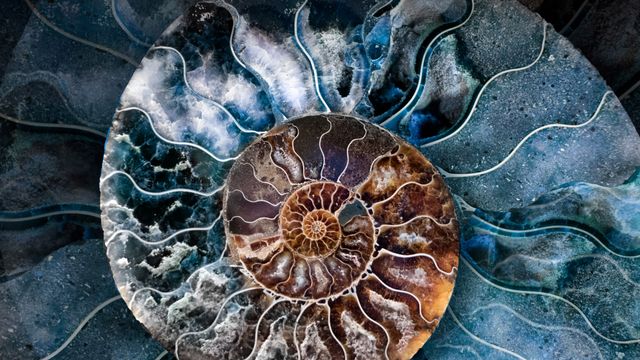
Look closely at this ammonite fossil. Its swirling shell, once home to a prehistoric sea creature, holds a mathematical secret—a spiral pattern. Each new chamber is proportionally larger than the previous one, maintaining a consistent growth ratio, often associated with the Fibonacci sequence.
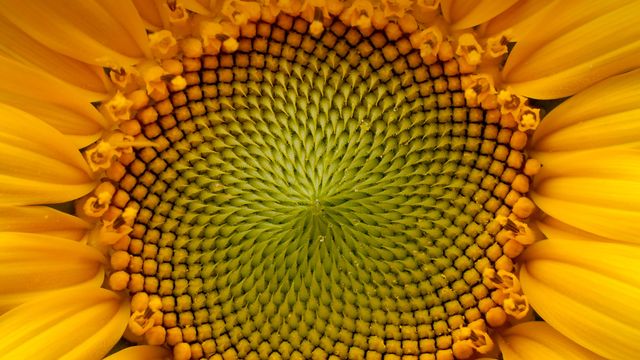
The Fibonacci sequence was named after the 13th-century Italian mathematician Leonardo Bonacci (Fibonacci), who introduced the concept to Europe. The pattern 1, 1, 2, 3, 5, 8…—where each number is the sum of the two before it—was, however, first described in India as early as 200 BCE by the ancient poet-mathematician Pingala. The Fibonacci sequence appears widely in nature, including pineapples, artichokes, pinecones and the arrangement of leaves on a stem.
Ammonites were molluscs that lived between 400 and 66 million years ago, gliding through ancient seas inside coiled shells that protected their soft bodies. When ammonites perished, sediment buried their shells and minerals slowly turned them to stone, preserving this natural geometry for millions of years. The ammonite fossil is a striking reminder that maths and nature speak the same language.
Related Images
 Golden jellyfish, Jellyfish Lake, Eil Malk, Palau
 Blue Linckia sea stars, New Ireland, Papua New Guinea
 Dr. Sylvia Earle explores the Great Barrier Reef in a scene from 'Mission Blue'
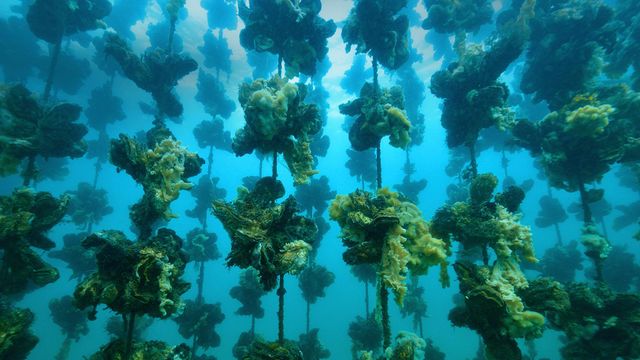 Oyster farm offshore from Notojima Island, Ishikawa Prefecture, Japan
 Common octopus, Gulf of Lion, Mediterranean Sea
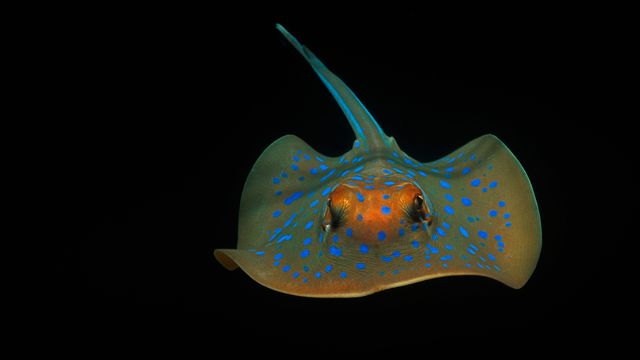 Bluespotted ribbontail ray near Perth, Australia
 Moon jellyfish and golden jellyfish, Raja Ampat, West Papua, Indonesia
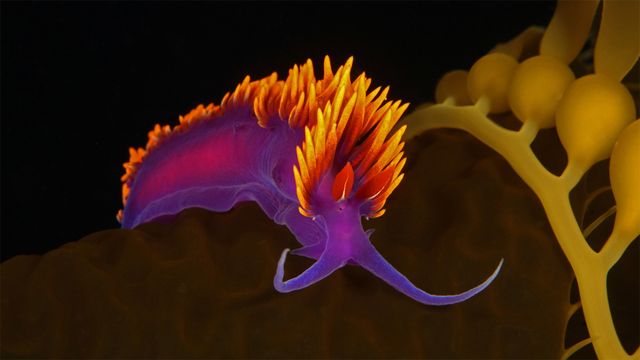 Spanish shawl nudibranch on kelp off Santa Catalina Island, Channel Islands, California, USA
Bing Today Images