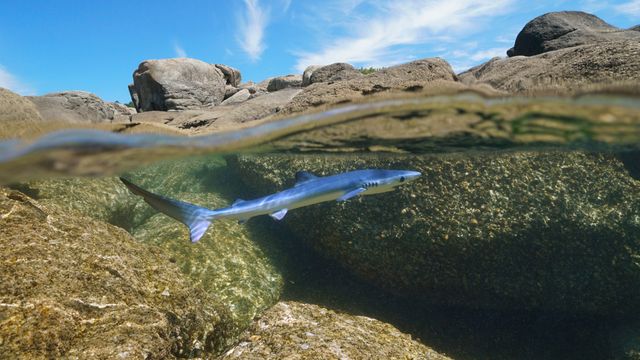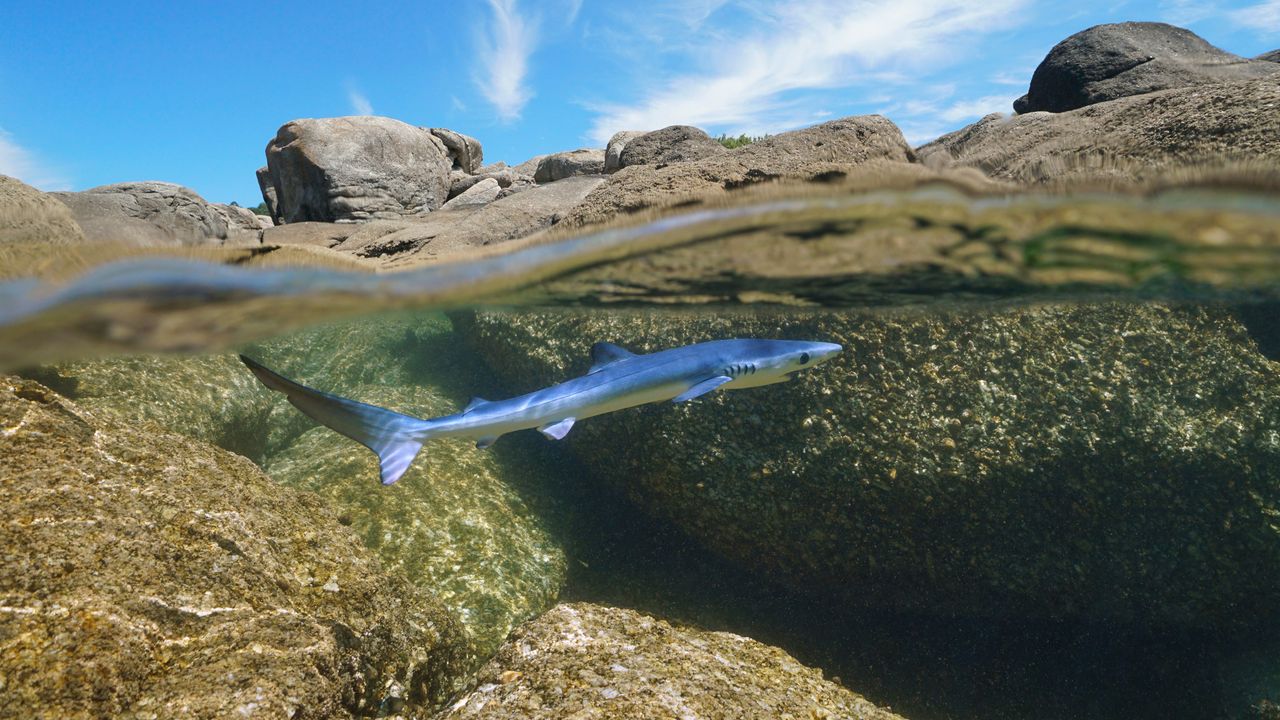
Young blue shark swimming off the coast of Galicia, Spain
© Damocean/Getty Image
Chasing waves. Shark Awareness Day
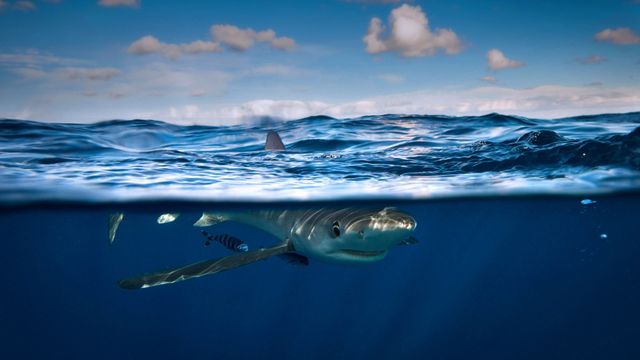
Sharks have been around for over 400 million years—outlasting dinosaurs, surviving ice ages, and weathering mass extinctions. They are symbols of ocean health, which is why Shark Awareness Day draws attention to these apex predators that help maintain balance in marine ecosystems. Protecting sharks means preserving the health of entire ocean environments—and ultimately, securing a sustainable future for all life. With many shark species facing the threat of extinction, this day is all about appreciating their ancient legacy and learning how we can help keep them off the endangered list.
Take the blue shark, featured here, for example—sleek, wide-ranging, and undeniably captivating. It's the only living member of its genus, and it prefers the deep waters of temperate and tropical oceans. While typically a laid-back swimmer, it's capable of sudden bursts of speed when needed. Blue sharks are famous for their epic migrations—some travel from New England to South America, guided by seasonal changes, food availability, and favorable environmental conditions. They give birth to live young and are known for their large litters—ranging from 25 to over 100 pups. After birth, the young head to special nursery zones, far from adult habitats, where they can grow and learn the ways of the sea.
Related Images
 Cefalù on the Tyrrhenian coast in Sicily, Italy
 Mua Caves in the Ninh Bình province of Vietnam
 Firefall at Horsetail Fall, Yosemite National Park, California
 La Digue, an island in the Seychelles
 Wildflowers in bloom at Lost Dutchman State Park in Arizona
 An old farm in the Shetland Islands, Scotland
 For Waitangi Day, the Pancake Rocks on New Zealand’s South Island
 Shoreline near Tofino on Vancouver Island, British Columbia, Canada
Bing Today Images