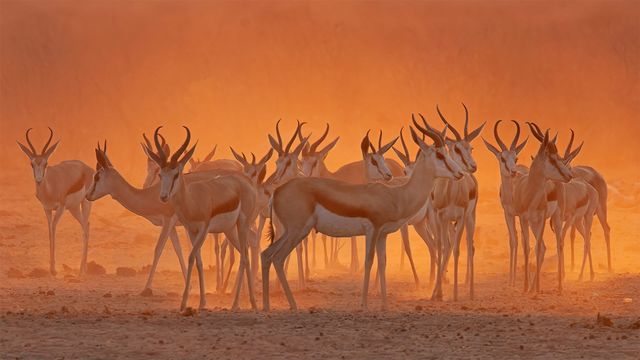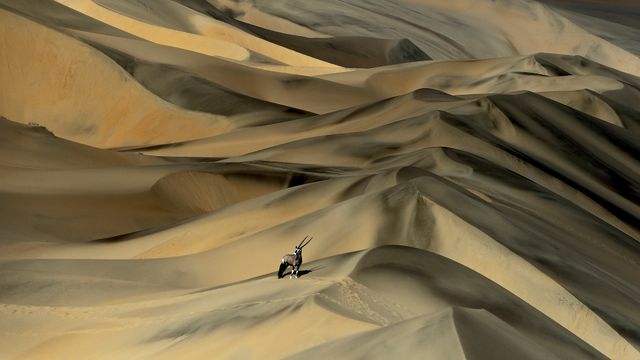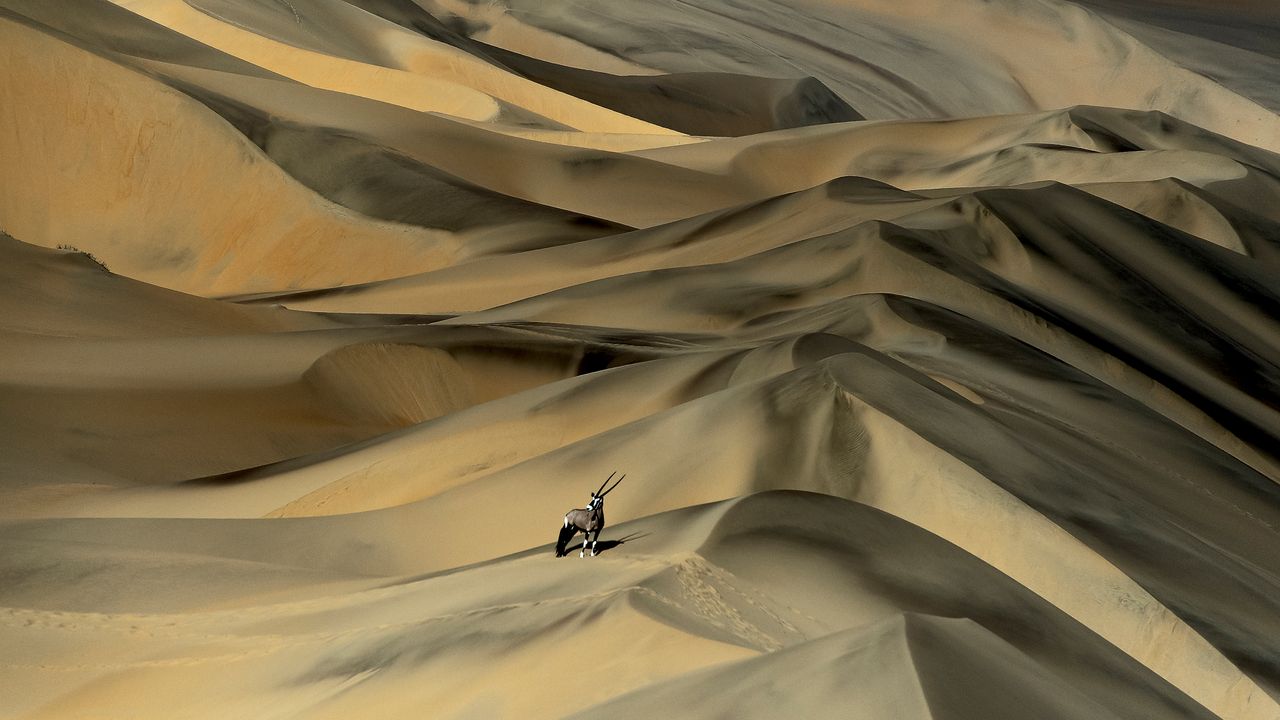
Gemsbok (Oryx gazella) in sand dunes, Namibia
© Sergey Gorshkov/Minde
Gemsbok in Namibian sand dunes
'Life, uh, finds a way.' While Dr. Malcom from 'Jurassic Park' was referring to dinosaur reproduction, his sentiment also applies to how life can be found in some of the most inhospitable places on Earth. Extremophiles are organisms that can live in extreme environments of heat, cold or other conditions seemingly beyond what life can adapt to. Think penguins and polar bears in the frigid Arctic. Camels that can survive months in a scalding desert sans a single sip of water. Microscopic ocean organisms that thrive in environments of extreme acidity, temperature and pressure.
The Namibian gemsbok, seen here likely searching for sustenance, is accustomed to living in an inhospitable environment. This creature, also known as the oryx, is native to Southern Africa's arid regions. The gemsbok does not need drinking water to live, instead finding hydration in the vegetation it grazes upon.
Related Images
 Sandstone formations in the badlands near Caineville, Utah, United States
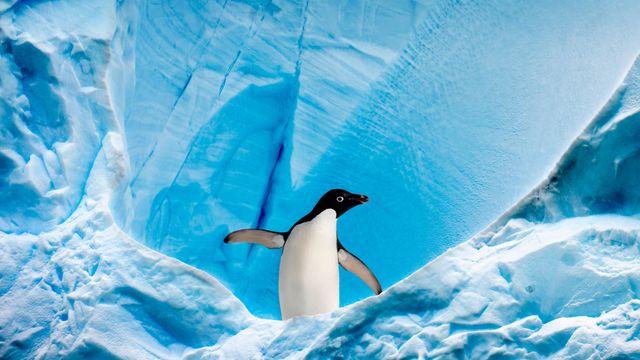 Adélie penguin, Graham Passage, Antarctic Peninsula, Antarctica
Bing Today Images