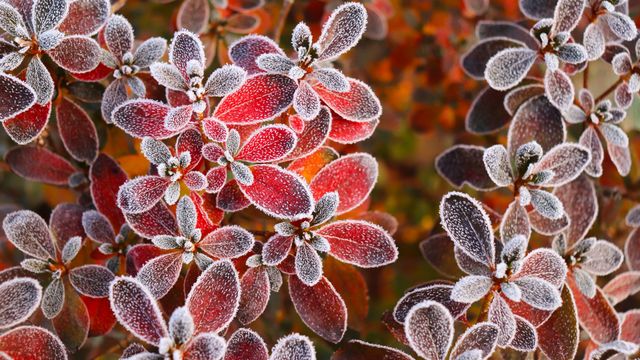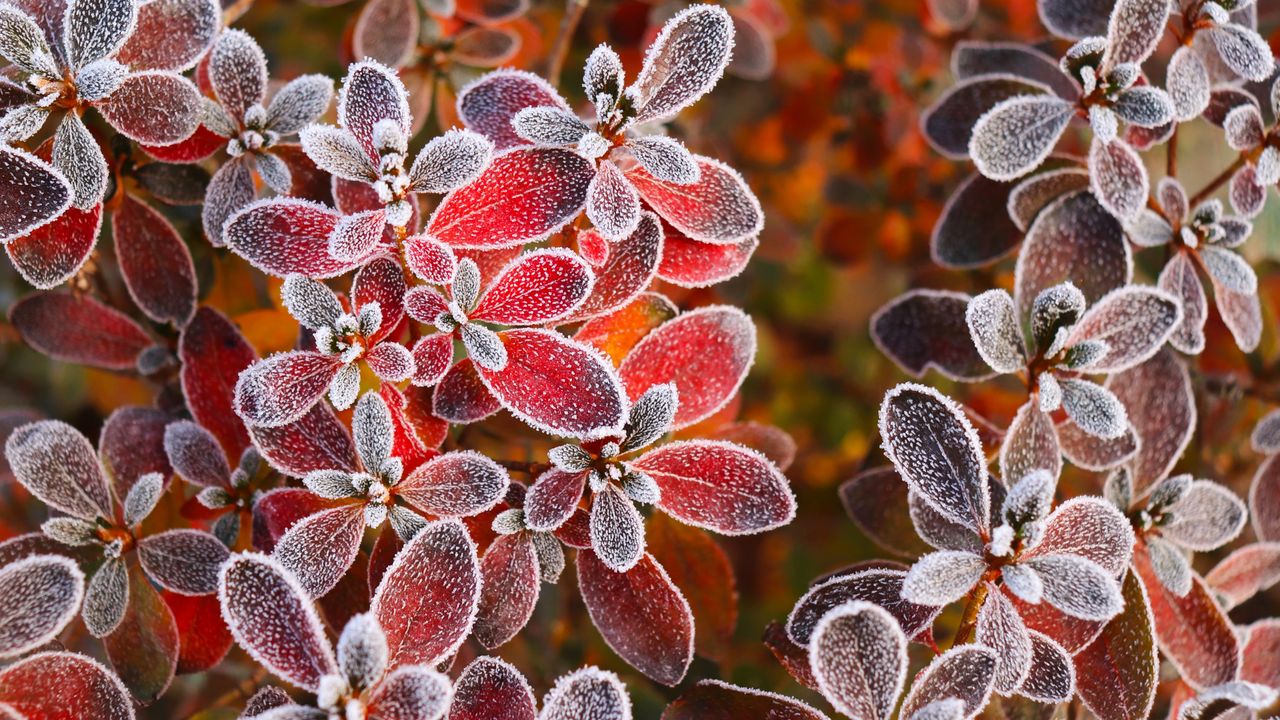
Frozen azalea with red leaves
© avoferten/Shutterstoc
Frosty foliage. Frost on azalea foliage
As fall's first frost works its way across the South, ice crystals form on the leaves of evergreen shrubs, like this azalea. Long gone are the pinks, oranges, and yellows of their spring blooms, but a new colorful display awaits, as their green leaves turn shades of red and purple. For the plants, the new pigments protect their leaves as temperatures drop, but for gardeners, they create a vibrant autumnal display, framed in white frost. When spring arrives, new growth will restore the shrub's green leaves, and the colorful cycle begins anew.
That crimson flush stems from anthocyanins, protective pigments that evergreen Rhododendron species synthesize when autumn temperatures drop below roughly 45 degrees. By absorbing excess solar radiation, these compounds shield delicate cells from photoinhibition at a time when cold slows down metabolic repair. The chemical shield keeps the foliage intact through freezing conditions, allowing the understory shrubs to resume photosynthesis during brief winter thaws.
Related Images
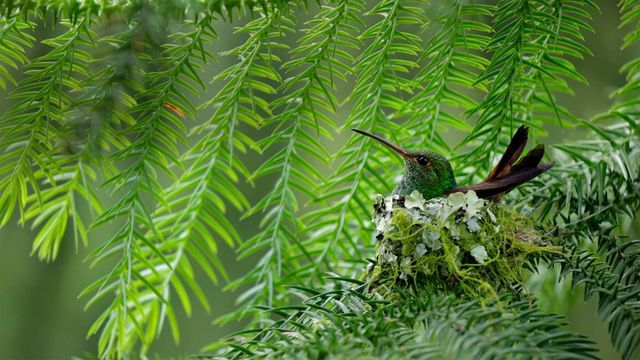 A rufous-tailed hummingbird in Costa Rica
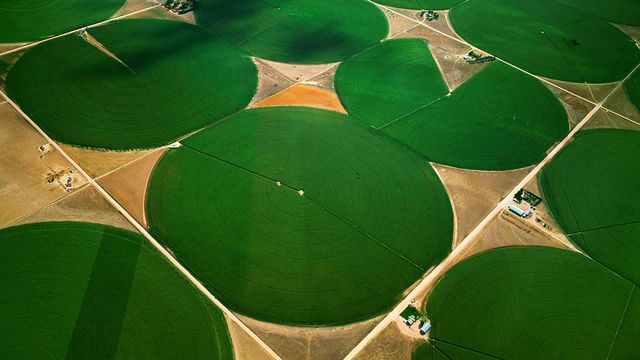 Circular agricultural fields in Morgan County, Colorado
 Leopard snoozing in a tree in Namibia for National Napping Day
 Autumn leaves and goldfish in Tokyo, Japan
 Baby hedgehog
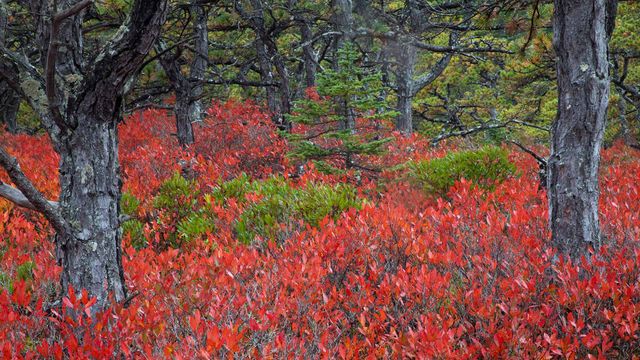 Highbush blueberry plants in Acadia National Park, Maine
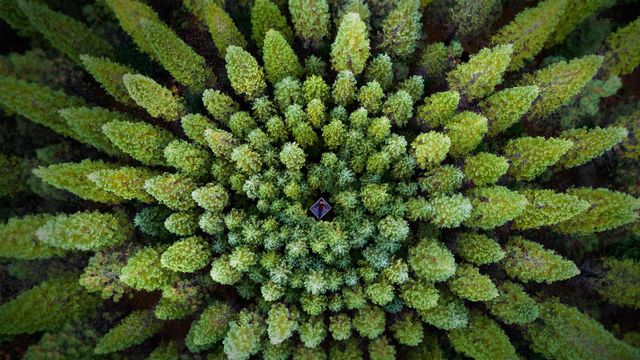 For Earth Month, a symmetrical forest known as a Nelder plot
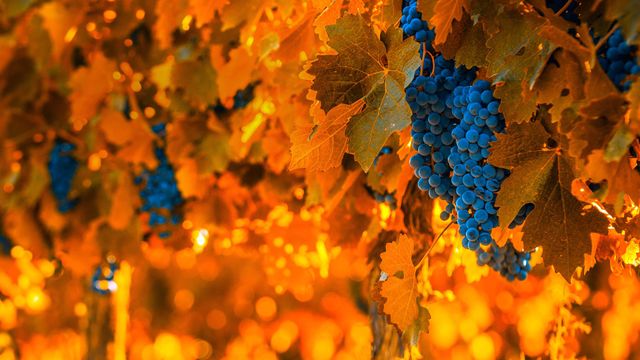 Grapes on the vine in Mendoza, Argentina, for the National Grape Harvest Festival
Bing Today Images