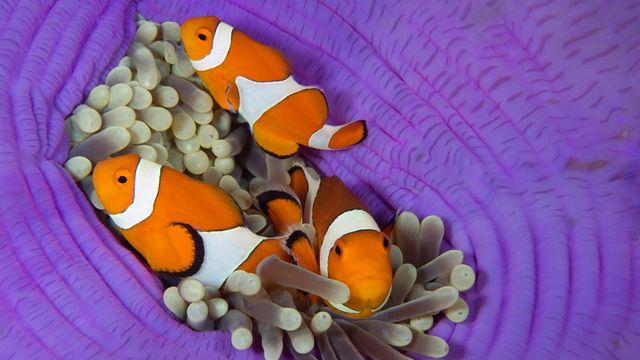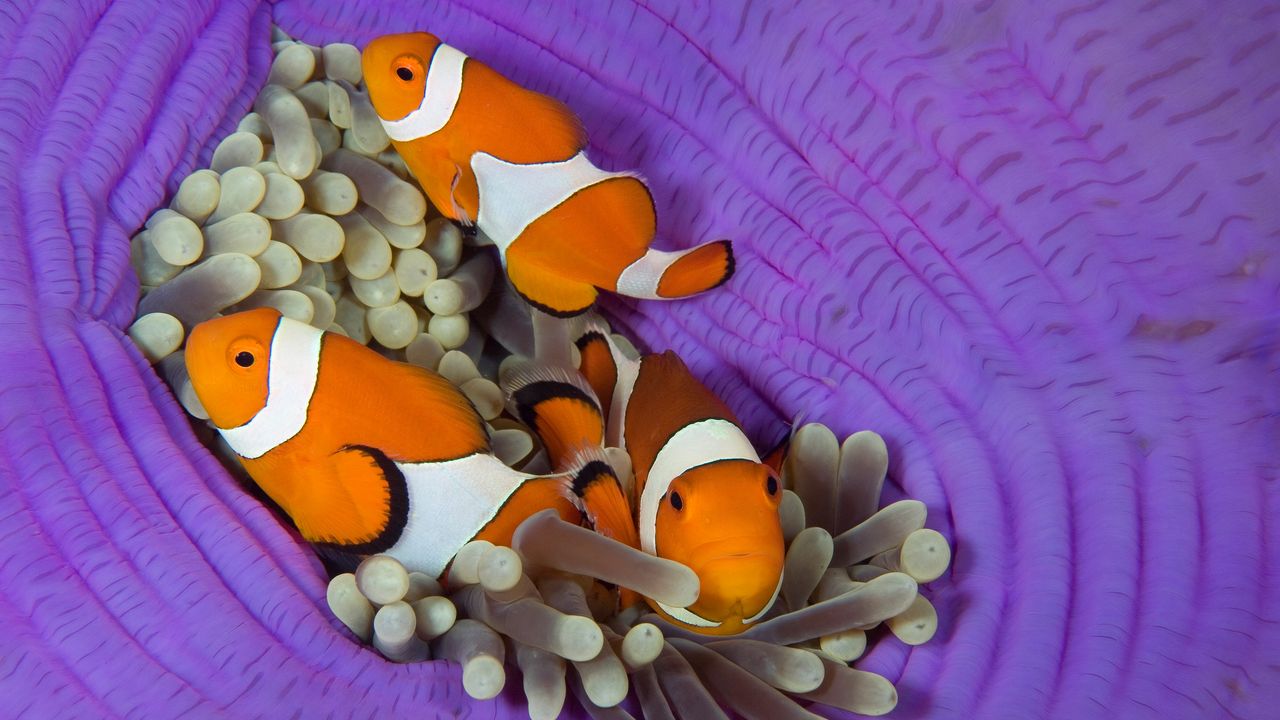
Three false clownfish in a sea anemone, Cabilao Island, Bohol, Philippines
© Franco Banfi/Nature Picture Librar
A prime 'reef' estate. False clownfish off Cabilao Island, Bohol, Philippines
Location matters. Just ask the false clownfish seen in the image at Lighthouse Reef, near Cabilao Island, Philippines. In these tropical waters packed with hungry mouths and fierce competition, they've secured prime real estate: a sea anemone armed with thousands of microscopic stinging cells.
Despite the name, there's nothing fake about the false clownfish. The label simply distinguishes it from its cousin, the 'true' clownfish, whose markings are thicker and darker. Like all clownfish, every individual begins life as a male. If the dominant female disappears, the highest-ranking male transforms into a female and takes her place, reshuffling the social order without changing neighbourhoods.
To most fish, an anemone is a living minefield. To clownfish, it's a fortress, nursery and lifelong address. A specialised mucus coating lets them slip safely among the tentacles, gaining protection while repaying their host with nutrients, cleaning and defence against intruders. Scientists call it mutualism. Around here, it looks more like the ocean's most successful roommate agreement.
Related Images
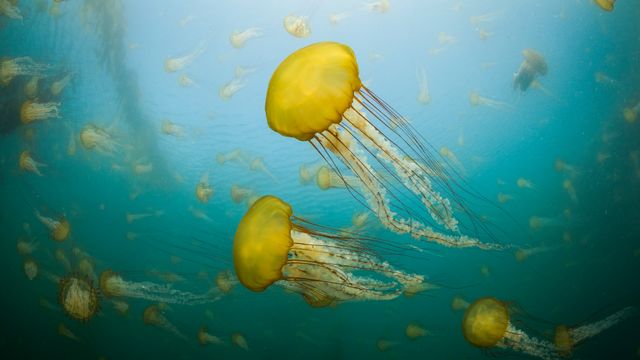 Pacific sea nettles off the coast of Carmel, California
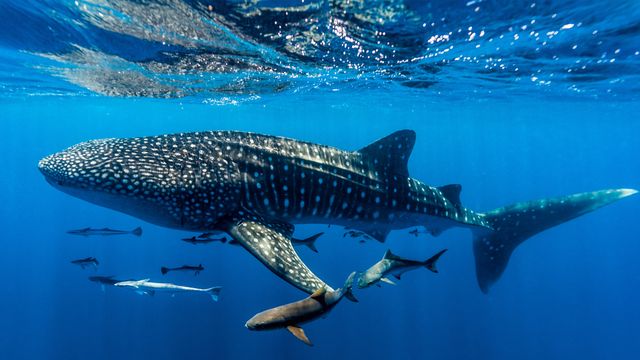 Whale shark, Ningaloo Reef, Western Australia
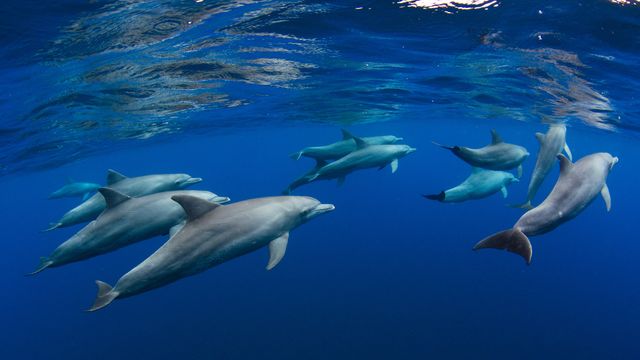 Dolphin pod near Réunion island, Indian Ocean, overseas department of France
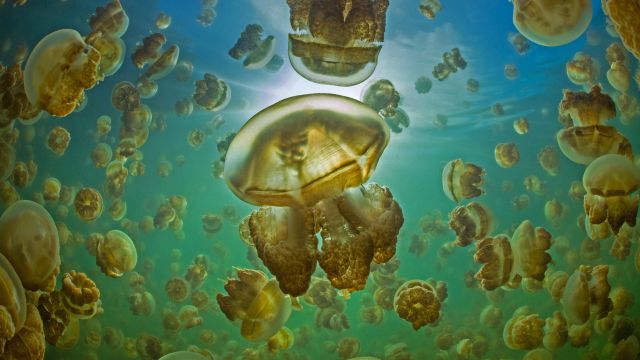 Golden jellyfish in Jellyfish Lake on the island of Eil Malk, Palau
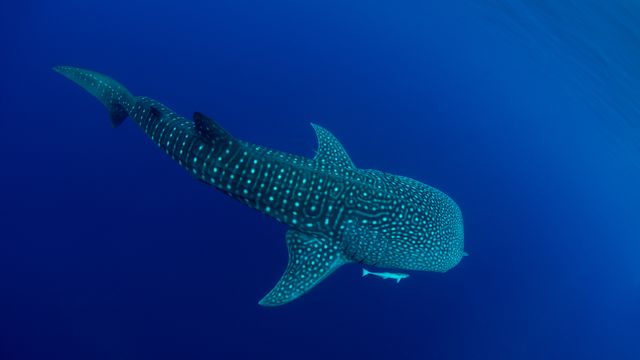 A whale shark in Cenderawasih Bay, West Papua, Indonesia
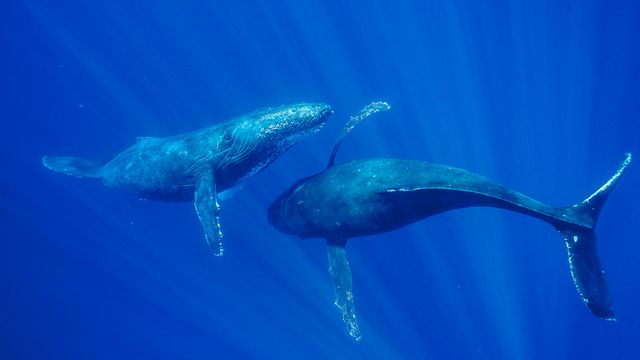 Humpback whales, Maui, Hawaii
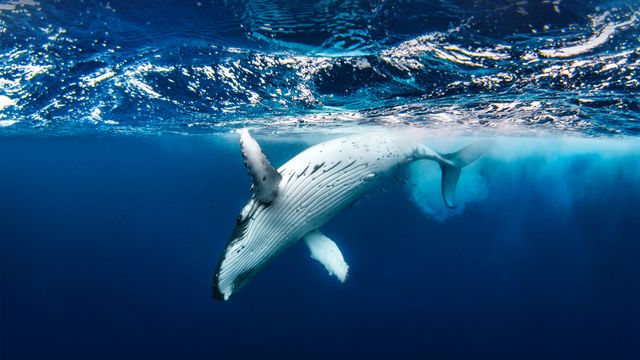 Humpback whale
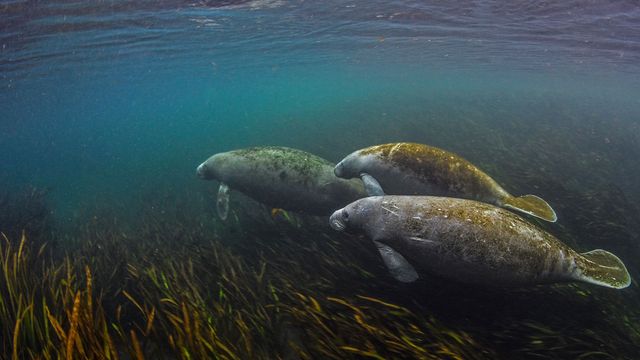 Manatees in the Ichetucknee River in Florida, USA.
Bing Today Images