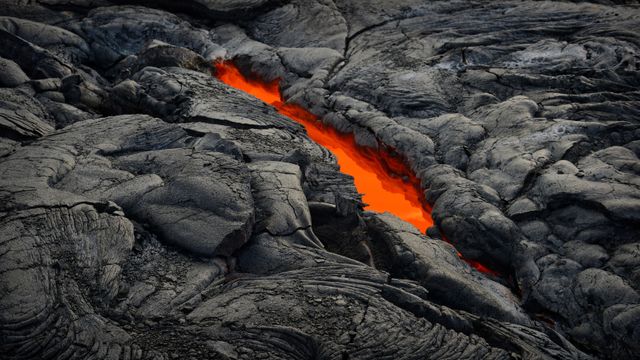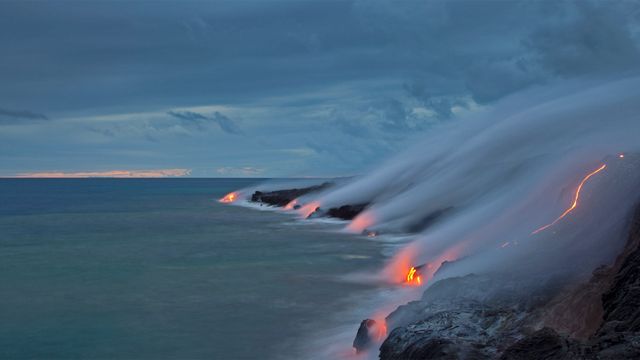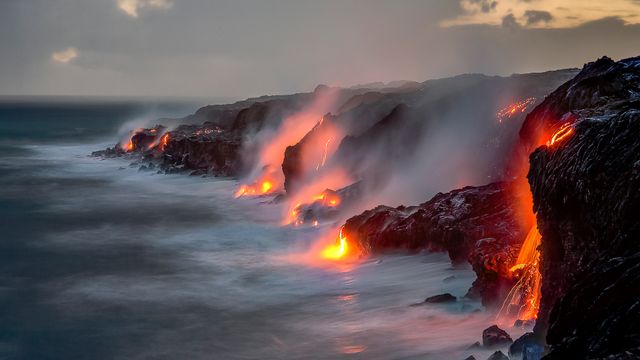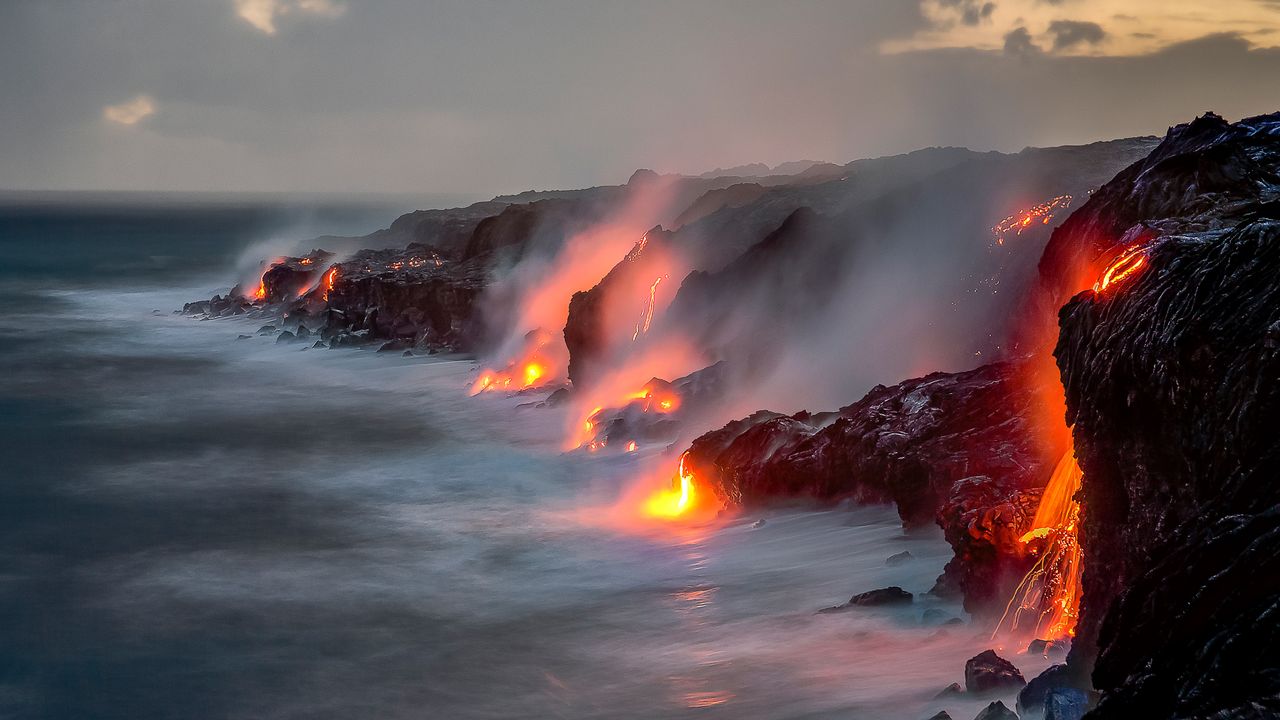
A series of lava flows spill into the ocean, Big Island, Hawaii, United States
© Ken McCurdy/Getty Image
Lava flows spill into the ocean on Big Island, Hawaii
Most landscapes change over thousands of years. Volcanoes can reshape them in a matter of hours, and on Hawaii's Big Island, they continue to do just that. Recognising the scientific and natural importance of this ever-changing environment, Hawaii Volcanoes National Park was established in 1916. For more than a century, it has protected more than 1,430 square kilometres of volcanic terrain, native forests and rare wildlife.
The national park is named after its two volcanoes—Kīlauea and Mauna Loa. Kīlauea is one of the world's most active volcanoes, and during some eruptions, its lava flows downhill to the Pacific Ocean, where it cools into new rock. Mauna Loa, the world's largest active volcano by volume, has erupted 34 times since its first well-documented eruption in 1843. The park is also home to species such as the nēnē, Hawaii's state bird, and the endangered Hawaiian petrel. Shaped by fire and time, the park continues to protect a landscape that never stands still.
Related Images
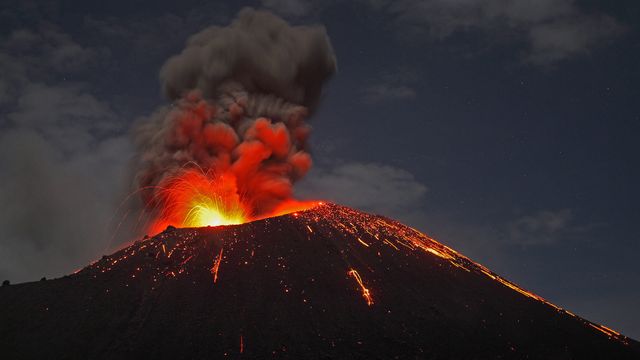 Anak Krakatoa volcano erupting off the coast of Sumatra, Indonesia
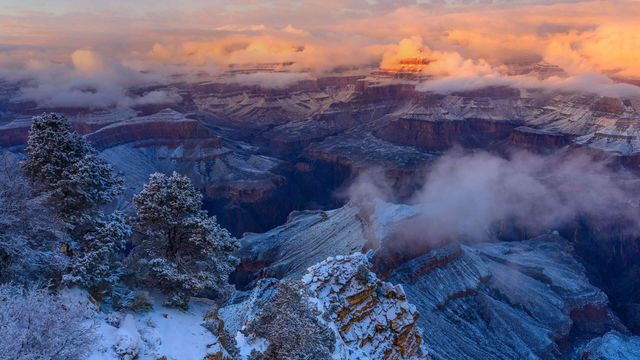 Winter at the Isis Temple in Grand Canyon National Park, Arizona
Bing Today Images