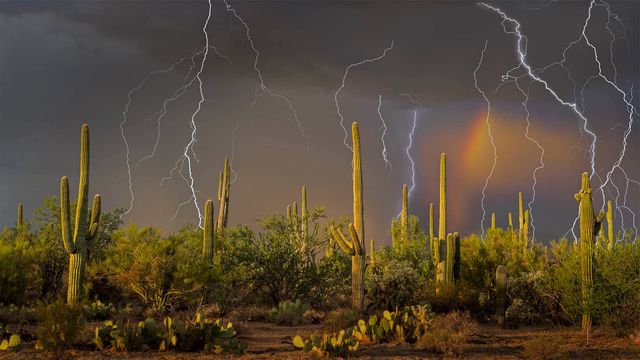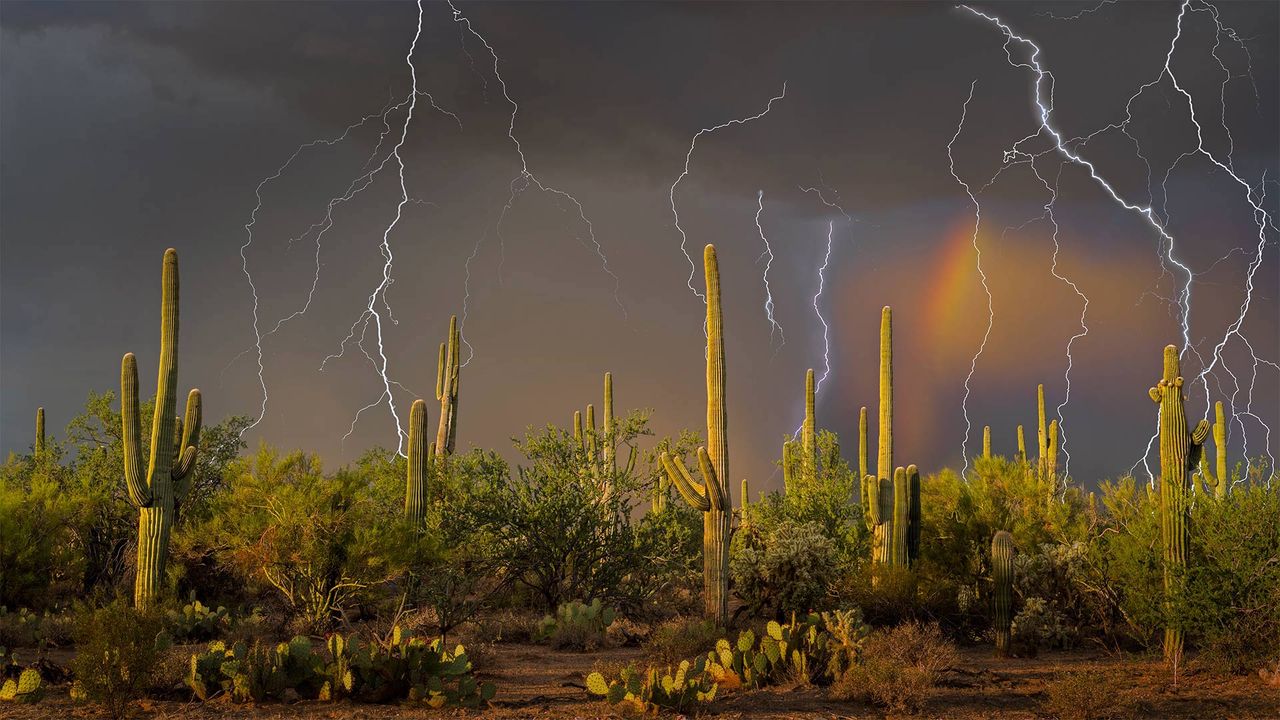
Lightning storm in the Tortolita Mountain foothills, north of Tucson, Arizona, USA
© Jack Dykinga/Minden Picture
The monsoon arrives in the desert
Lightning strikes are common during the summer monsoon of the American Southwest. In Arizona and New Mexico, powerful thunderstorms roll in most every afternoon from early July until mid-September. Here, in the Sonoran Desert north of Tucson, Arizona, the severe weather over the saguaro cactus makes for a dramatic scene.
The monsoon - which refers to the entire season and not just a single storm - is caused by intense daytime heat, which drives shifts in wind patterns that bring moist air to the generally arid Southwest. Mornings typically begin fair, but as temperatures rise throughout the day, precipitation gathers into clouds that finally burst in periods of heavy rain during the late afternoon and evening. The monsoon storms also bring huge dust storms called ‘haboobs’, borrowing the name from similar storms in Sudan.
In Arizona, the monsoon can account for nearly half the state’s annual rainfall, which averages little more than 17 centimetres. Water is precious in the desert, and the region relies on this weather pattern to fill reservoirs and maintain the fragile ecosystem. While dry lightning early in the season can spark wildfires, as the monsoon rain starts to fall, it helps reduce local fire danger.
Related Images
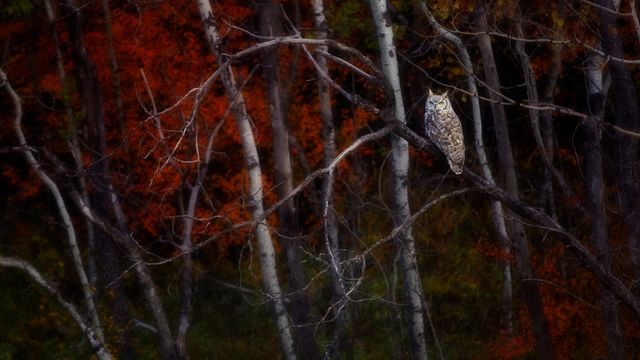 Great Horned Owl sitting on an Aspen tree, Alberta
 Blue quandongs and colourful leaves on subtropical rainforest floor, Currumbin Creek Valley
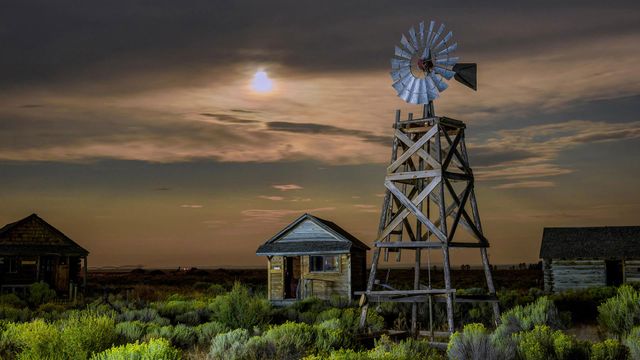 Fort Rock Valley Historical Homestead Museum, Oregon
 Fireworks during La Merce Festival in Barcelona, Spain
 Fireworks for New Year's Eve in Backnang, Germany
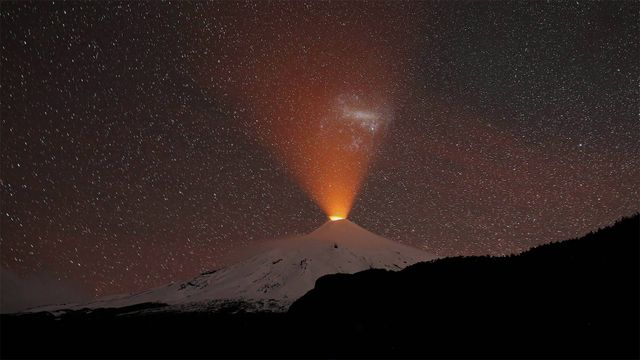 The Villarrica volcano in Chile on September 2, 2018
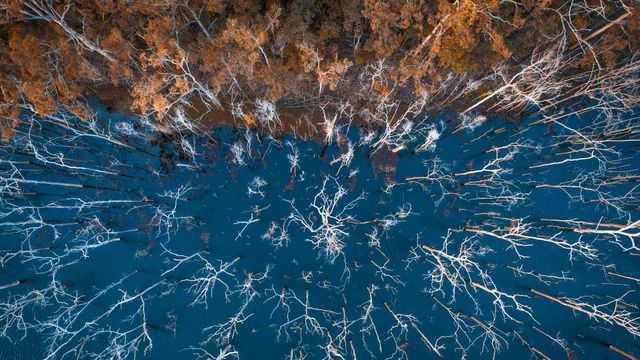 Advancetown lake and forest, Gold Coast, Queensland, Australia
 Hardee County Fair in Wauchula, FL
Bing Today Images