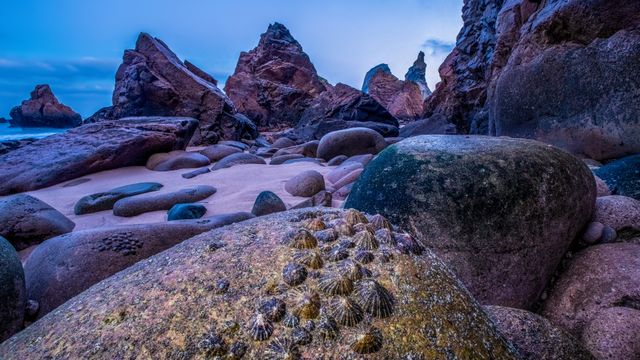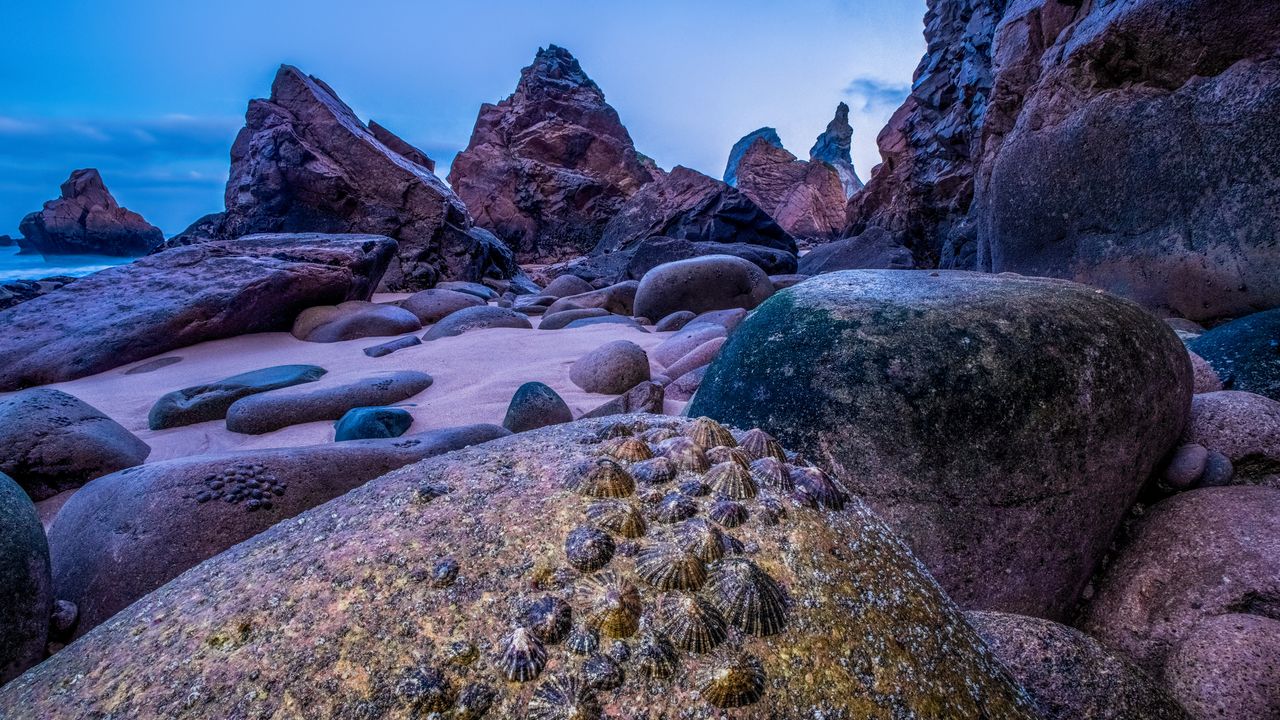
Limpets exposed at low tide on the coast of Praia da Ursa, Portugal
© Theo Bosboom/Nature Picture Librar
Quiet strength. Limpets at low tide on the coast of Praia da Ursa, Portugal
Tucked away beneath steep cliffs near Cabo da Roca, the westernmost point of mainland Europe, Praia da Ursa feels like the edge of the continent. Reached by a narrow, rugged trail, this secluded beach along Portugal's Atlantic coast is shaped largely by wind, stone, and powerful waves. When the tide recedes, the shoreline briefly widens. Smooth rocks emerge, and with them, small signs of life. Limpets cling tightly to the exposed stone, holding fast where the ocean usually breaks.
These modest marine snails are well adapted to conditions here, using strong suction and low shells to withstand surf, shifting temperatures, and long periods exposed to air. During high tide or when submerged, they graze on algae, then return to familiar spots as the sea recedes. Praia da Ursa's isolation makes these moments easy to miss and rewarding to notice. In a landscape defined by scale and force, even the smallest survivors reflect the Atlantic coast's quiet resilience.
Related Images
 Mission church ruins at Quarai, Salinas Pueblo Missions National Monument, New Mexico
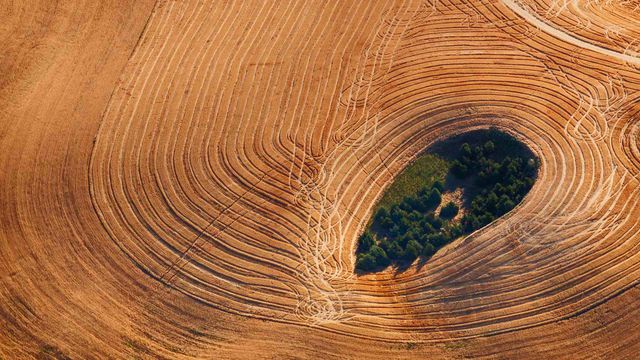 Farmland in Washington state's Palouse region
 Depiction of deities from the Tomb of Tutankhamun at the Egyptian Museum, Cairo, Egypt
 Reliefs in the ancient Persian city of Persepolis, Iran
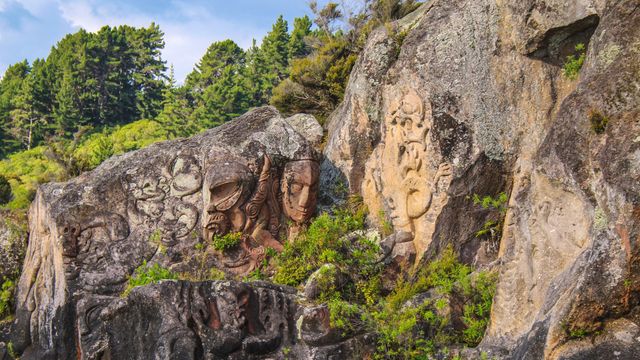 Ngātoroirangi Mine Bay Māori Rock Carvings on Lake Taupō, New Zealand
 A carving of artist W.O.J. Nieuwenkamp in the Pura Meduwe Karang temple in Bali, Indonesia
 Sunrise on the Brocken, Harz National Park, Germany
Bing Today Images