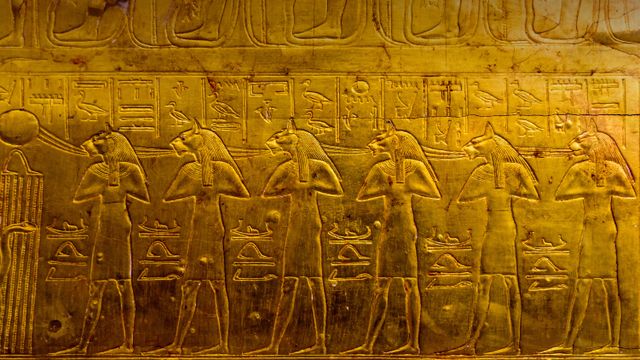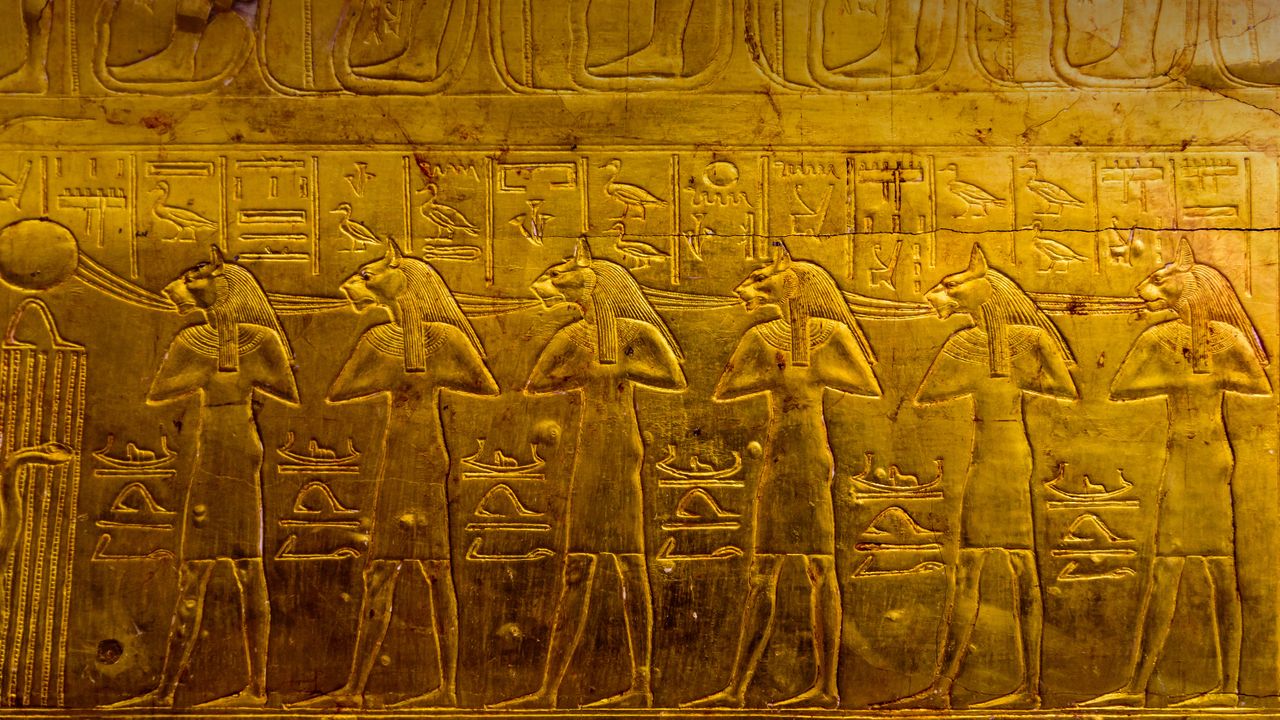
Depiction of deities from the Tomb of Tutankhamun at the Egyptian Museum, Cairo, Egypt
© Stefan Lippmann/Universal Images Group via Getty Image
Tomb of the Golden Pharaoh. A century since Tut's tomb was discovered
A hundred years ago today, British archaeologist and Egyptologist Howard Carter discovered the sarcophagus of Tutankhamun, better known as King Tut, in Egypt's Valley of the Kings. Though they first uncovered the tomb of the 'boy king' on November 4, 1922, Carter and crew took years to excavate the burial site. What they found astonished the world. It was loaded with more than 5,000 artifacts, including a solid gold coffin, face mask, thrones, archery bows, trumpets, a lotus chalice, furniture, food, wine, sandals, gold caps to protect Tut's toes, and fresh linen underwear. Because you should always bring clean undies, even when you're crossing into the realm of the dead.
Though Tut is considered a minor pharaoh by historians, the discovery of his tomb was one of the most significant in the history of archaeology. The burial site was remarkably well preserved—unlike many neighboring tombs, it was untouched by grave robbers, thanks to debris covering the entrance for most of the tomb's existence. In the 1960s, Egypt allowed the treasures of King Tut to leave the country for display, and the exhibit has traveled the world numerous times. Today, King Tut's death mask and sarcophagus are displayed here at the Egyptian Museum in Cairo.
Related Images
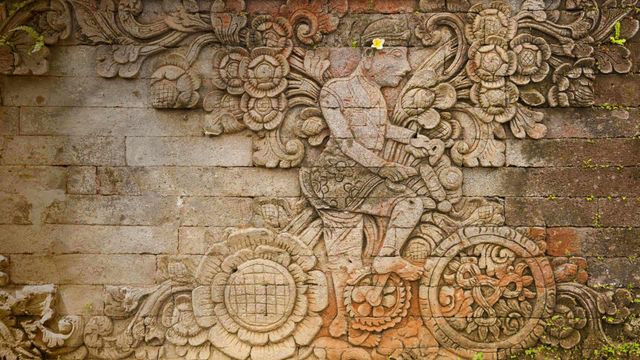 A carving of artist W.O.J. Nieuwenkamp in the Pura Meduwe Karang temple in Bali, Indonesia
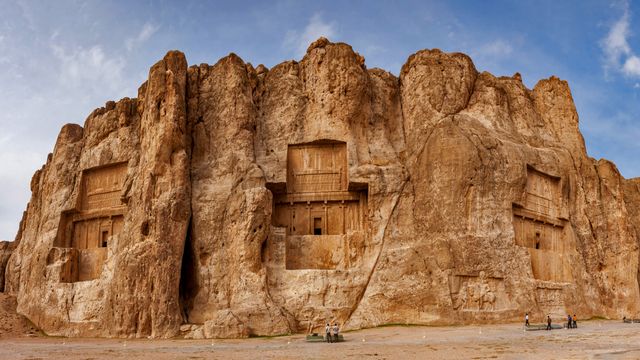 Naqsh-e Rostam archaeological site near Persepolis, Iran
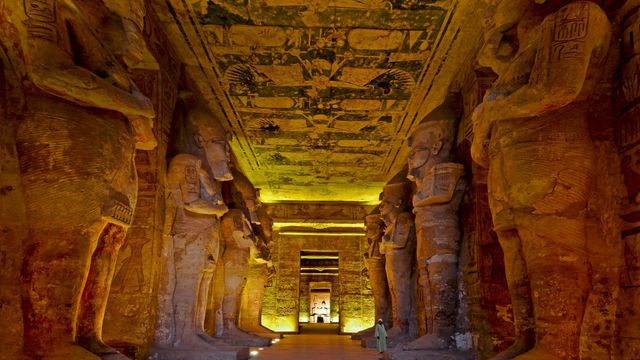 The interior of the Great Temple of Ramesses II, Abu Simbel, Egypt
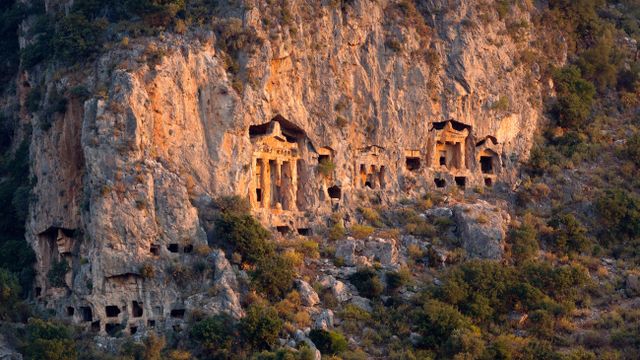 Ancient rock tombs carved into the cliff near Dalyan, Turkey
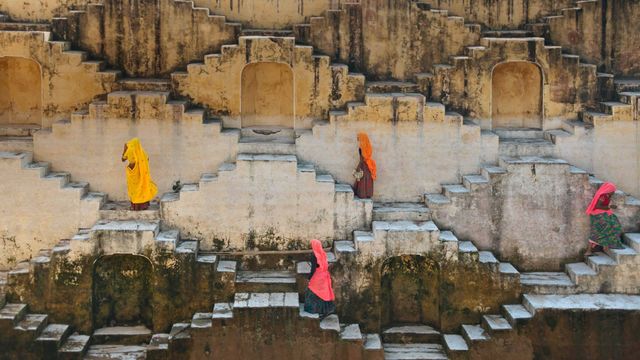 Women climbing a stepwell near Amber Fort in Jaipur, Rajasthan, India
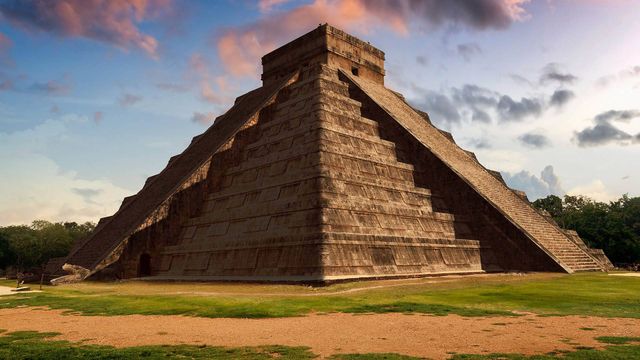 Equinox at the Temple of Kukulcan in Chichen Itza, Mexico
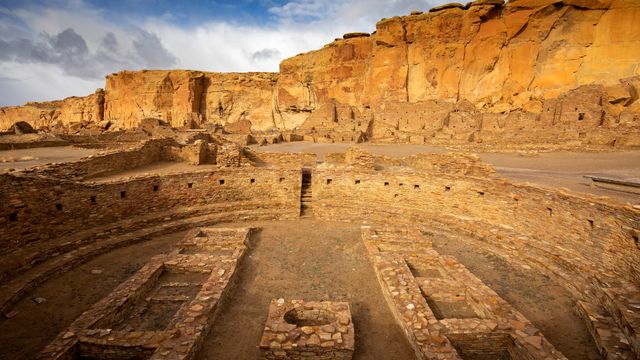 Pueblo Bonito, Chaco Culture National Historical Park, New Mexico
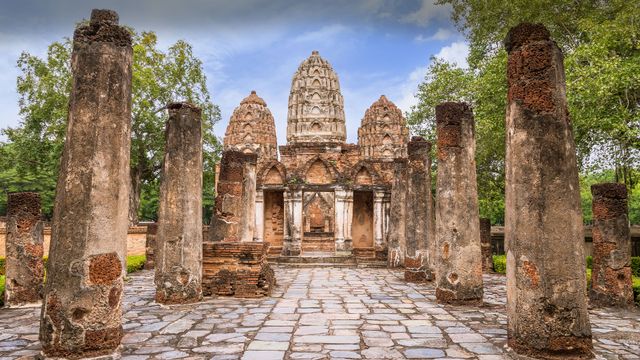 Wat Sri Sawai in Sukhothai Historical Park, Thailand
Bing Today Images