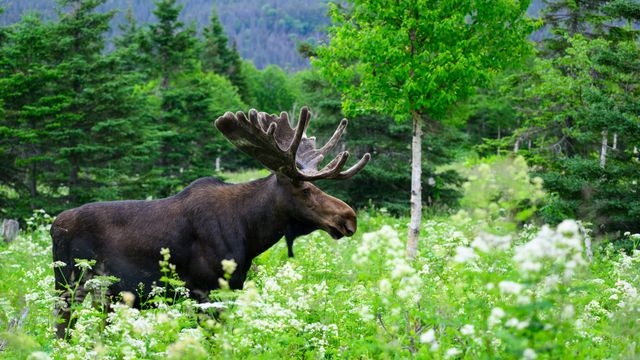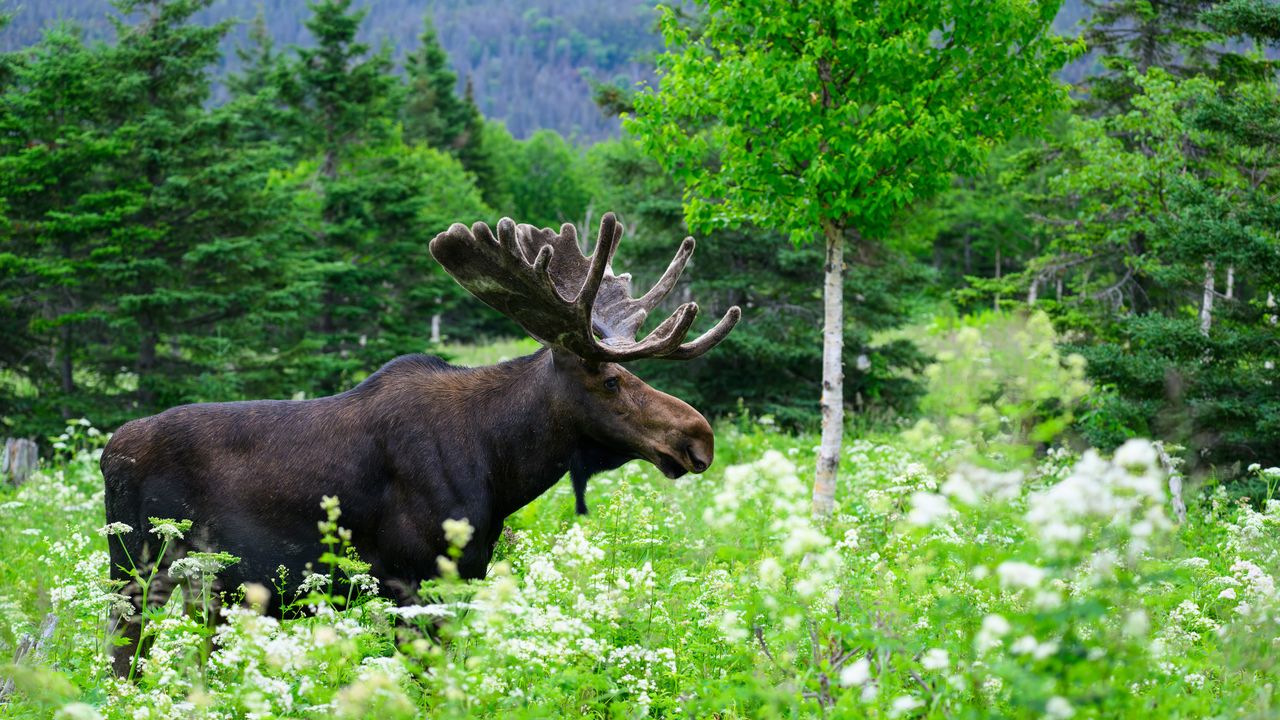
A majestic bull moose foraging through the green undergrowth, Quebec
© pchoui/Getty Image
In step with the forest. A bull moose foraging through the green undergrowth, Quebec
Not one to hurry, a bull moose moves with steady purpose—and for good reason. As part of the North American moose population native to Canada, these animals are well adapted to long winters and short growing seasons. Their diet shifts with availability: in summer, they browse fresh leaves, shrubs and aquatic plants; in winter, they rely more on woody material like twigs and bark.
Bulls are typically alone, except during the autumn breeding season, when they seek out females and may engage in antler-to-antler clashes with rivals. Those antlers are among the fastest-growing tissues in the animal kingdom. Shed each winter, they begin growing again in spring—helping conserve energy when food is scarce. Females give birth to one or two calves in May or June. While adult moose have few natural predators, they are increasingly affected by climate-driven changes, especially rising tick infestations, as well as habitat loss and road traffic across their range.
Related Images
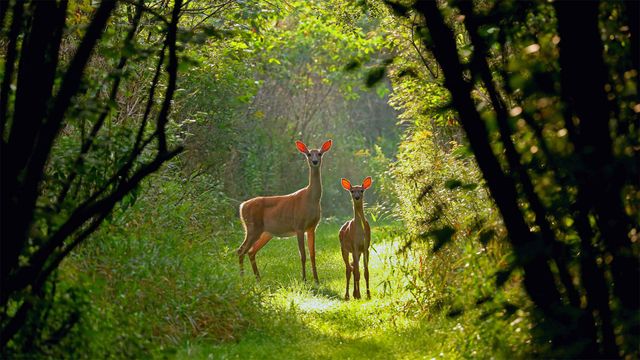 White-tailed doe and fawn in Wisconsin
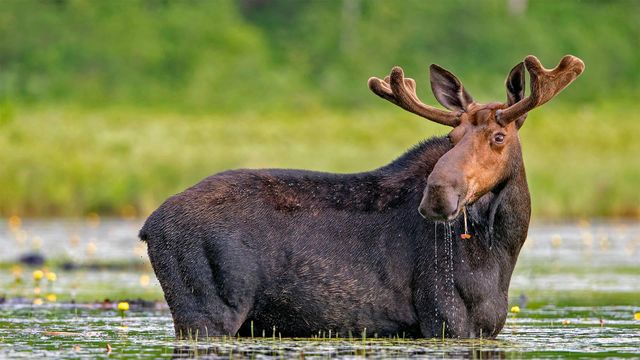 Moose snacking on water lilies in Millinocket, Maine
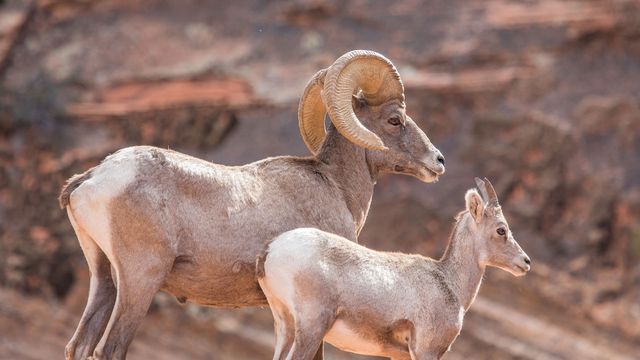 A father and a calf Ibex looking into the distance in Utah
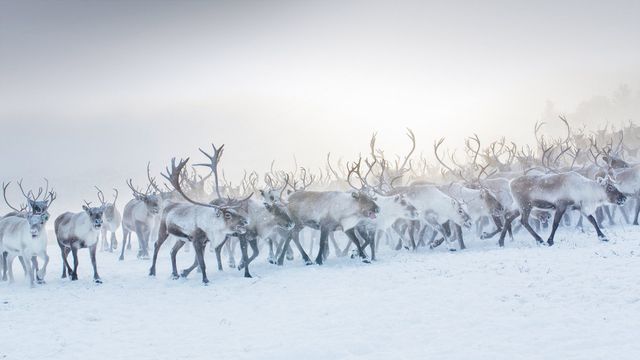 A herd of reindeer in Norway
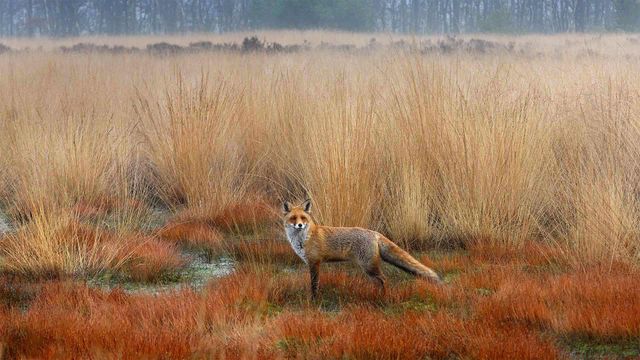 Red fox in the Netherlands
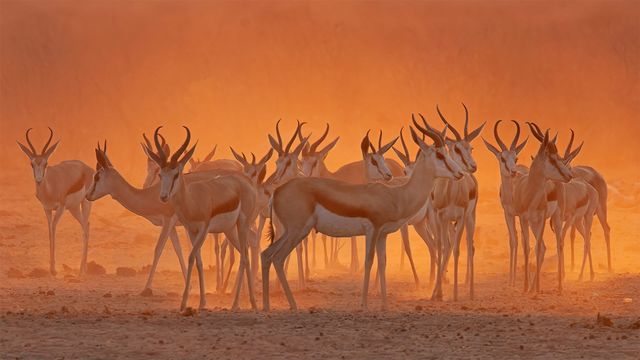 Springboks near a waterhole in Etosha National Park, Namibia
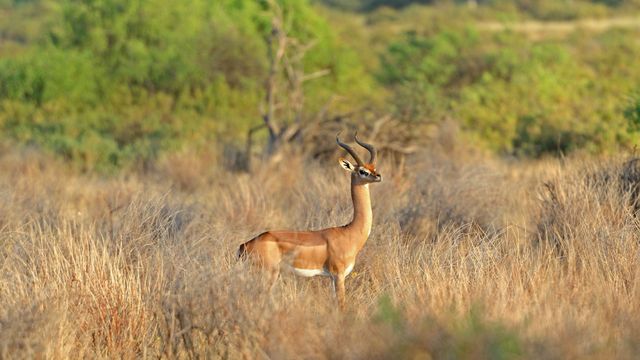 Gerenuk in Tsavo National Park, Kenya
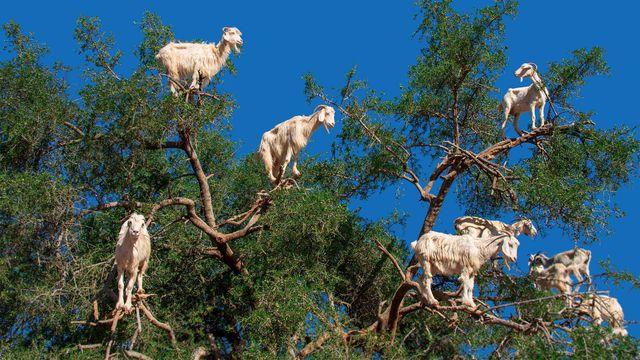 Goats in an argan tree near Essaouira, Morocco
Bing Today Images