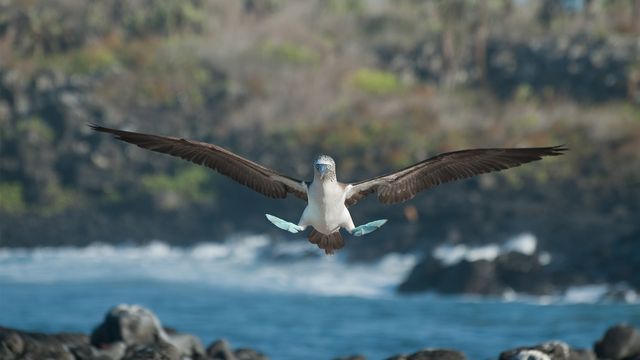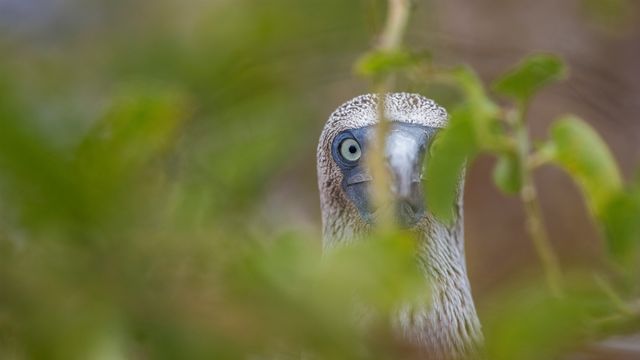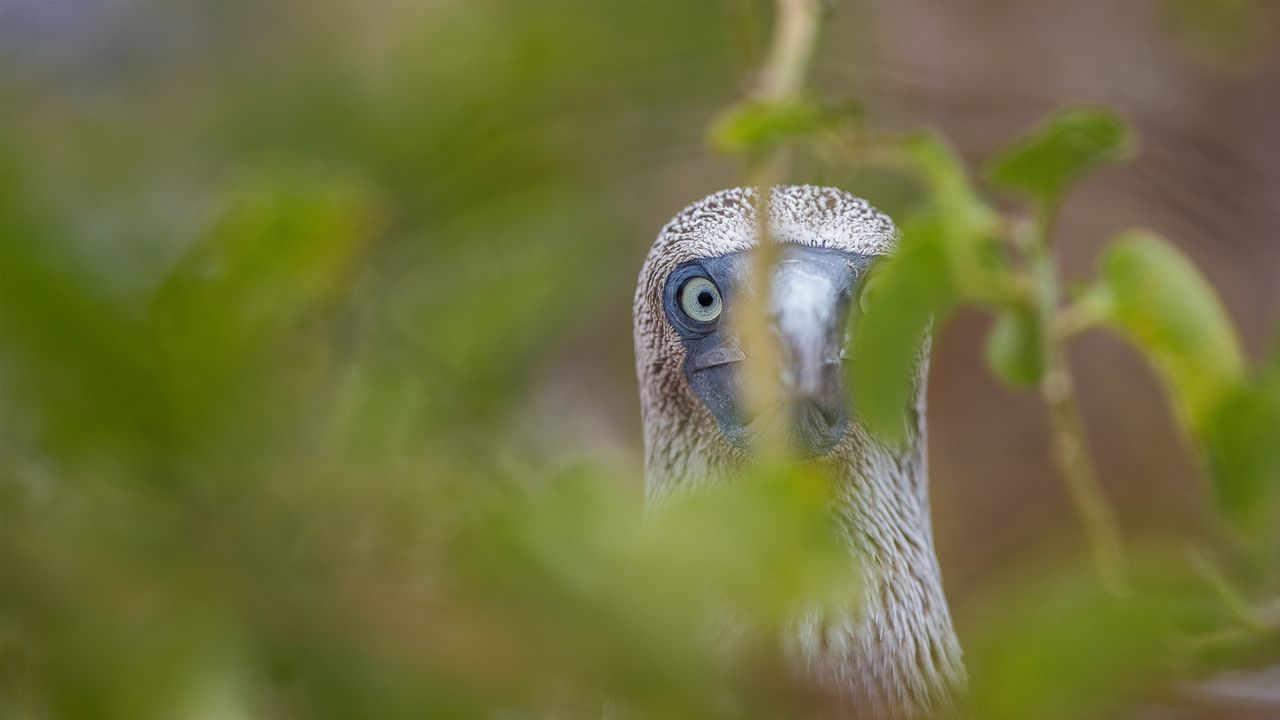
Blue-footed booby, Galápagos Islands, Ecuador
© Karine Aigner/TANDEM Stills + Motio
Evolution in focus. Darwin Day
Darwin Day marks more than a birthday—it marks a shift in thinking. Charles Darwin's observations connected variation, the survival of individuals best suited to their environment, and inheritance in ways science still builds on. His legacy rests on years of studying variation—finches, fossils, barnacles—and recognising patterns others had overlooked. When 'On the Origin of Species' was published in 1859, it offered a framework explaining how species evolve through natural selection.
One of the most recognisable animals tied to Darwin's work is the blue-footed booby, seen in today's image. Widely associated with the Galápagos Islands, these seabirds range across the eastern tropical Pacific. They are known for their bright blue feet, a trait shaped by both diet and sexual selection. The colour comes from carotenoid pigments obtained through fish such as sardines and anchovies. In both male and female, brighter feet signal better health and a stronger immune system. Males display their feet prominently during courtship, while females with more vivid pigmentation tend to produce healthier offspring. These birds hunt by diving straight into the water at high speed, using sharp eyesight to target schooling fish. Boobies stand as a reminder that evolution isn't a closed chapter—it's an ongoing process.
Related Images
 A group of curious Emperor penguins in Antarctica
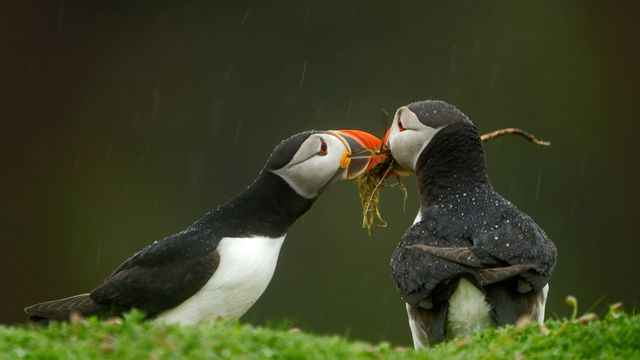 Male Atlantic puffin gives his mate nesting material, Skomer Island, Wales
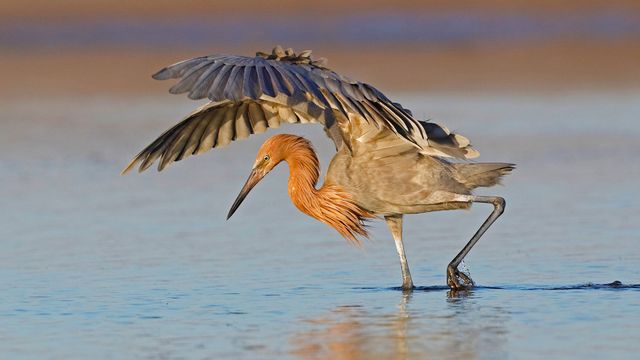 A reddish egret hunts in Fort De Soto Park, Florida
 Twin polar bear cubs asleep in a snow den in Wapusk National Park, Manitoba
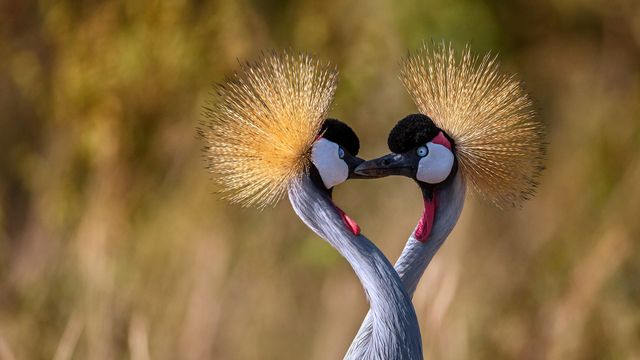 Grey-crowned cranes forming a heart shape
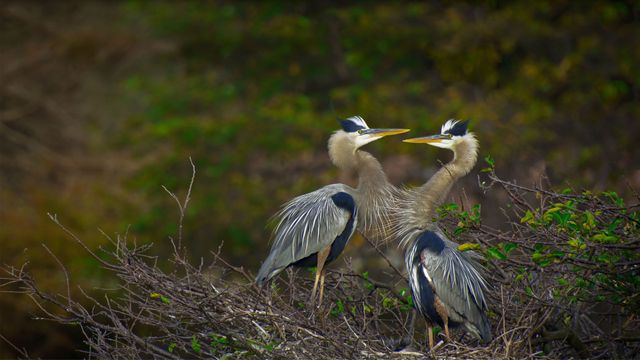 Great blue herons in the Wakodahatchee Wetlands, Delray Beach, Florida
 Trumpeter swans at Kelly Warm Springs, near Kelly, Wyoming
 Southern rockhopper penguins on the Falkland Islands
Bing Today Images