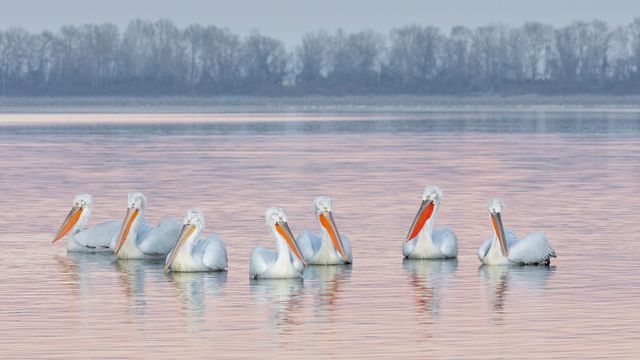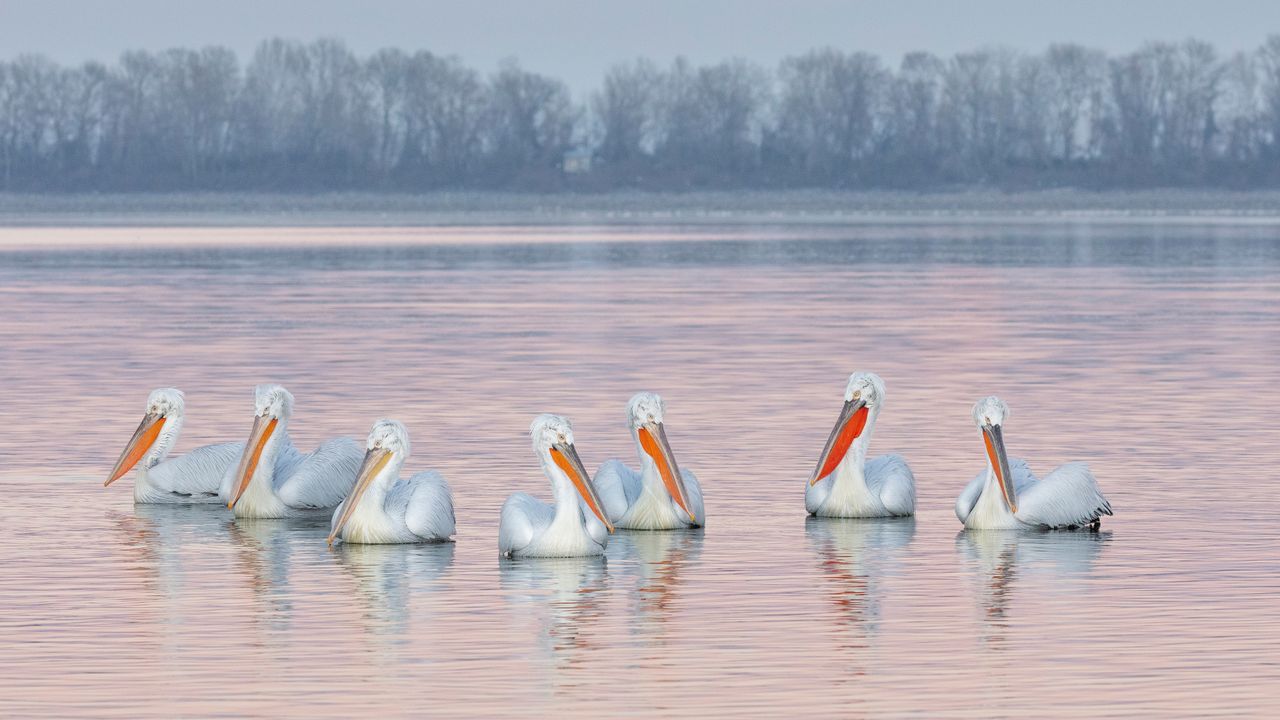
Dalmatian pelicans, Lake Kerkini, Greece
© Guy Edwardes/naturepl.co
Feather forecast: pelicans ahead. Dalmatian pelicans, Lake Kerkini, Greece
Winter at Lake Kerkini in Greece delivers some of Europe's clearest views of Dalmatian pelicans. Their large silhouettes move in tight, steady groups across the still water, making their scale hard to miss. With wingspans stretching over 10 feet, they rank among the world's largest flying birds. Lake Kerkini's predictable winter conditions offer reliable, close-range views of their size, grace, and coordinated movement.
As the season advances, the pelicans begin shifting into breeding appearance. Their throat pouches turn a bright orange-red, standing out sharply against pale winter plumage. Regular gatherings at Lake Kerkini allow these changes to be observed week by week, revealing feeding habits, social interactions, and the physical changes that signal the start of the breeding season. The open landscape keeps attention fixed on the birds and their daily routines without distraction.
Despite their strong winter presence, Dalmatian pelicans remain classified as near threatened. Habitat loss, disturbance, and collisions with power lines continue to slow recovery. Protected wetlands like Lake Kerkini are essential for maintaining stable breeding groups and supporting long-term conservation.
Related Images
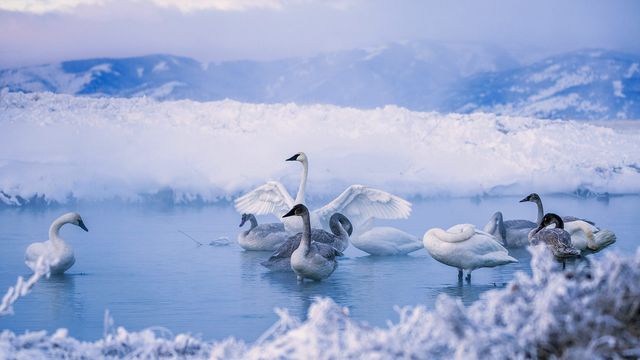 Trumpeter swans at Kelly Warm Springs, near Kelly, Wyoming
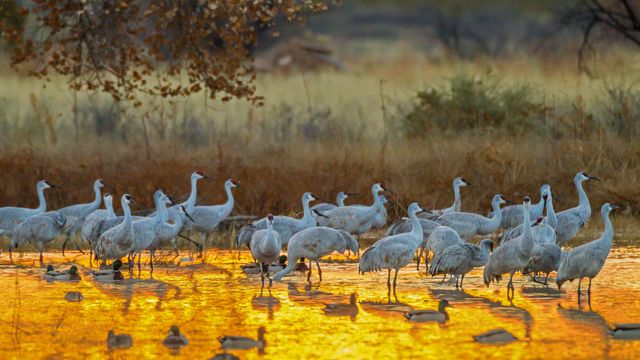 Sandhill cranes and mallard ducks, Bosque del Apache National Wildlife Refuge, New Mexico
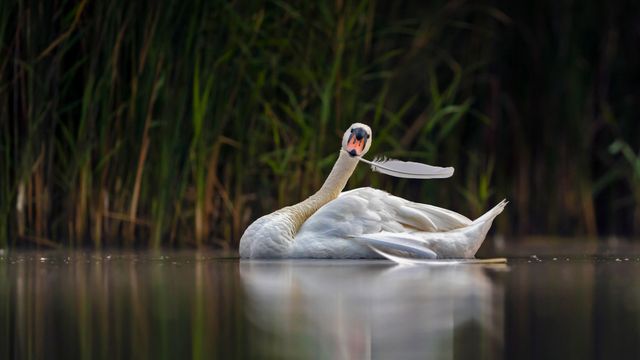 Mute swan in Valkenhorst Nature Reserve, near Valkenswaard, the Netherlands
 Male king eider ducks swimming in Troms og Finnmark, Norway
 Mute swan chicks shelter under mom's tail feathers, Massapequa Preserve, Long Island, New York
 Male Atlantic puffin gives his mate nesting material, Skomer Island, Wales
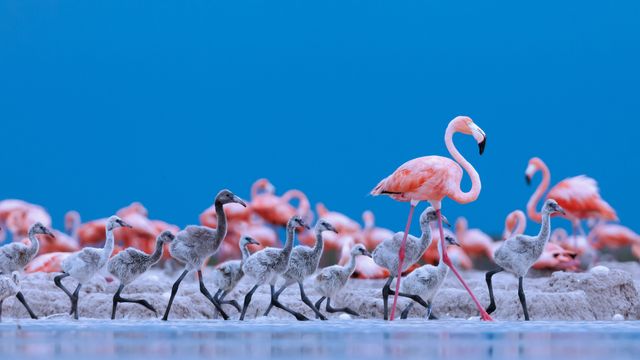 Caribbean flamingos, Ría Lagartos Biosphere Reserve, Yucatán Peninsula, Mexico
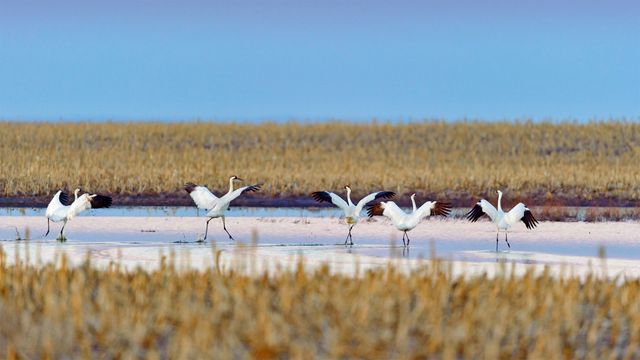 Whooping cranes taking off during spring migration in South Dakota
Bing Today Images