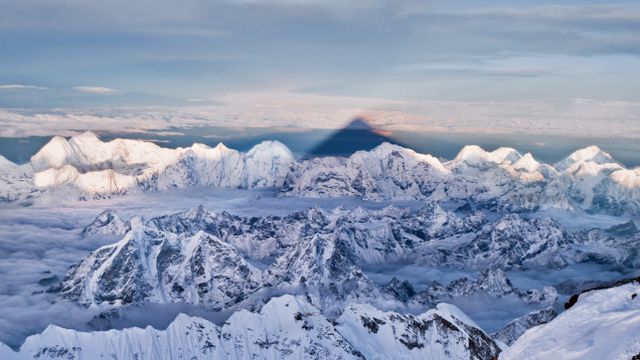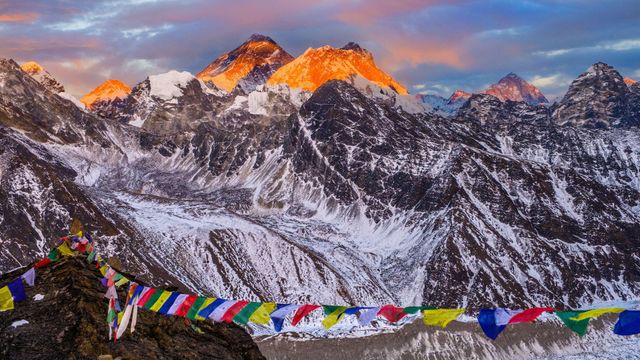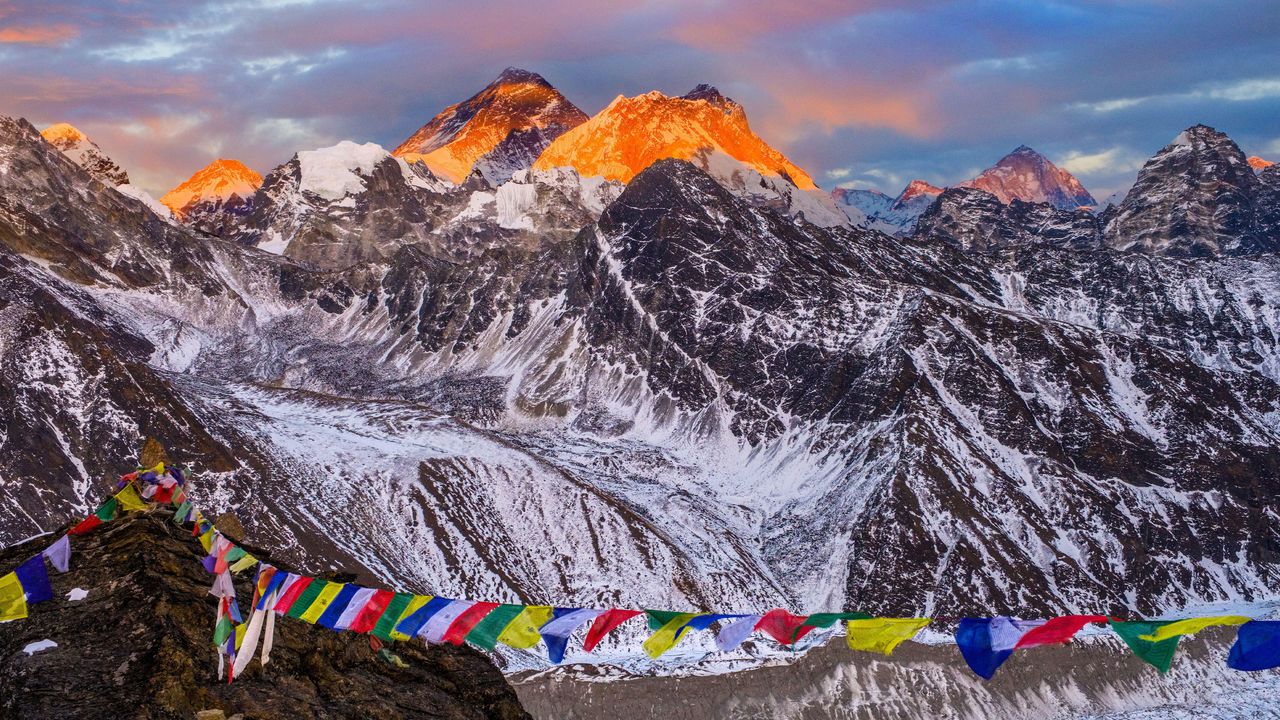
The summit of Mount Everest at sunset, seen from Renjo La, Nepal
© shoults/Alam
The summit of Mount Everest at sunset, seen from Renjo La, Nepal
From the rolling Alps to the towering Himalayas, mountains cover nearly a quarter of Earth's land and host 15% of the world's population and nearly half of its biodiversity hotspots. On the crest of the Great Himalayas of southern Asia, along the border between Nepal and Tibet, stands Mount Everest. At over 8,800 metres, it is the world's highest peak and a symbol of human aspiration and natural beauty. In 1953, Sir Edmund Hillary of New Zealand and Tenzing Norgay, a Nepali Sherpa climber, were the first to successfully reach its summit, marking a historic achievement in exploration. Its glaciers feed rivers sustaining millions, showing that mountains are more than scenery—they are lifelines.
However, these glaciers are melting rapidly due to rising global temperatures. This threatens agriculture, water security, energy production and the livelihoods of billions. Retreating glaciers and thawing permafrost also heighten hazards like floods, landslides and erosion, putting communities and infrastructure at risk. Mountains and glaciers are vital ecosystems that sustain life, influence climate and support biodiversity. Whether marvelling at Everest or hiking a local ridge, we are reminded to reconnect with these majestic landscapes and protect the essential resources they provide.
Related Images
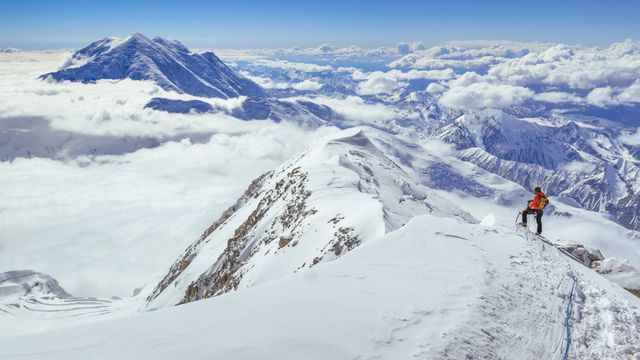 Mount Foraker viewed from Denali, Denali National Park, Alaska, USA
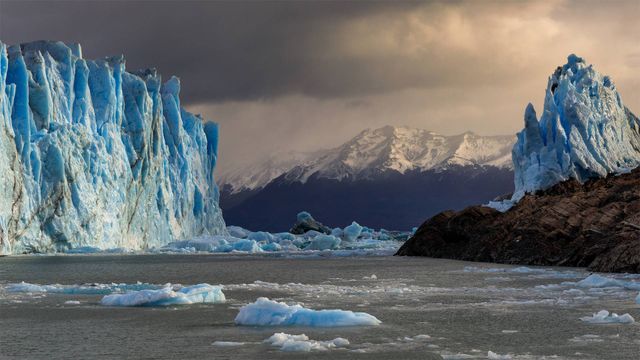 Perito Moreno Glacier in Patagonia's Los Glaciares National Park, Argentina
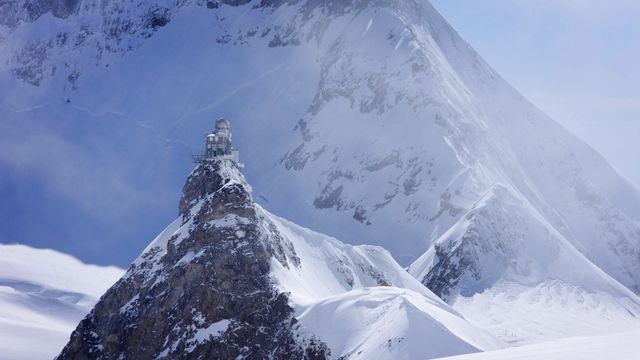 Sphinx Observatory in Switzerland
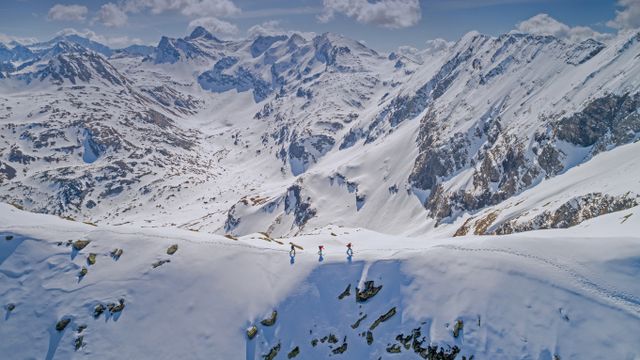 Ski touring, High Tauern mountain range, Austria
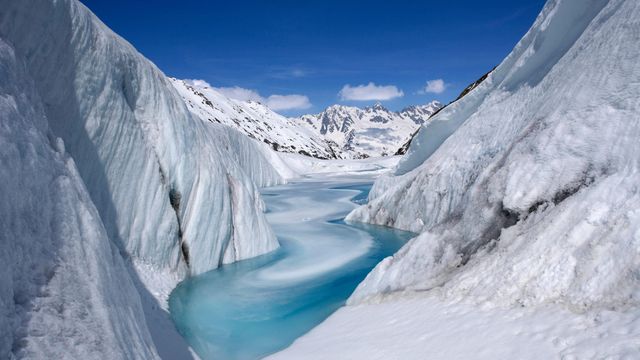 Mer de Glace on the Mont Blanc massif, Chamonix, France
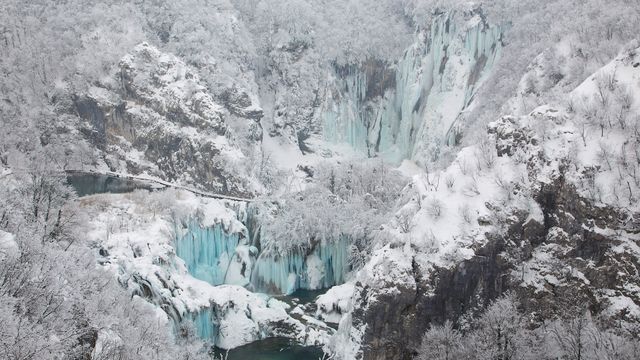 Frozen waterfalls in Plitvice Lakes National Park, Croatia
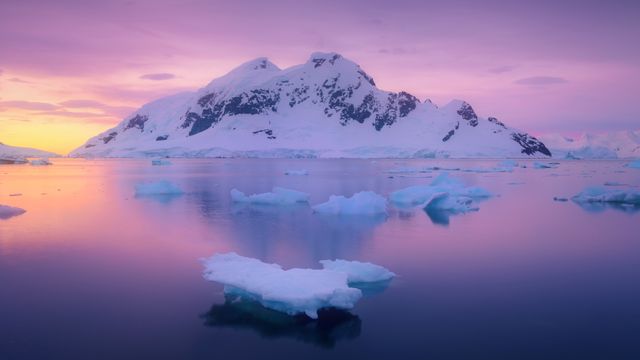 Paradise Harbour, Antarctica
Bing Today Images