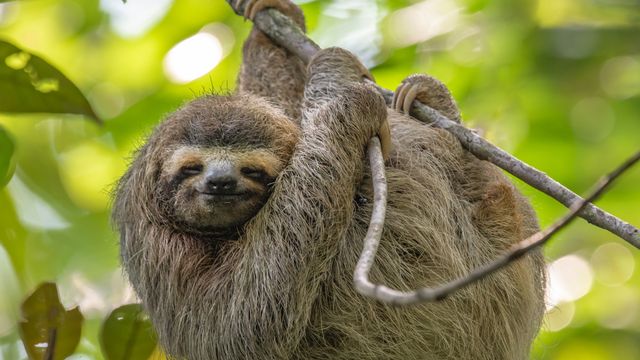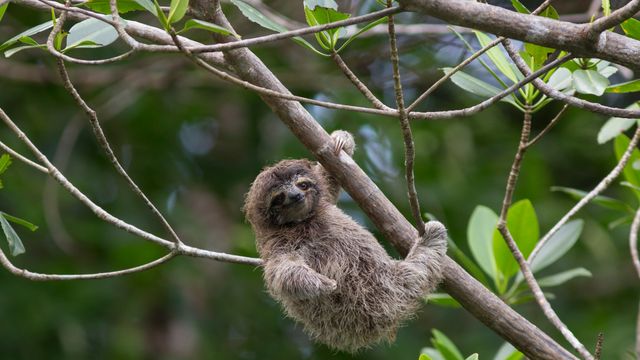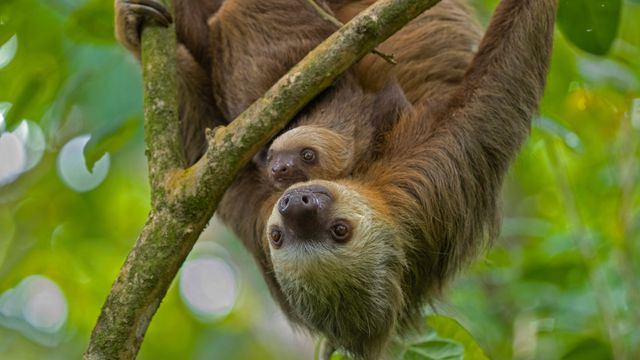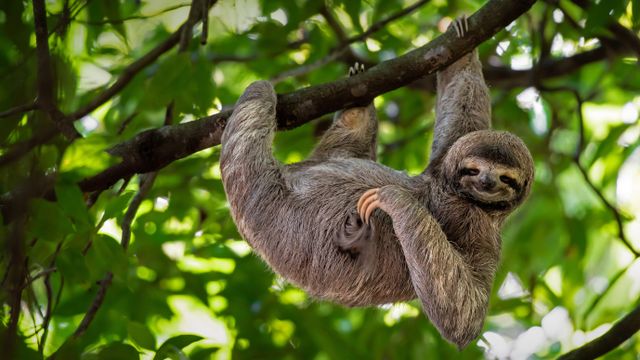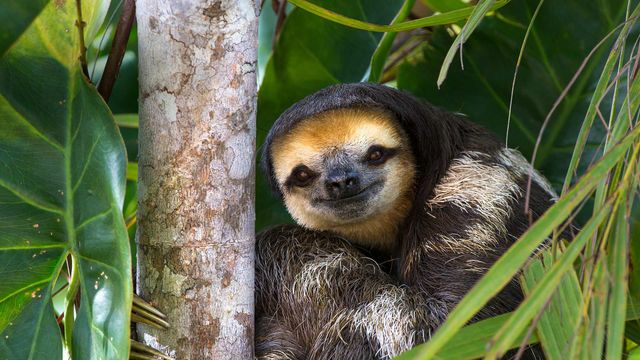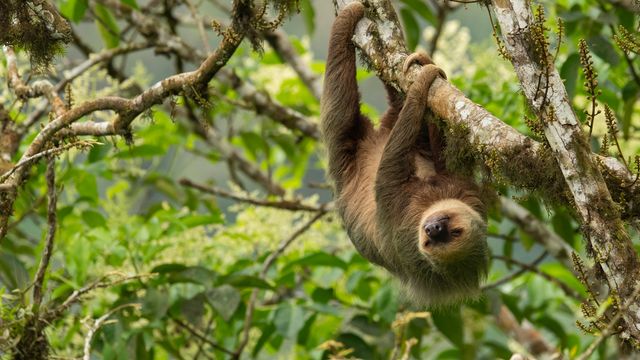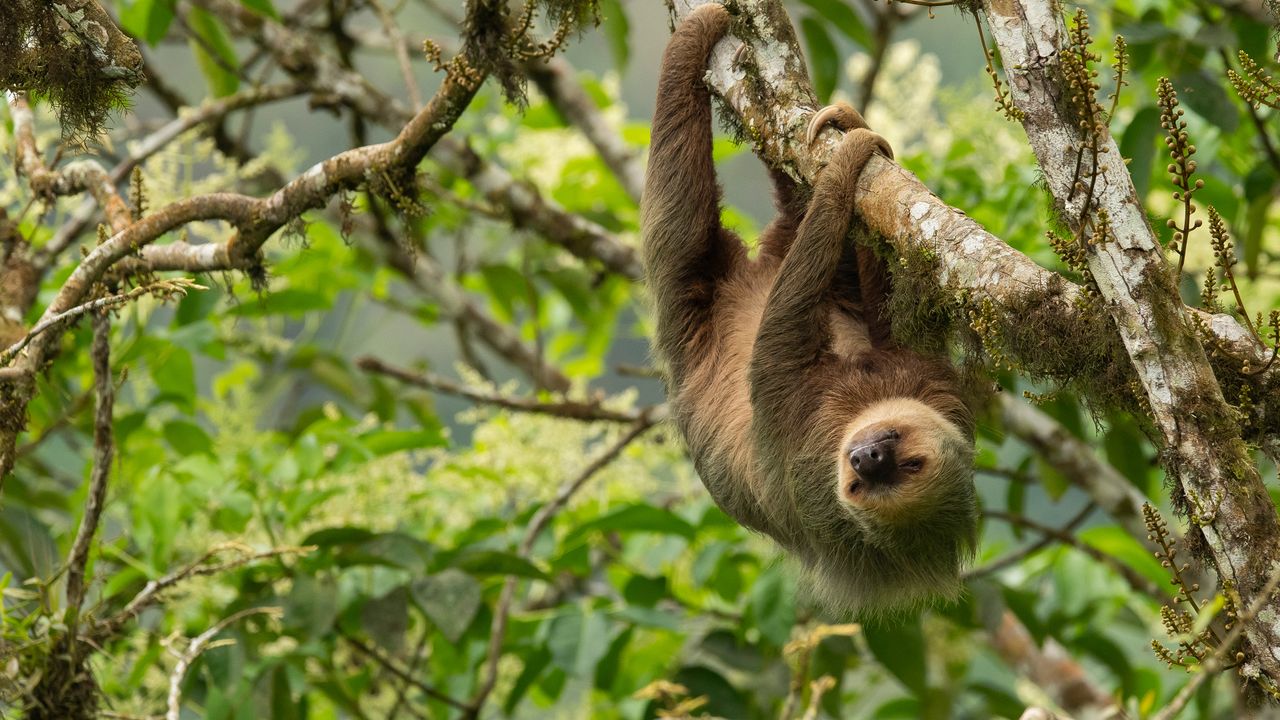
A Hoffmann's two-toed sloth in Ecuador
© Murray Cooper/Minden Picture
Life in the slow lane. International Sloth Day
How good would it feel if you could just hang out and do absolutely nothing all day? That's exactly what sloths do, and today, we celebrate them. International Sloth Day honors these unhurried creatures and reminds us that life doesn't always need to be rushed. Sloths are tree-dwelling mammals native to Central and South America. Their deliberate movements conserve energy, avoid predators, and even allow algae to grow on their fur, creating green camouflage among the canopy. Hoffmann's two-toed sloth, pictured here, is a prime example of the slow-paced lifestyle typical of all sloths. It spends most of its time in the trees, occasionally descending to the ground to move to a new one.
Beyond their charm, sloths play a crucial role in tropical forests. Their presence signals a healthy ecosystem, and protecting their habitats benefits various other species, including frogs and birds. Yet these gentle creatures face growing threats due to rainforest degradation. Organizations like the Sloth Conservation Foundation are working tirelessly to develop initiatives to preserve their habitats, ensuring that future generations can continue to marvel at these slow-moving icons of nature.
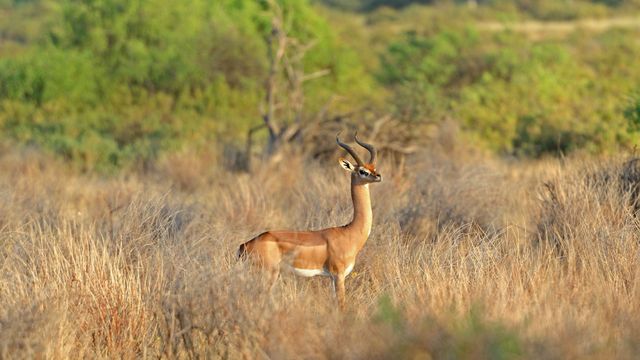 Gerenuk in Tsavo National Parks, Kenya
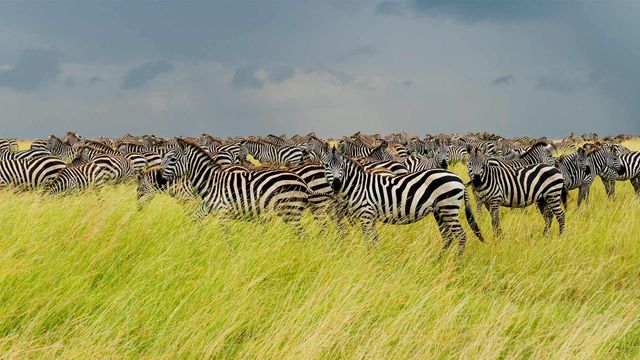 Zebras in Serengeti National Park, Tanzania
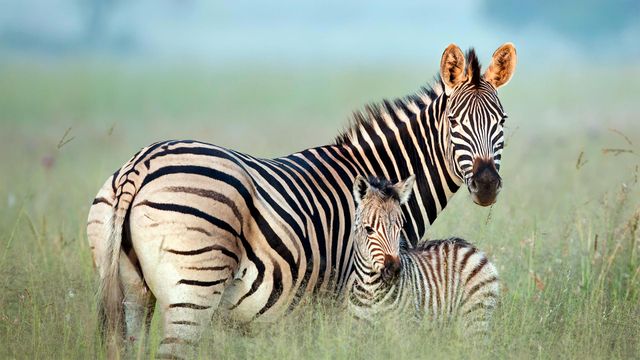 Burchell's zebra mother and foal in Rietvlei Nature Reserve, South Africa
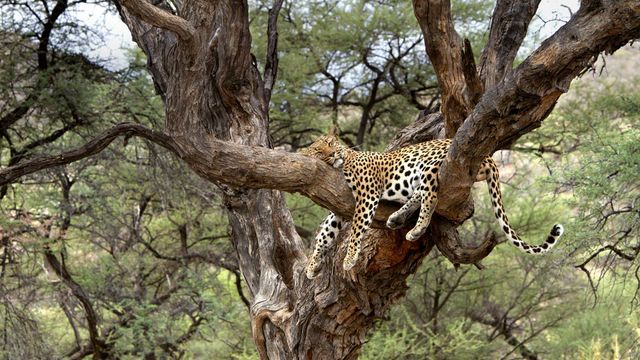 Leopard snoozing in a tree in Namibia for National Napping Day
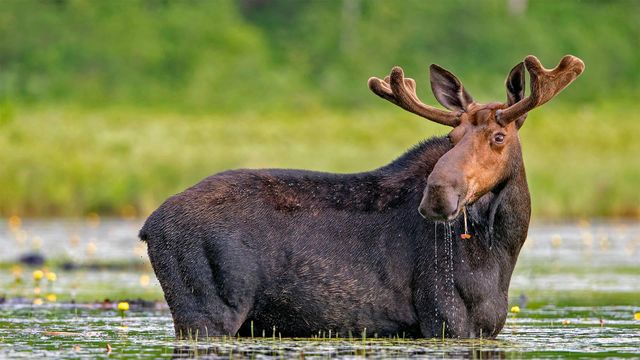 Moose snacking on water lilies in Millinocket, Maine
 For Siblings Day, lion cubs wrestling in Samburu National Reserve, Kenya
 Male African lion and cub in Kgalagadi Transfrontier Park in southern Africa
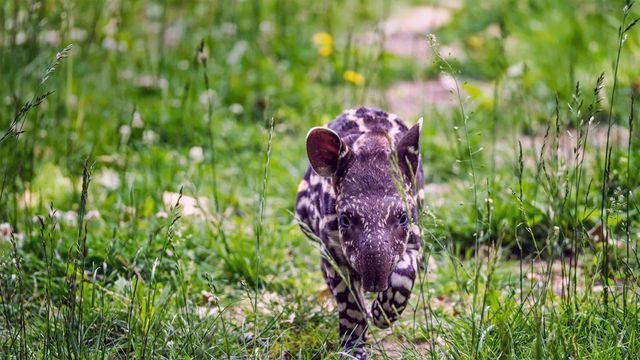 South American tapir calf trots through the grass