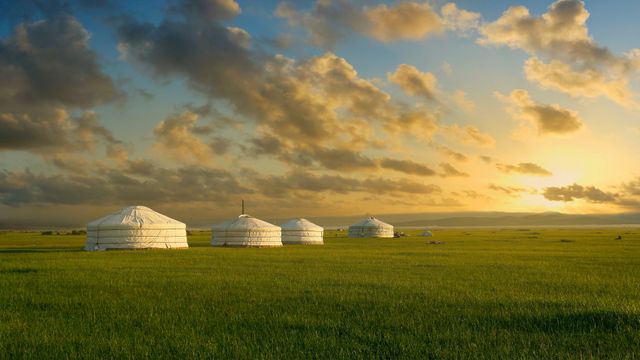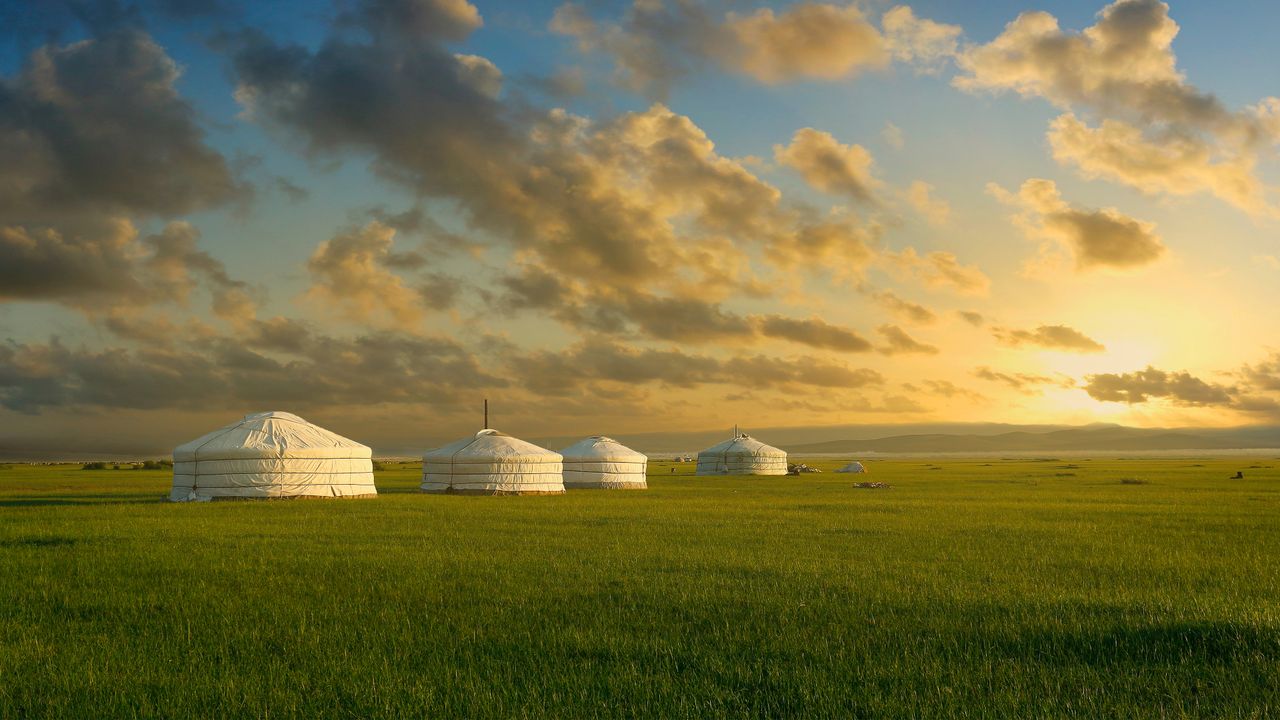
Yurts in the grassland of Mongolia
© Michel Arnault/Shutterstoc
A steppe ahead. World Nature Conservation Day
Every July 28, World Nature Conservation Day reminds us that protecting nature isn't optional—it's essential. Mongolia's vast grasslands, featured today, are a powerful example. These ecosystems are among the largest intact temperate grasslands on Earth, stretching thousands of square kilometres of open steppe. They support around 200,000 nomadic herder families and provide habitat for rare species like the Mongolian gazelle and snow leopard. While the day isn't tied to a single founding organisation, it aligns with the mission of global conservation leaders like the International Union for Conservation of Nature (IUCN), which has worked to protect biodiversity since 1948.
This global focus on conservation echoes in India's own long-standing commitment to nature. The country's efforts can be traced all the way back to Emperor Ashoka, whose pillar edicts stand among the earliest known records of environmental stewardship. Today, the Ministry of Environment, Forest and Climate Change carries that legacy forward—leading initiatives that range from managing national parks and preserving native biodiversity to controlling pollution and promoting sustainable development.
Related Images
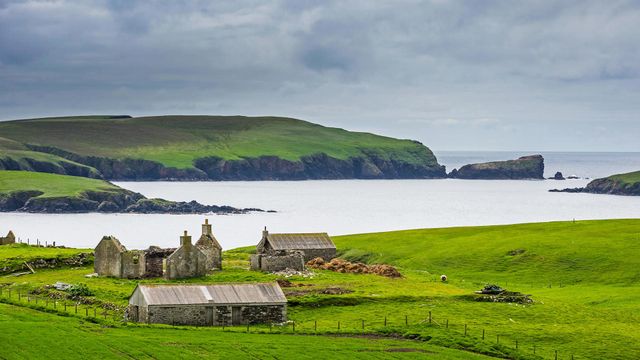 An old farm in the Shetland Islands, Scotland
 Tintern Abbey, Wales
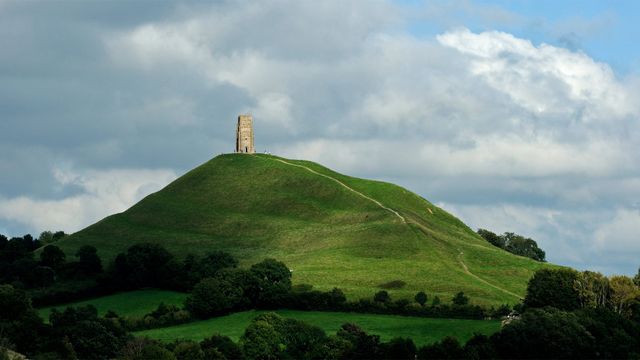 Glastonbury Tor and St Michael's Tower in England for the start of the Glastonbury Festival
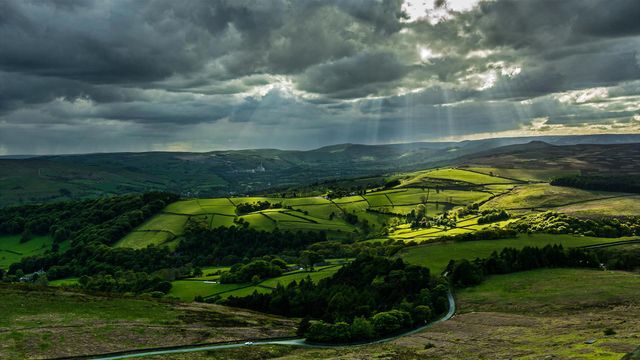 Hope Valley, Peak District, England
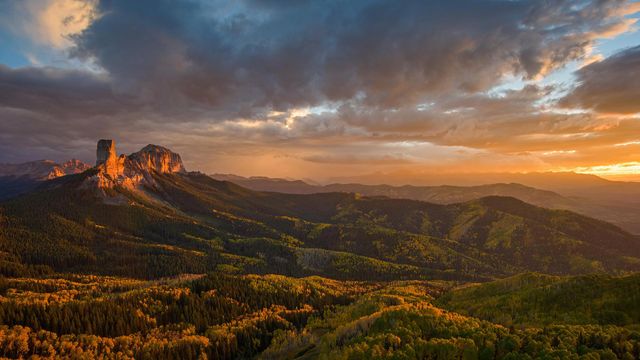 Chimney Rock and Uncompahgre National Forest, Colorado, USA
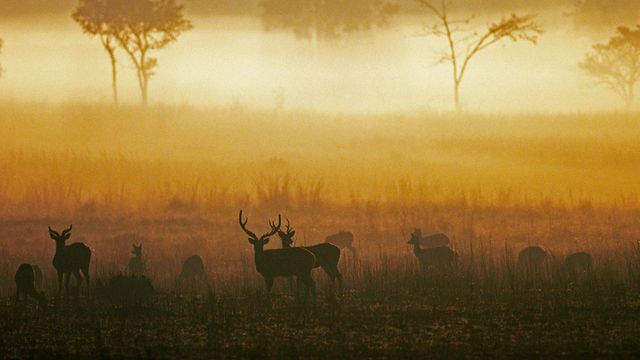 Chital, spotted deer in misty grassland at dawn, Kanha National Park, Madhya Pradesh, India
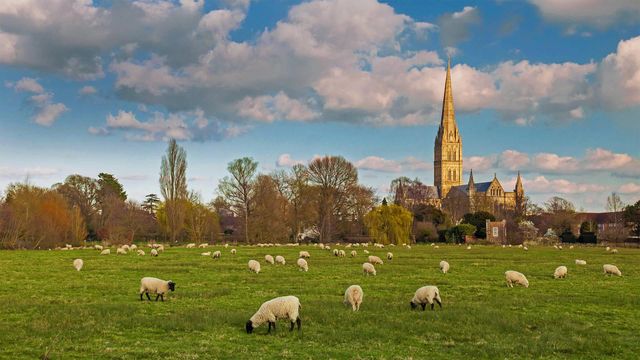 Salisbury Cathedral with grazing flock of sheep, England
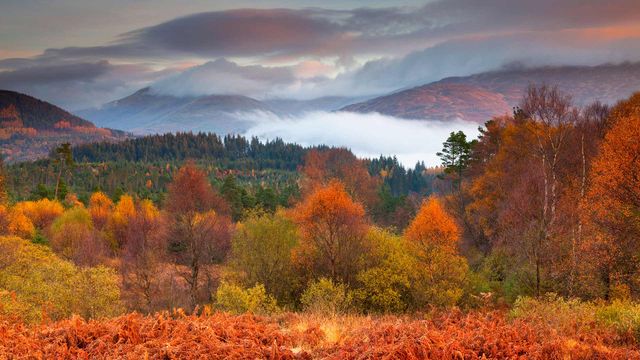 The Trossachs National Park in autumn, Stirling, Scotland
Bing Today Images