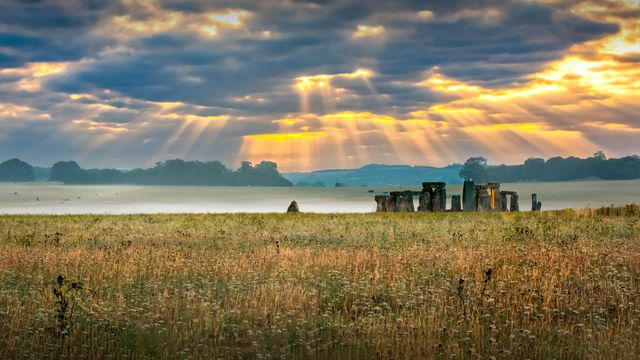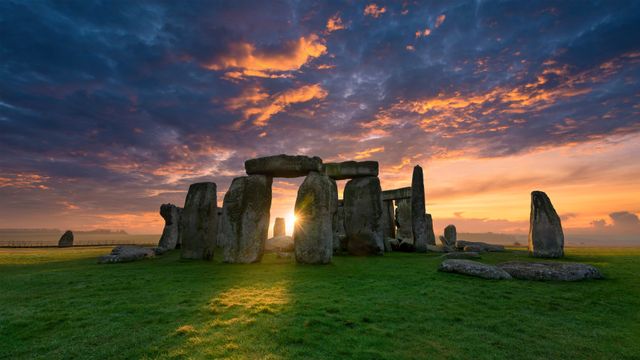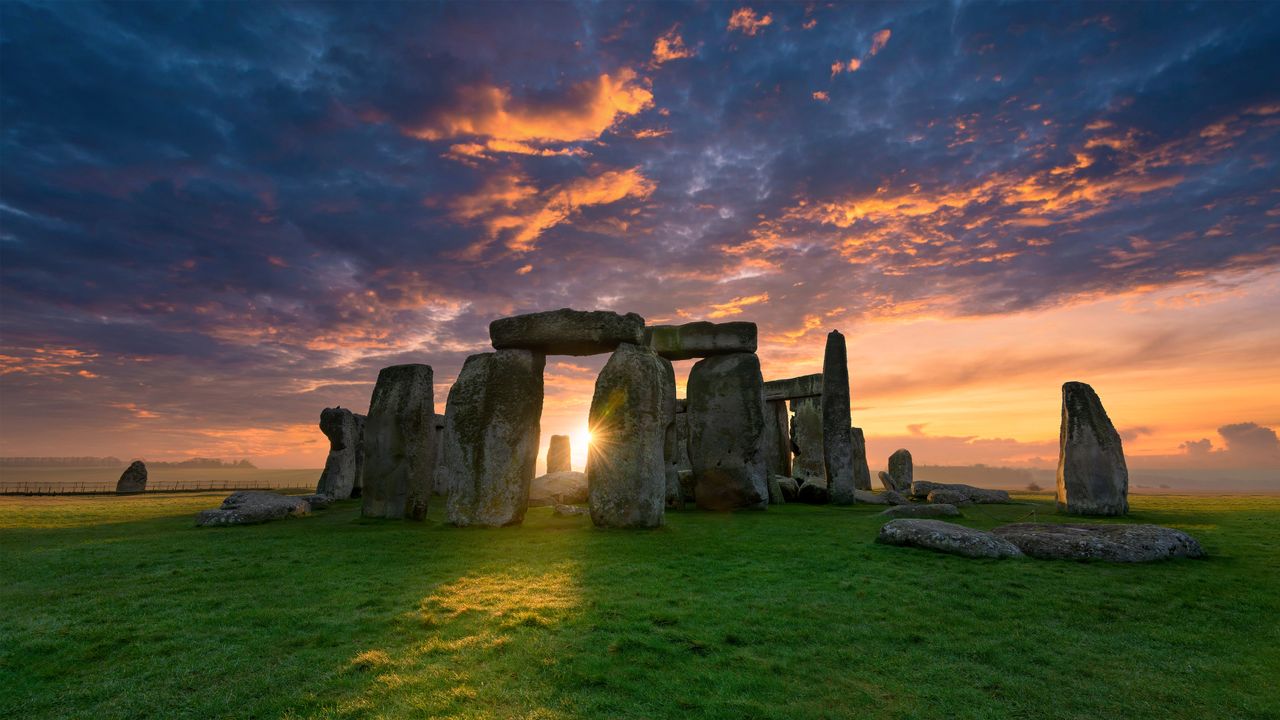
Stonehenge, Salisbury Plain, Wiltshire, England
© Captain Skyhigh/Getty Image
The mystery of Stonehenge. Summer solstice
Stonehenge, a renowned prehistoric monument estimated to have been built between 3000 and 2000 BCE in the county of Wiltshire, England, has fascinated people for centuries. Its circular arrangement of large standing stones remains a captivating mystery, as the purpose and methods of its construction are still debated. What is known is that it was constructed without metal tools or the use of wheels.
On the summer solstice, the longest day of the year, the sun rises directly over the Heel Stone—the largest of the structure—creating a captivating spectacle for observers. Similarly, during the winter solstice, the shortest day of the year, the sunset aligns with the stones, casting an enchanting glow upon the ancient site. Stonehenge's precise alignment with astronomical events suggests its importance in ancient religious and ceremonial practices, making it an iconic symbol of human ingenuity and connection to the cosmos.
Related Images
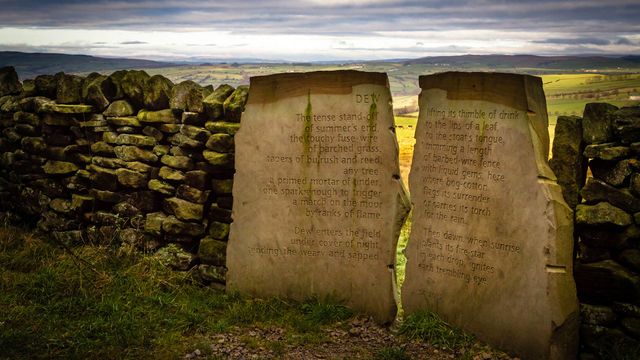 The Dew Stone, part of the Stanza Stones trail, in Yorkshire
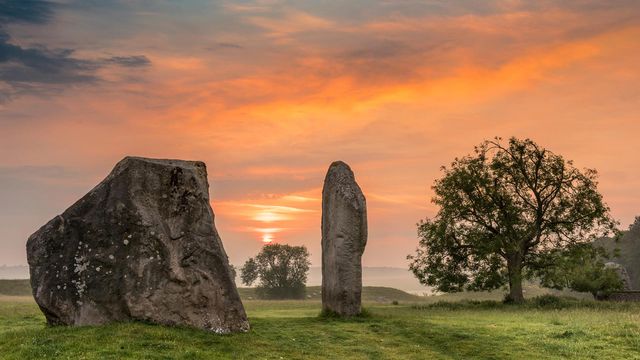 Dawn breaks over the ancient Sarsen Stones at Avebury, Wiltshire, at Summer Solstice
Bing Today Images