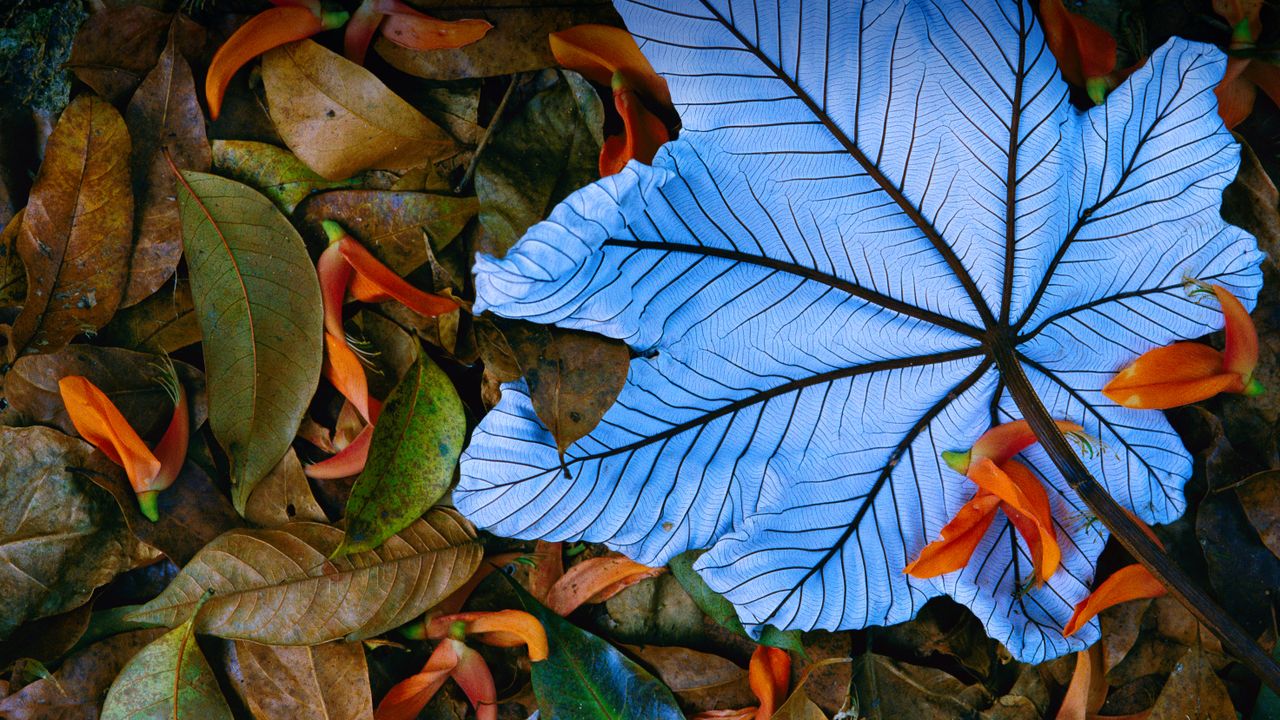
Cecropia leaf, Mexico
© Gerry Ellis/Minden Picture
Cecropia leaf, Mexico
Today we’re in a Mexican rainforest to examine a large Cecropia leaf and some lobster claw petals. The genus called Cecropia contains some of the most recognisable neotropical trees anywhere, but the roughly 50 different species can be hard to distinguish. All Cecropias grow fast. On average, they’ll climb to almost a metre per year and under perfect conditions can grow as much as three metres in that time. Not only are Cecropias very popular with animals like sloths, monkeys and toucans for their fruit and leaves, many species have a symbiotic relationship with Azteca ants. The Cecropias provide shelter and food for the ants, and the ants in turn defend the trees from plant-eating predators.
The other striking leaves here are cup-shaped flower petals of the lobster claw, or what botanists call the Heliconia rostrata. With its bright colours and distinctive shape, the lobster claw is often cultivated as an ornamental plant for tropical gardens. Gardeners looking to attract birds love the Heliconia because its plentiful nectar draws hummingbirds to its downward-facing flowers. Those same flowers have special recognition in Bolivia as “patujú”, the national flower, which appears on one of the country’s flags.
Related Images
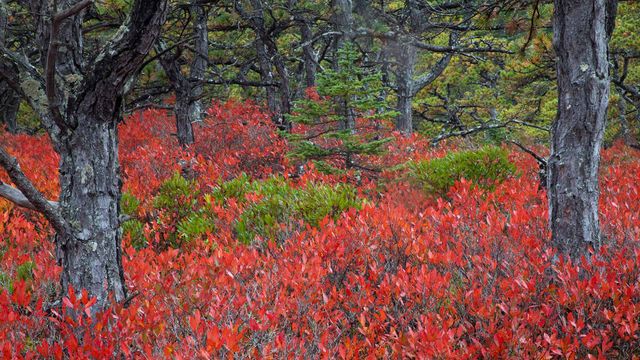 Highbush blueberry plants in Acadia National Park, Maine
 Autumn leaves and goldfish in Tokyo, Japan
 Circular agricultural fields in Morgan County, Colorado
 Frost on blueberry plants, New Brunswick, Canada
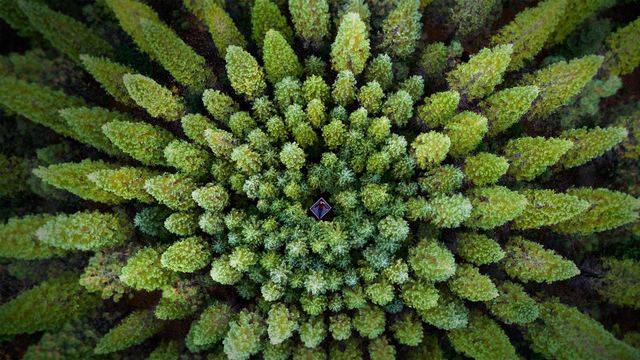 For Earth Month, a symmetrical forest known as a Nelder Plot
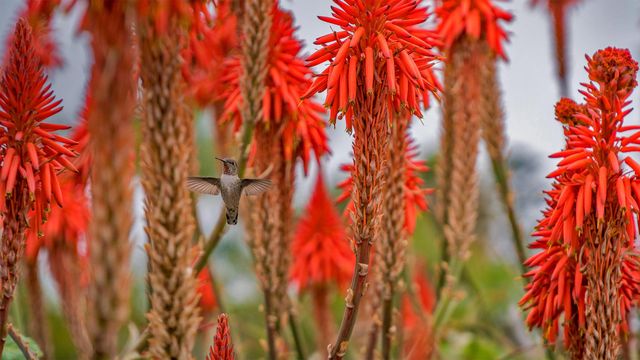 Hummingbird near blooming aloe vera in Laguna Beach, California
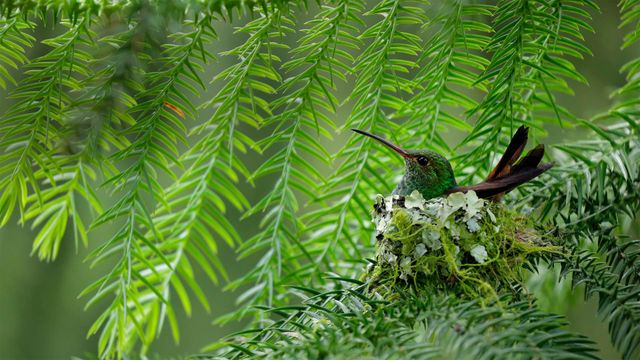 A rufous-tailed hummingbird in Costa Rica
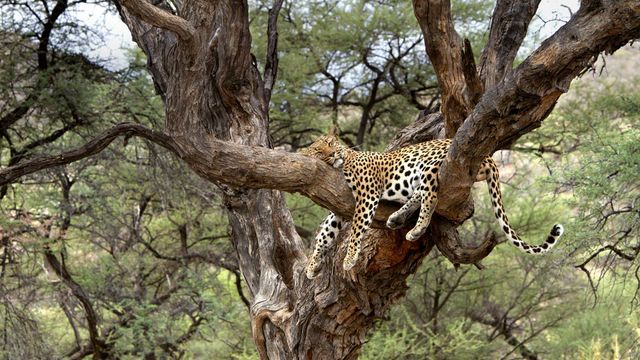 Leopard snoozing in a tree in Namibia
Bing Today Images