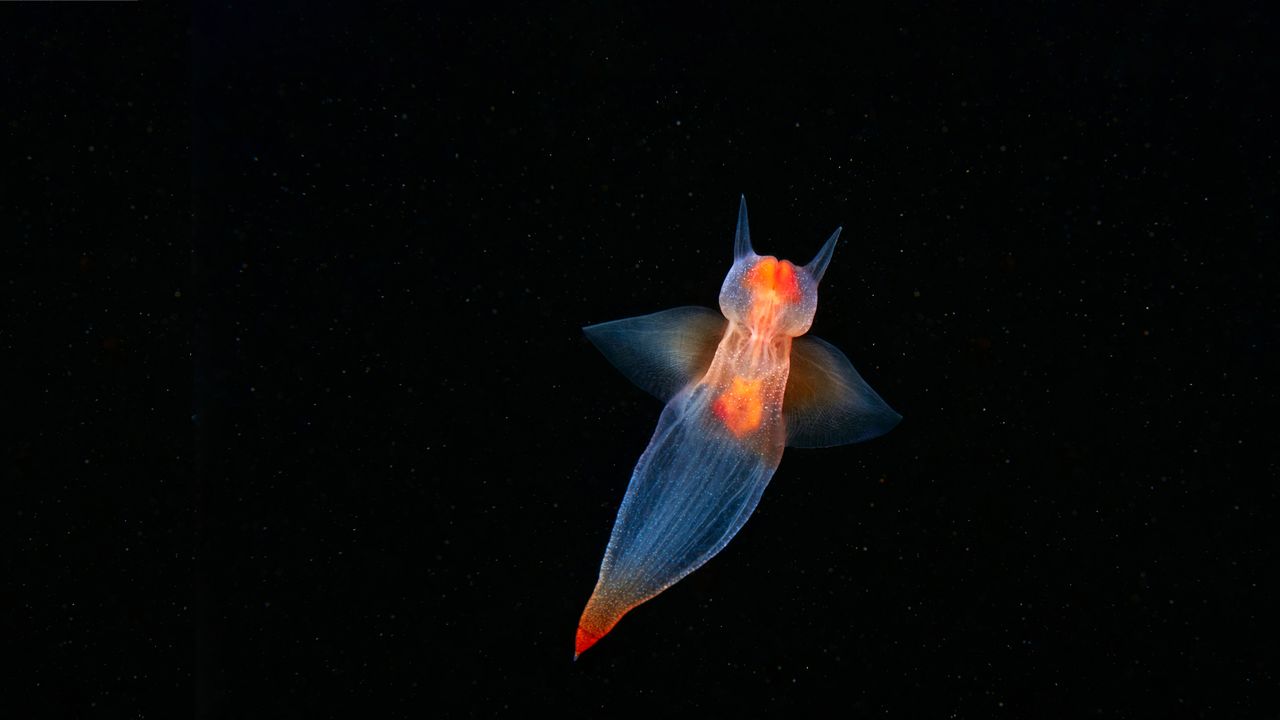
Sea angel
© Alexander Semenov Images/Shutterstoc
Sea angel
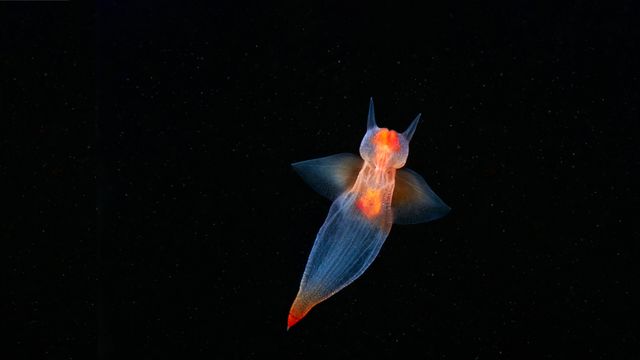
Today’s sea angel is one of about 3,000 sea slug species. Scientifically known as nudibranchs, sea slugs are mollusks that can be found in all the oceans and seas of the world. Sea angels are classified in six different families, and they’re all remarkably small, with the largest being only about 7 centimetres long. They can be found in arctic waters under the ice to more tropical areas and all points in between.
Gelatinous in nature, they’re also mostly see-through. You see those “wings” there in the photo? They allow the sea angel to move at speeds of around 0.35 kilometres per hour, which may not seem very fast, but it’s about twice as fast as their most common prey, the sea butterfly. Belying their name, these angels are ambush predators that actively attack and extract sea butterflies (technically sea snails) from their shells. Some species of sea angels emit a toxin to keep predators away, which has caused other sea creatures to carry them around to fend off their own predators.
Related Images
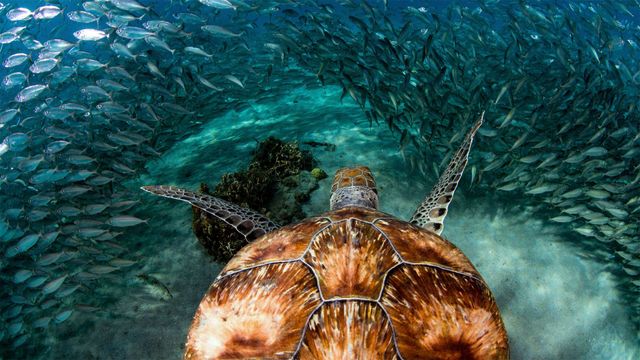 Green sea turtle with sardines near Playa Grandi Beach, Curaçao
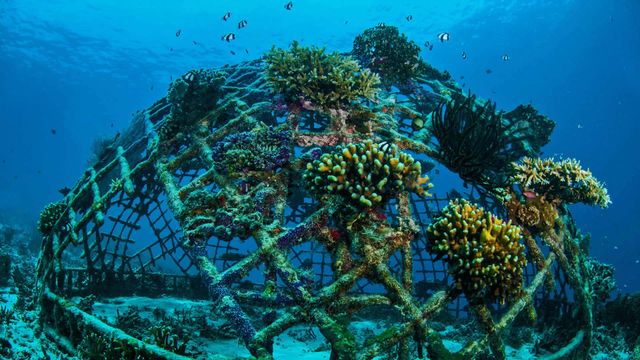 Biorocks growing coral off the Gili Islands, Indonesia
 Aerial view of the cherry laurel maze in Glendurgan Garden, Cornwall, England
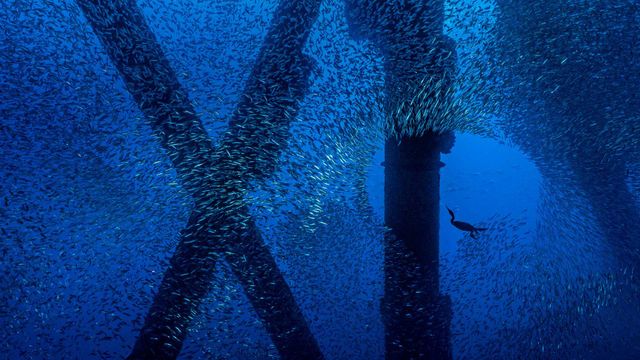 A Brandt's cormorant hunts for a meal in a school of Pacific mackerel beneath an oil rig off the coast of Los Angeles, California
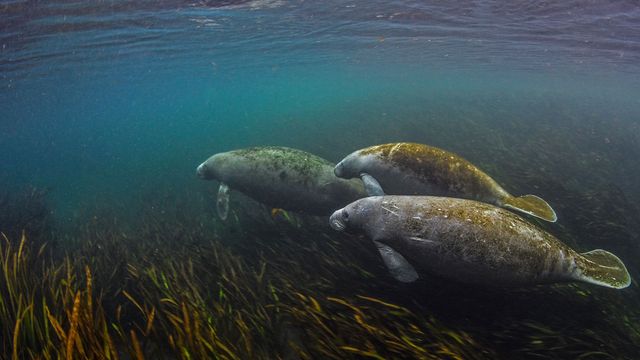 Manatees in the Ichetucknee River in Florida
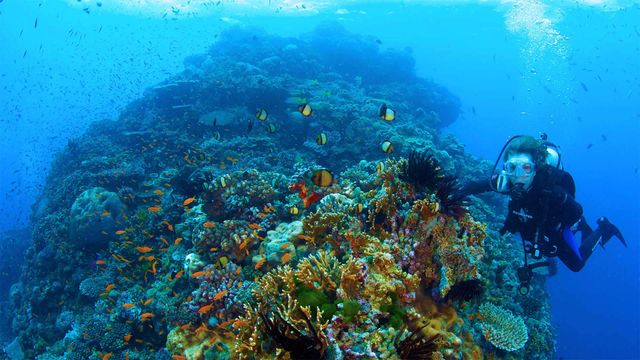 Dr. Sylvia Earle explores the Great Barrier Reef in a scene from 'Mission Blue'
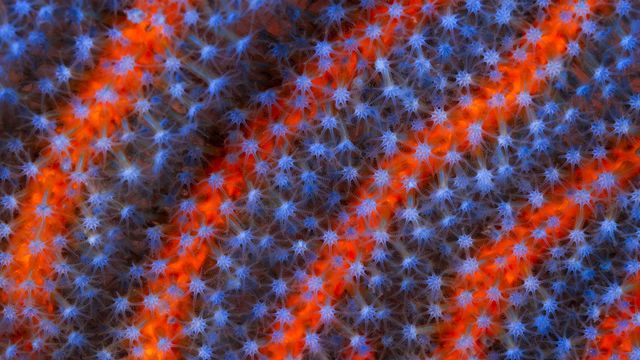 Soft Coral (Ellisella sp) in the Great Barrier Reef, Australia
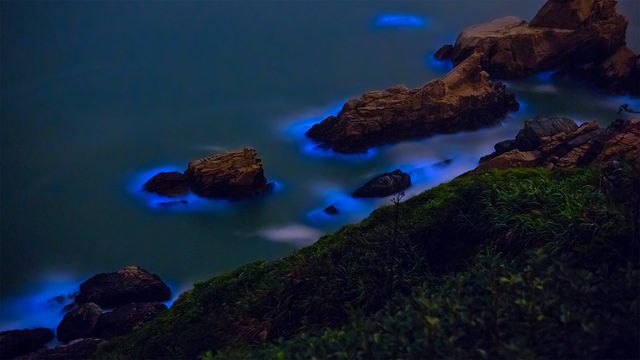 Bioluminescent algae along the shores of the Matsu Islands off the coast of Taiwan
Bing Today Images