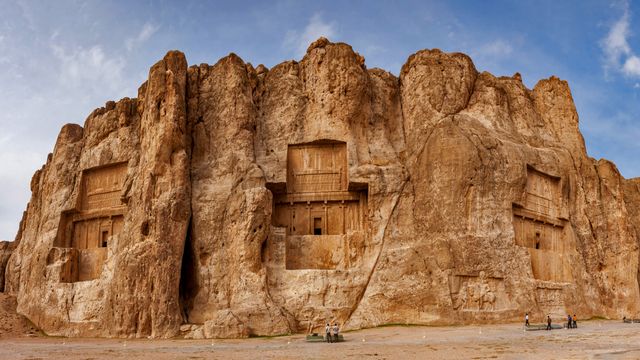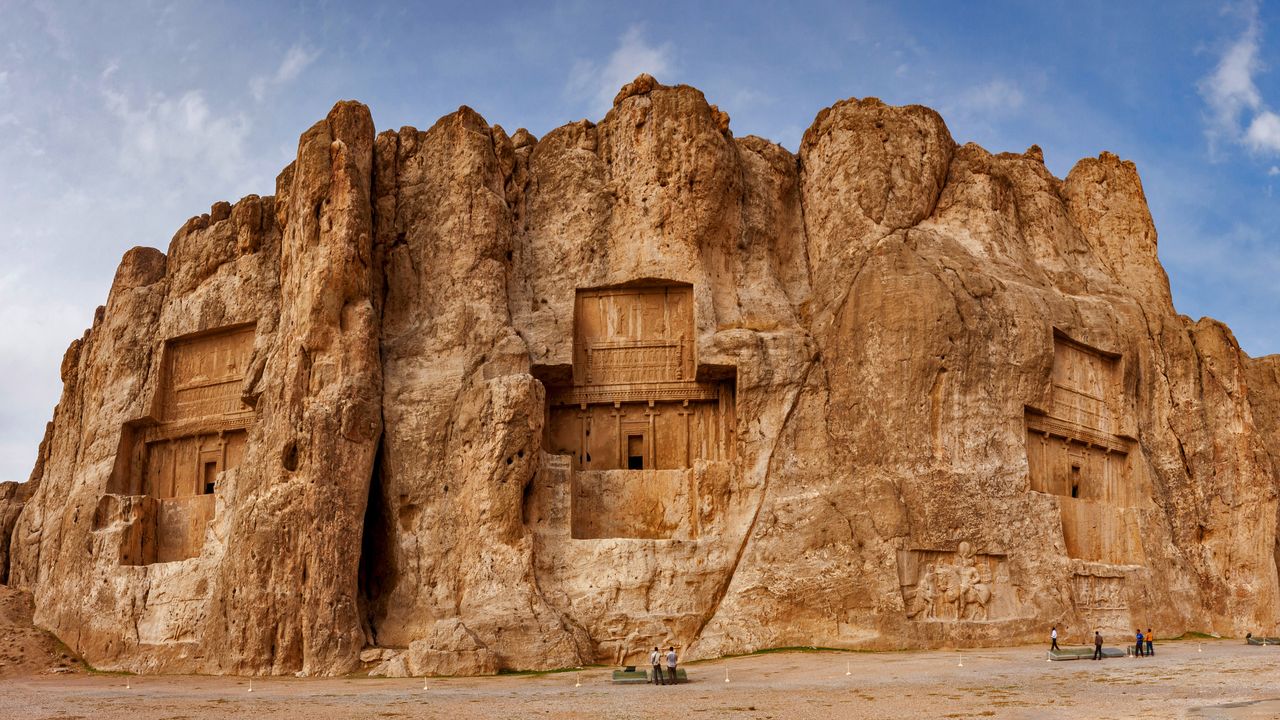
Naqsh-e Rustam archaeological site near Persepolis, Iran
© mshirani/Shutterstoc
International Archaeology Day
Naqsh-e Rostam is an ancient necropolis carved into the mountains of southwestern Iran, a porthole into one of the earliest civilizations to flourish in ancient Persia. The tombs of four Achaemenid kings (you can see three of them here) are marked by rock reliefs carved high above the ground into the cliff face. This site and the area around it are of huge significance to the history of Iran and its people. They’re also a shining example of the role archaeology plays in understanding our past. On the third Saturday of every October, we pause to celebrate and recognize the contributions of archaeologists as interpreters of human history.
A necropolis is a complex of tombs and burial plots, literally translated as a ‘city of the dead.’ This one is close to the city of Shiraz in Fars Province. One of the tombs is identified by an inscription as being the resting place of Darius I, aka Darius the Great, and the others are believed to be the tombs of Darius’ son, Xerxes I, Artaxerxes I, and Darius II, leaders during the Achaemenid dynasty from 522-330 BCE. Naqsh-e Rostam is also home to relief carvings depicting kings of the later Sassanian Empire, the last Iranian empire before the Muslim conquests of the 7th and 8th centuries. Only a few hundred yards away is the archaeological site known as Naqsh-e Rajab, with more rock carvings depicting three Sassanid kings and a high priest. While these civilizations have faded, what they created endures as a permanent record of human history.
Related Images
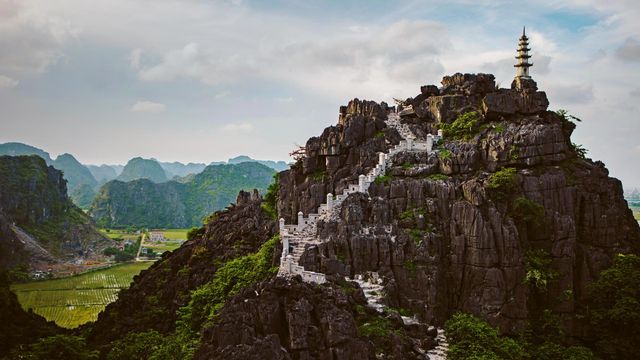 Mua Caves in the Ninh Bình province of Vietnam
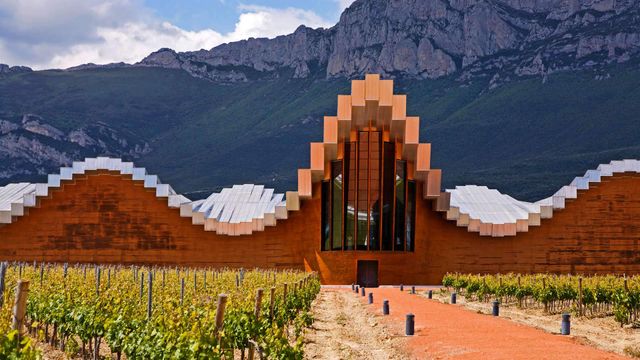 Ysios Winery in La Rioja, Spain
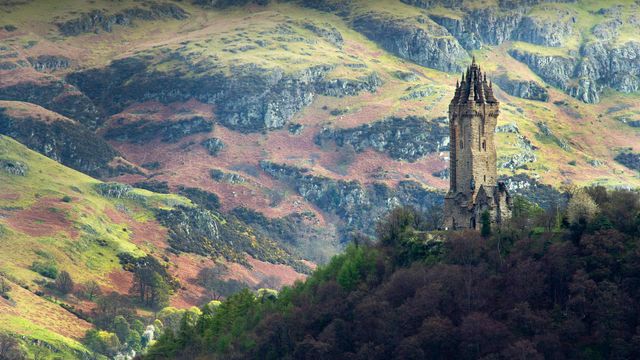 The National Wallace Monument overlooking Stirling in Scotland
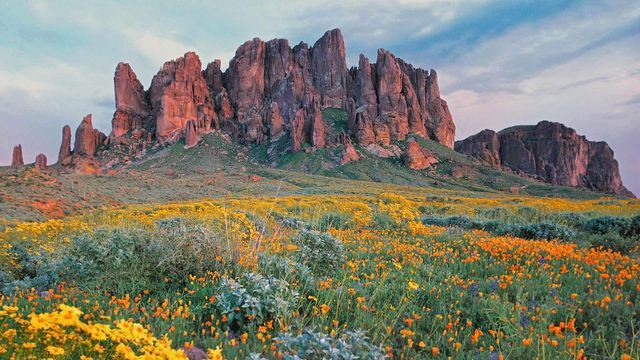 Wildflowers in bloom at Lost Dutchman State Park in Arizona
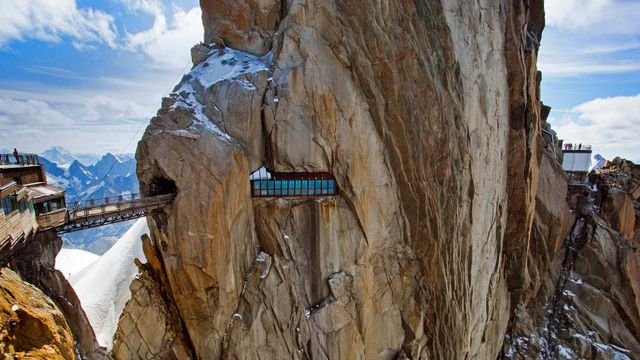 A walkway through a mountain peak in Chamonix, France
 Bath, Somerset, England
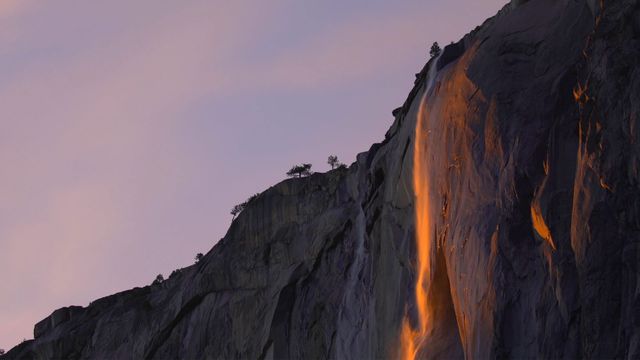 Firefall at Horsetail Fall, Yosemite National Park, California
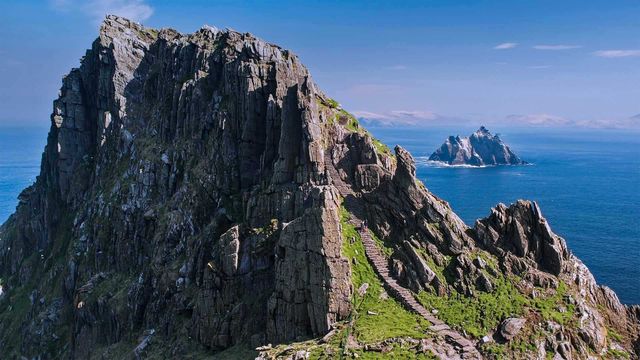 The Skellig Islands, Skellig Michael and Little Skellig, in Ireland
Bing Today Images