
Elephant hawk-moth on foxglove flower
© David Chapman/Alam
Stealthy pollinators. Elephant hawk-moth
How come bees and butterflies get all the pollinator credit? Moths may not be as buzzy or flashy, but they get the job done, too. You’ll probably find out that most moths have feather-like antennas, whereas butterflies have ball- or club-shaped growths at the tip of their antennae. Of course, since most moths are nocturnal, you may want to leave a light on outside to see them.
The elephant hawk-moth in our photo will always see you, regardless of the available light. Not only does it have super-sensitive eyesight, but it can also see in colour — in fact, scientists say it was one of the first species they could prove had a nocturnal colour vision. We were fascinated to discover one reason for the elephant hawk-moth’s great eyesight – it uses a lot of energy flapping its wings to hover and feed on flowers, so it has to be efficient when looking for its next floral feast. Nature – what a problem-solver!
Related Images
 Half-painted Ganesha idol at a workshop in Bangalore
 The festival of lights
 Ruby-throated hummingbird feeding on yellow bells in the Texas Hill Country, USA
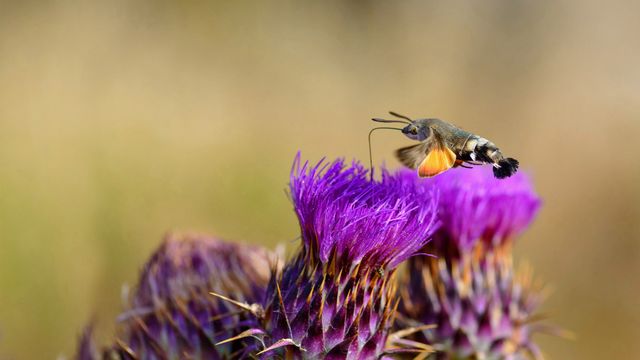 Hummingbird hawk-moth feeding on flower, Sardinia, Italy
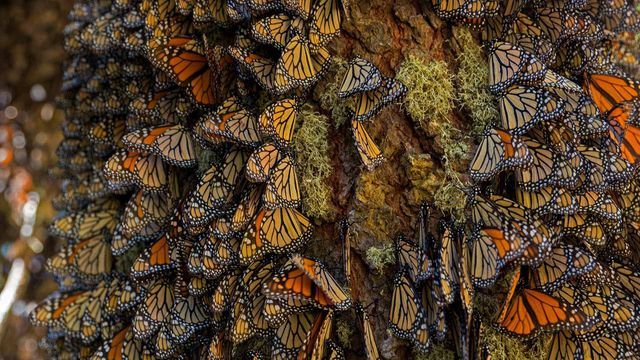 Monarch butterflies wintering in Michoacán, Mexico
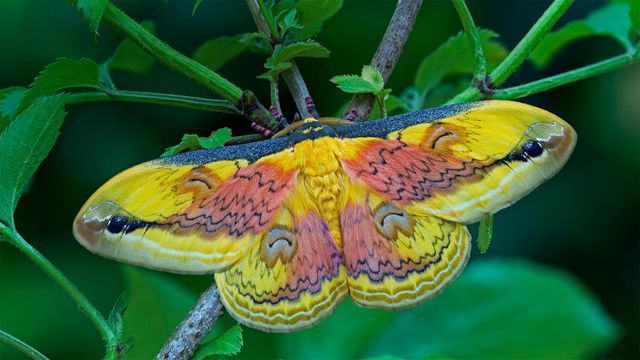 A Loepa oberthuri moth
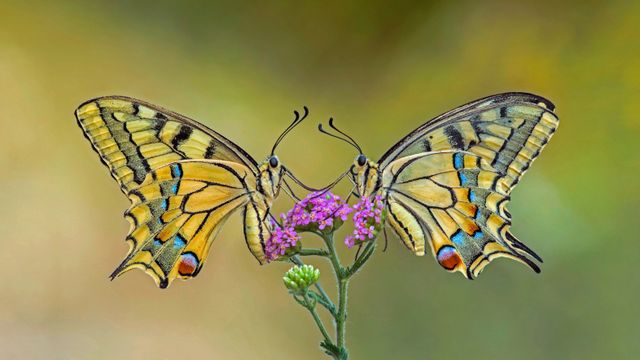 Two Old World swallowtail butterflies on a flower
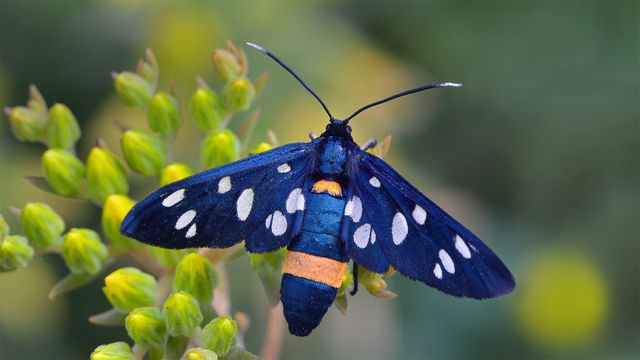 Nine-spotted moth in Switzerland
Bing Today Images