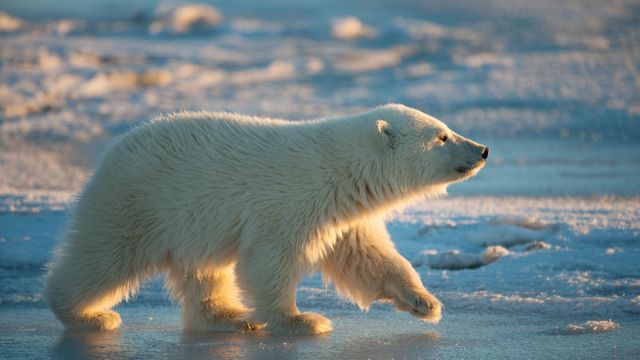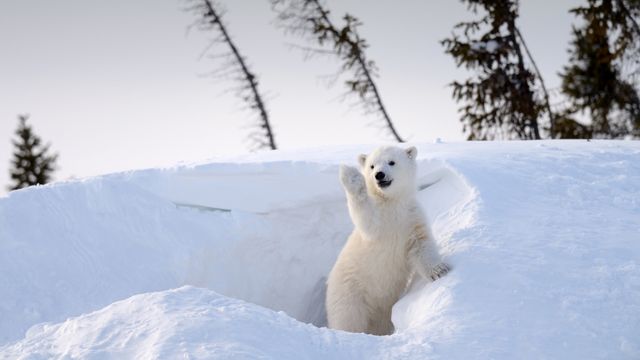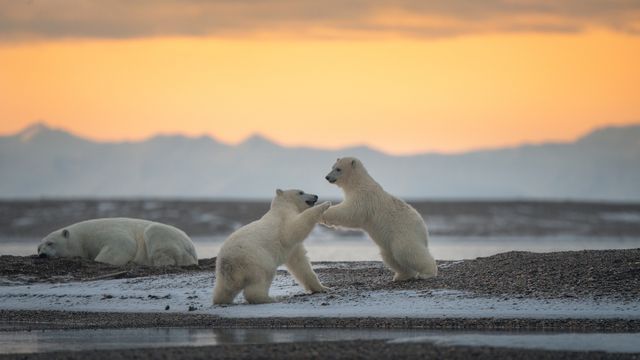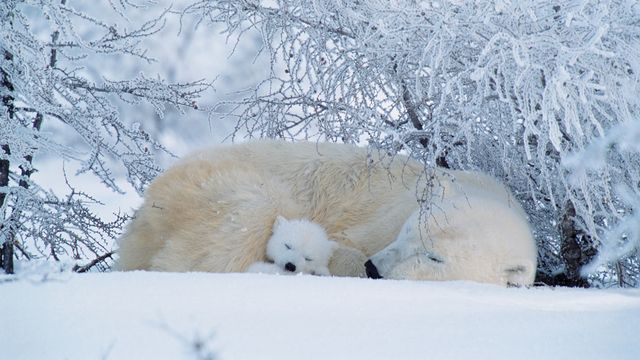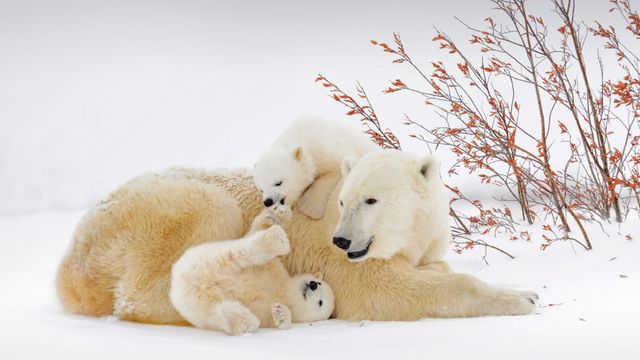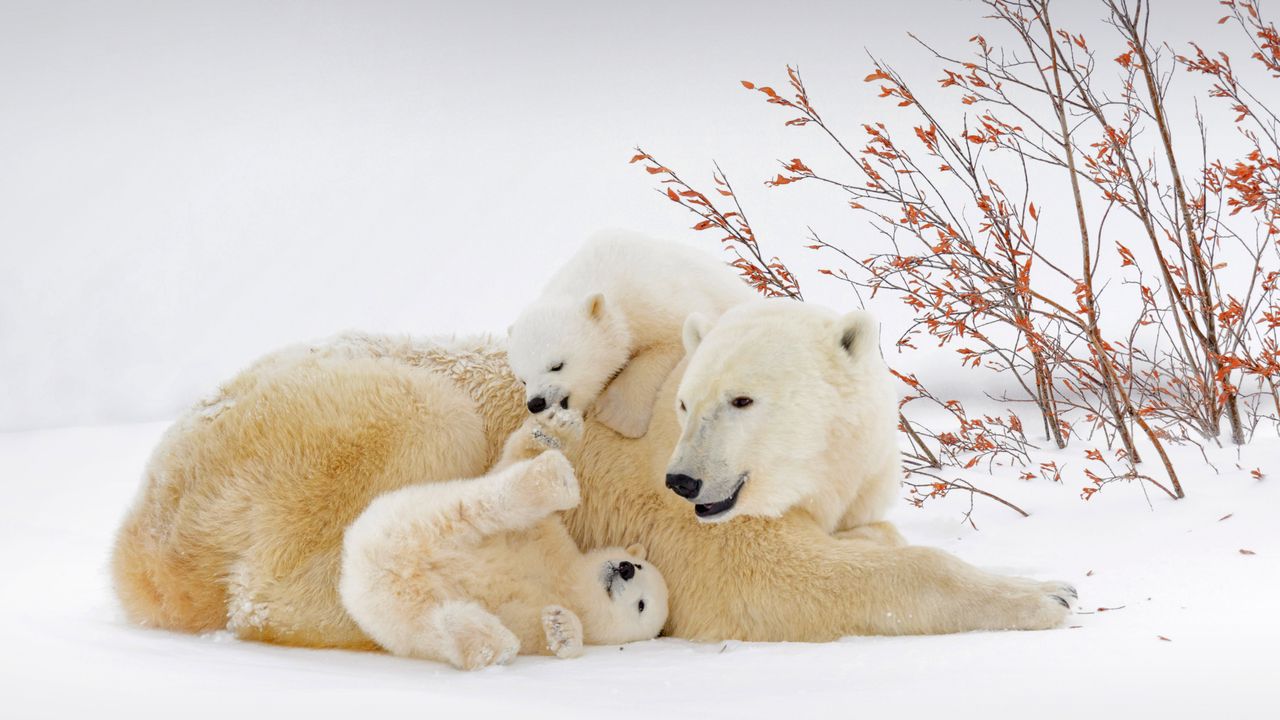
Polar bears, Wapusk National Park, Manitoba, Canada
© Andre Gilden/Minden Picture
Polar bears
This polar bear mother and her playful cubs have been photographed in Wapusk National Park, Manitoba, Canada. Wapusk – which means ‘white bear’ in the Cree language – is one of the largest polar bear denning areas in the world and is critical to the survival of a population of about 1,000 bears who roam the western side of Hudson Bay. The park’s location in the transition zone between boreal forest and Arctic tundra makes it important when monitoring the effects of climate change. Perhaps no other creature is as emblematic of climate change as polar bears, the apex predator of the Arctic Circle. As the planet warms, their fragile habitat shrinks.
In autumn, after the ice floes have diminished, making hunting more difficult, a pregnant female polar bear will dig a maternity den, usually in a snowdrift. She lies dormant there through the winter before giving birth sometime between November and February. The cubs are born blind and weigh about half a kilogram with only a light layer of fur. In the cold Arctic winter, the newborns would suffer outside the protection of the den, so they rest there with their mother, growing quickly on her milk until the young family breaks open the entrance to the den sometime in early spring.
Related Images
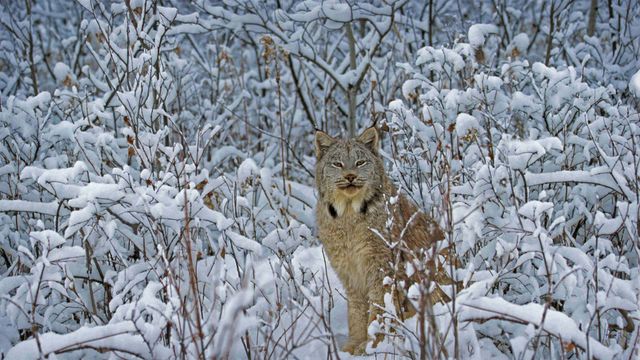 Lince canadiense en un bosque de Montana, EE.UU.
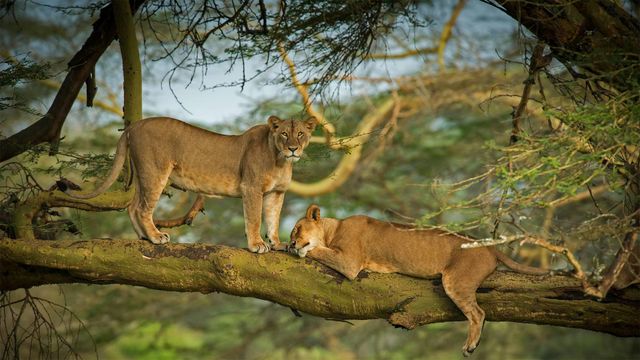 Two female lions in the forest surrounding Lake Nakuru, Kenya
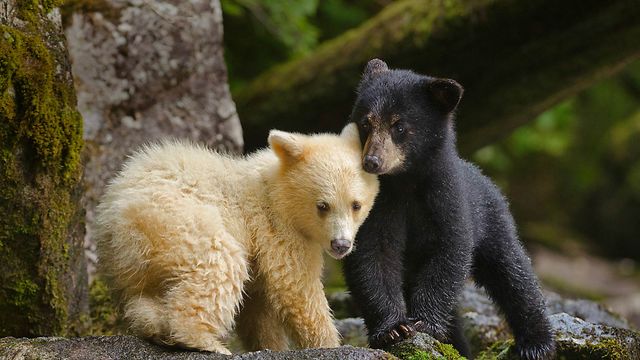 Oseznos Kermode en el bosque templado de la Columbia Británica, Canadá
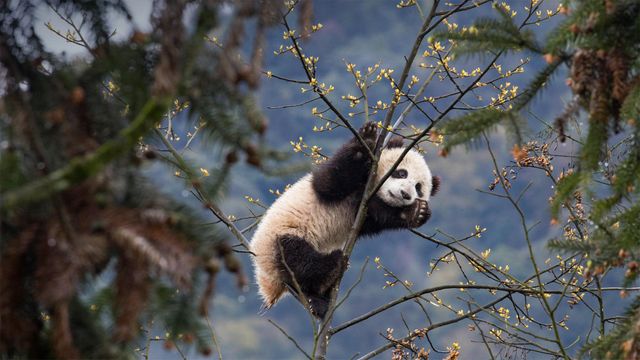 Giant panda cub in Bifengxia Panda Base, Sichuan, China
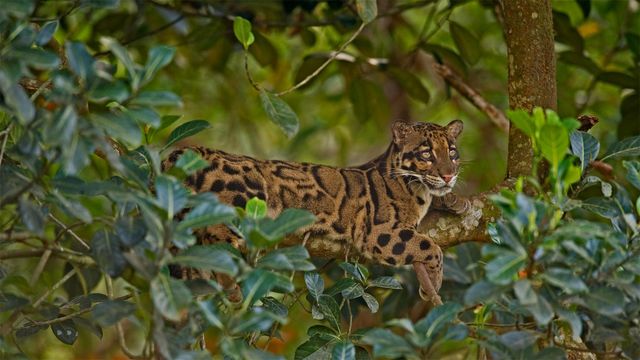 Clouded leopard
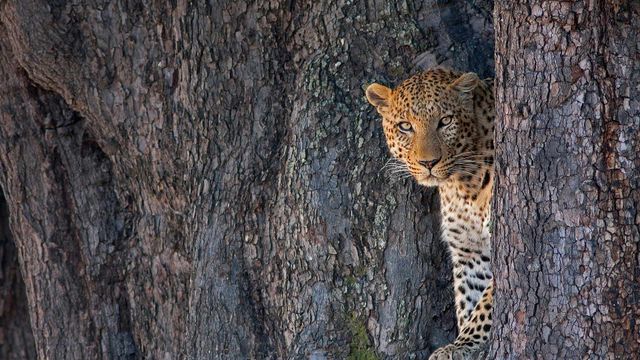 Leopardo en la reserva de Linyanti, Botsuana
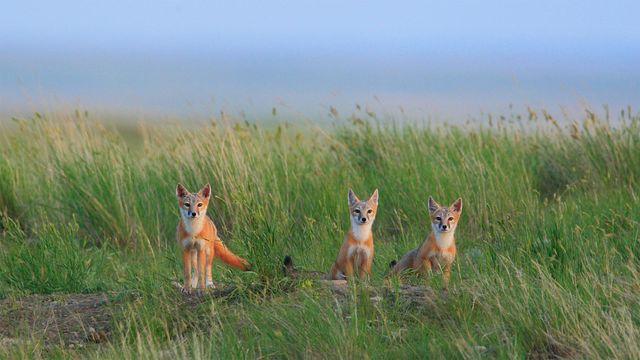 Crías de zorro cometa en el Parque Nacional de las Grasslands, cerca de Val Marie, en Saskatchewan, Canadá
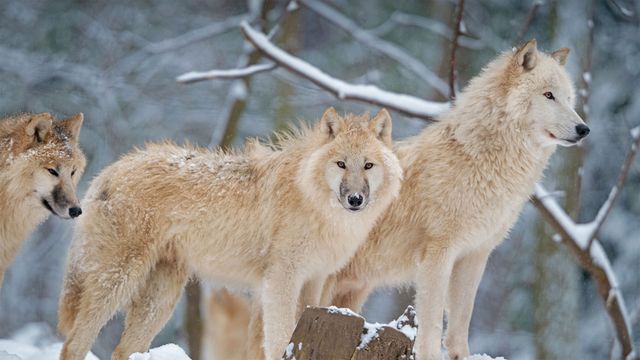 Lobos árticos en las islas de la Reina Isabel, Canadá
Bing Today Images