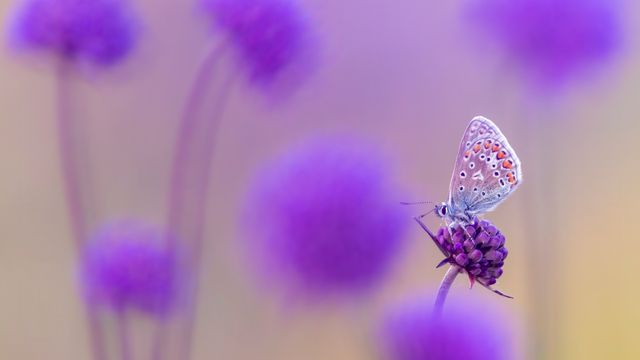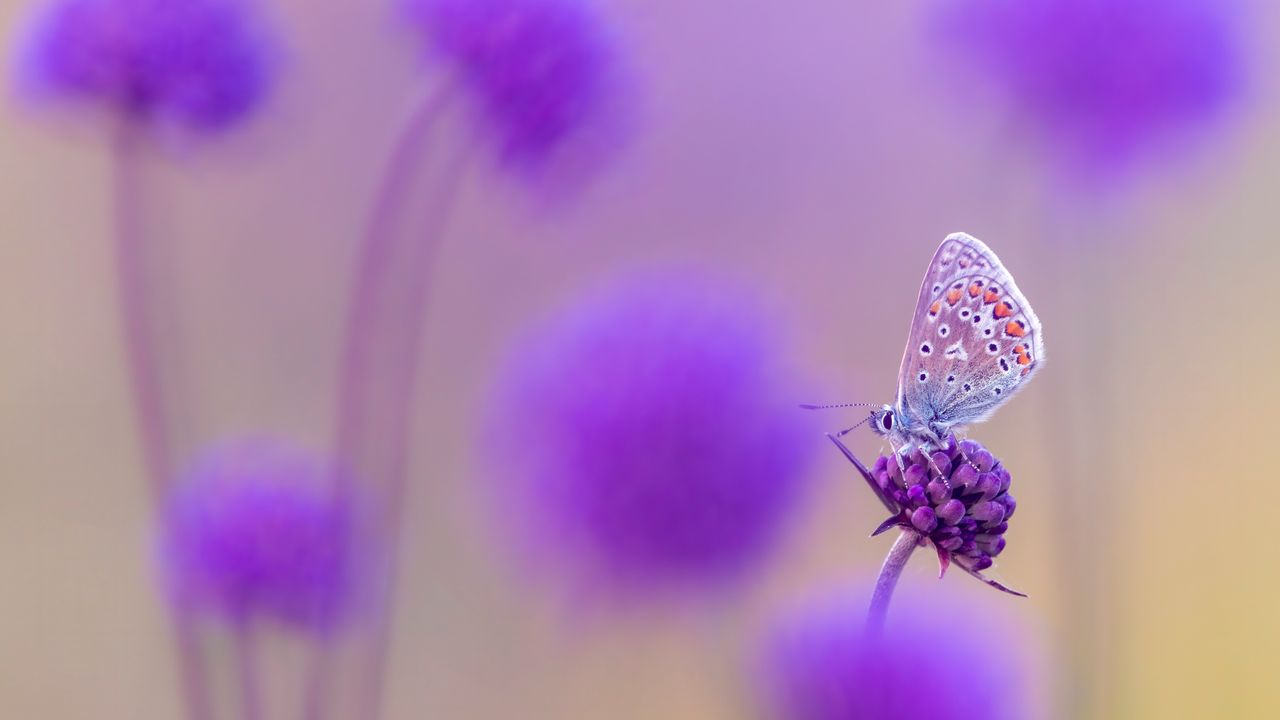
Common blue butterfly, Devon, England
© Ross Hoddinott/Nature Picture Librar
Sky tinted wings. Common blue butterfly
That quick glimpse of blue fluttering through a field has a story that begins much earlier, with a tiny caterpillar and a surprising survival trick. The common blue is found across Europe, North Africa, and parts of Asia, feeding on flower nectar as an adult. It starts life as a small egg, often placed by a female on a host plant such as bird's-foot trefoil. The real surprise comes during its caterpillar stage, when ants play an unexpected role in its survival. After hatching, the caterpillar feeds on leaves before entering the next stage of its transformation. Along the way, it produces a sugary substance called honeydew that ants feed on. As a way of saying thanks, the ants may protect the cocooned caterpillar from predators.
When the adult butterfly emerges, males reveal the blue wings that gave the species its name. Microscopic wing structures create the color by reflecting light. Females usually have brown wings with orange spots along their edges. The common blue butterfly's journey shows that nature's smallest creatures have surprisingly complex lives.
Related Images
 California sea lion in a forest of giant kelp, Baja California, Mexico
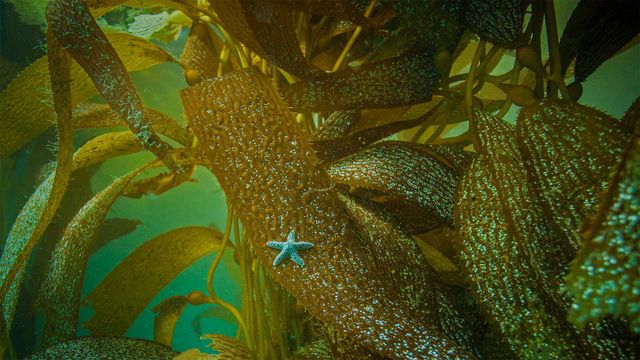 Ochre sea star on kelp off the coast of California
 The English National Ballet's 2016 production of 'The Nutcracker' at the London Coliseum in London, England
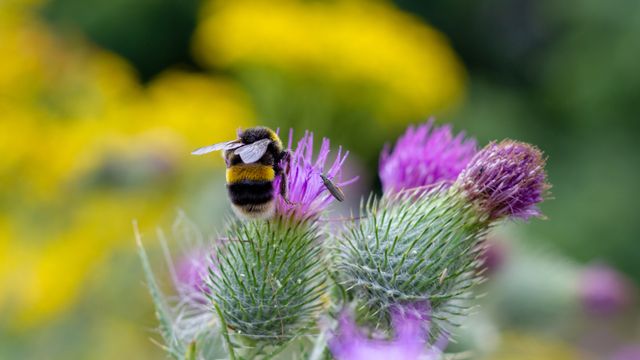 Bumble bee pollinating, Worcester, England
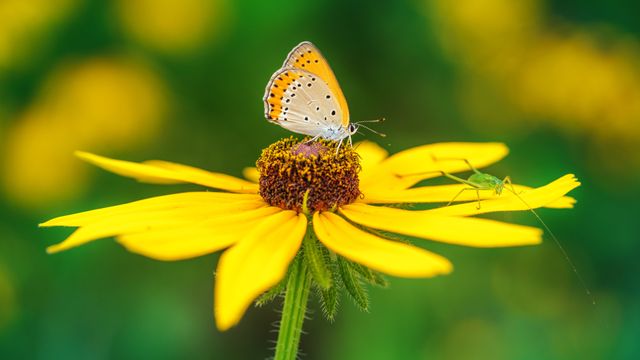 Butterfly pollinating on yellow flower
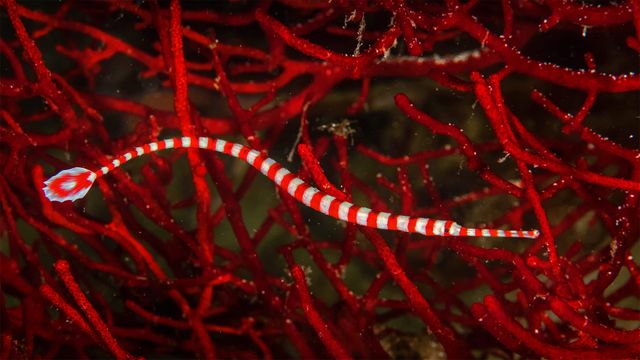 Banded pipefish near Moalboal, Philippines
Bing Today Images