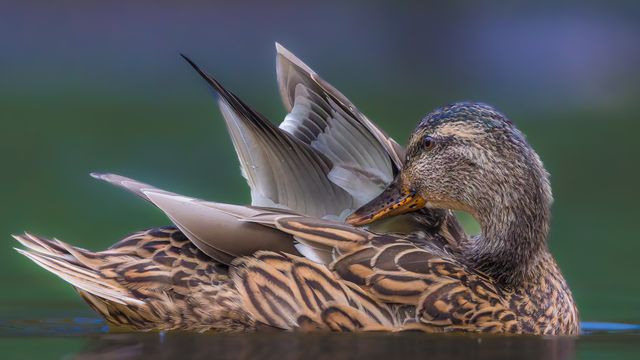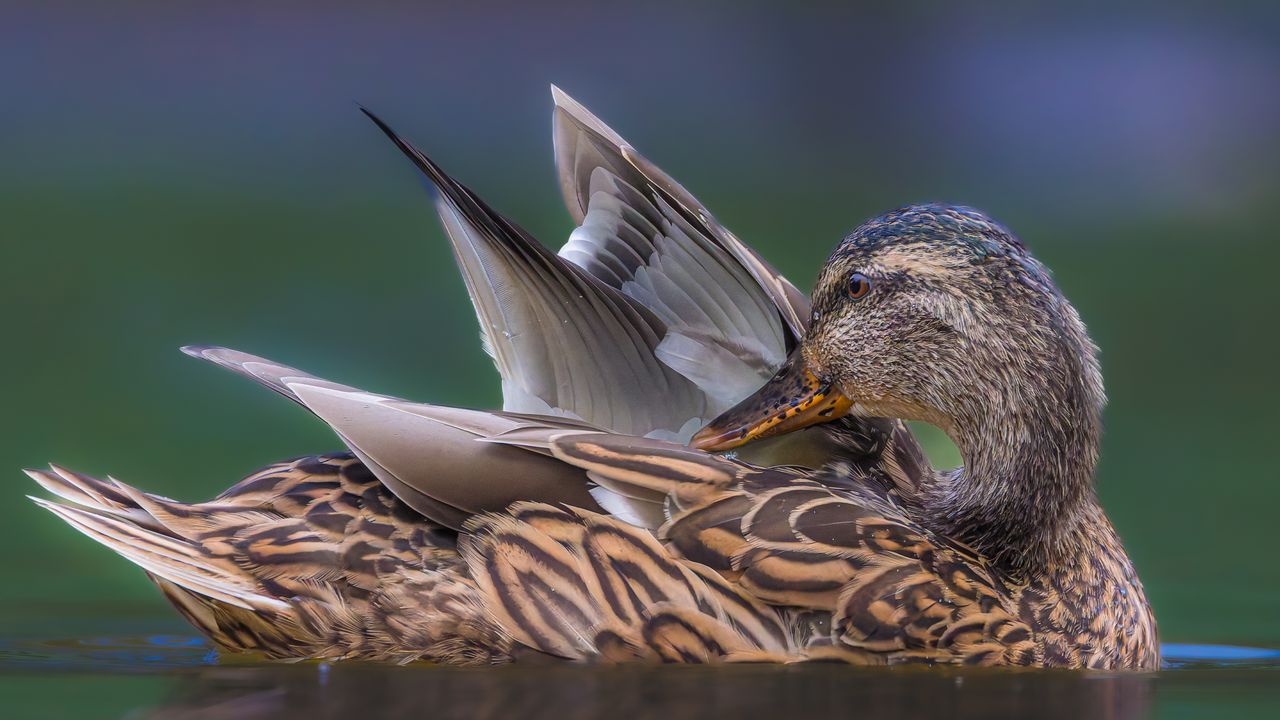
Mallard duck
© Philippe Paternolli/Getty Image
Drift and paddle. Mallard duck
At daybreak, the mallard glides over the still water like a brush across a canvas. Its shimmering plumage—emerald-green head in the male, speckled brown coat in the female—catches the first light. It can be seen from the marshes of the Camargue to the urban canals of Amsterdam, a faithful companion of Europe's aquatic landscapes.
An opportunist, it feeds mainly on seeds, aquatic plants and small invertebrates, sometimes dipping its head underwater with a graceful tilt. When spring arrives, the female chooses a discreet shelter, often away from the water, to brood her eggs. The ducklings, clad in golden down, gradually follow their mother, who guides them in a tender procession.
Resilient and adaptable, the mallard reminds us of both the fragility and the richness of our wetlands—those havens where life, even in the heart of the city, still softly murmurs.
Related Images
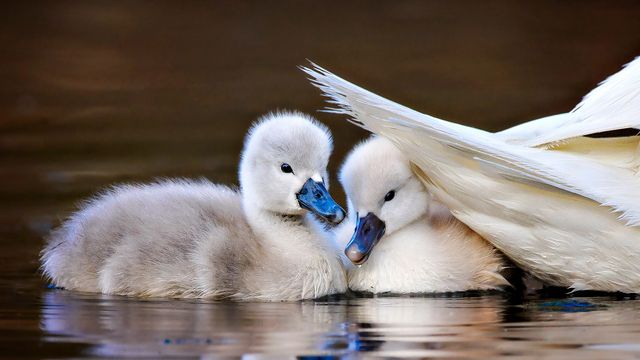 Two mute swan chicks shelter under mom's tail feathers at Massapequa Preserve, Long Island, New York
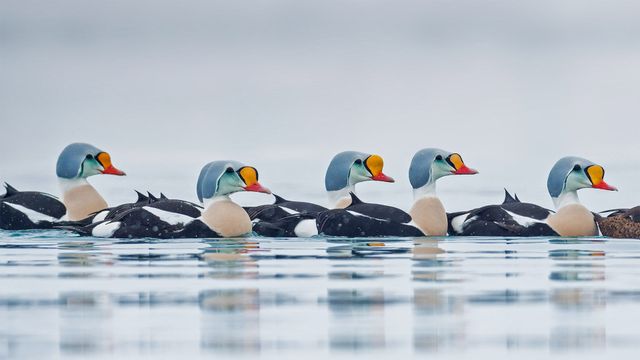 Male king eider ducks swimming in Troms og Finnmark, Norway
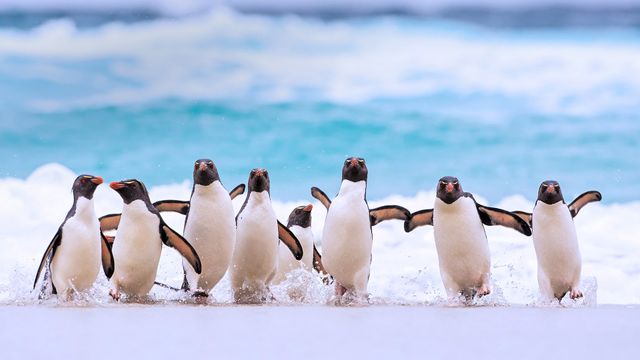 Southern rockhopper penguins on the Falkland Islands
 Sea otter mother and newborn pup, Monterey Bay, California
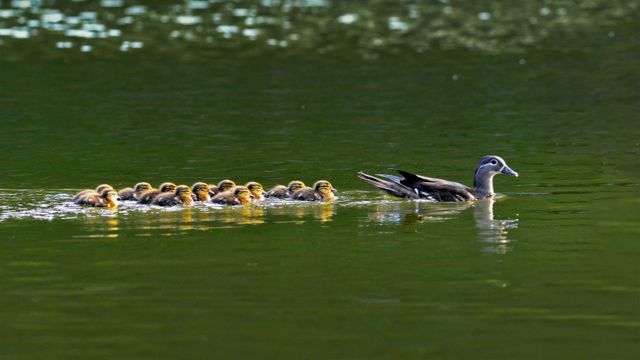 Mandarin duck hen with ducklings in South Korea
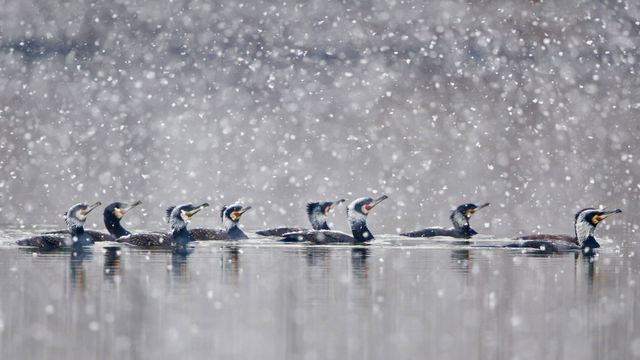 Great cormorants gliding through a snowstorm in Hesse, Germany
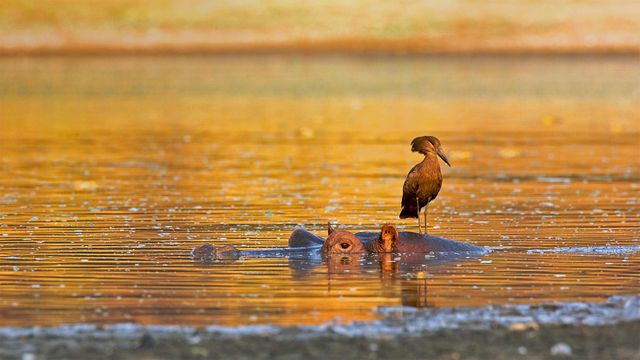 Hamerkop standing on a hippo, Mana Pools National Park, Zimbabwe
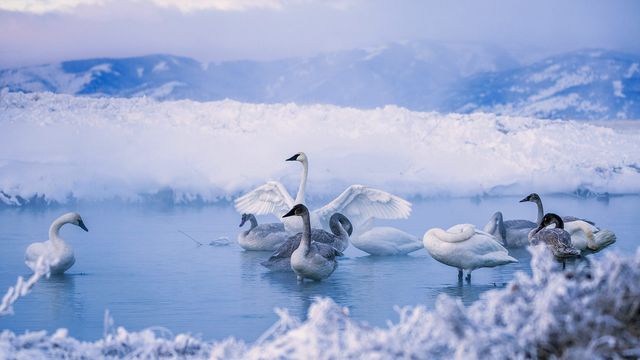 Trumpeter swans at Kelly Warm Springs, near Kelly, Wyoming
Bing Today Images