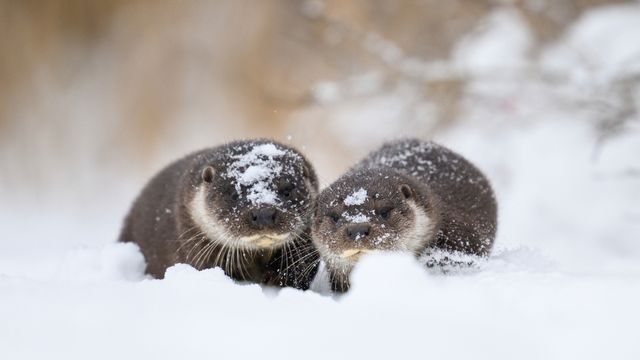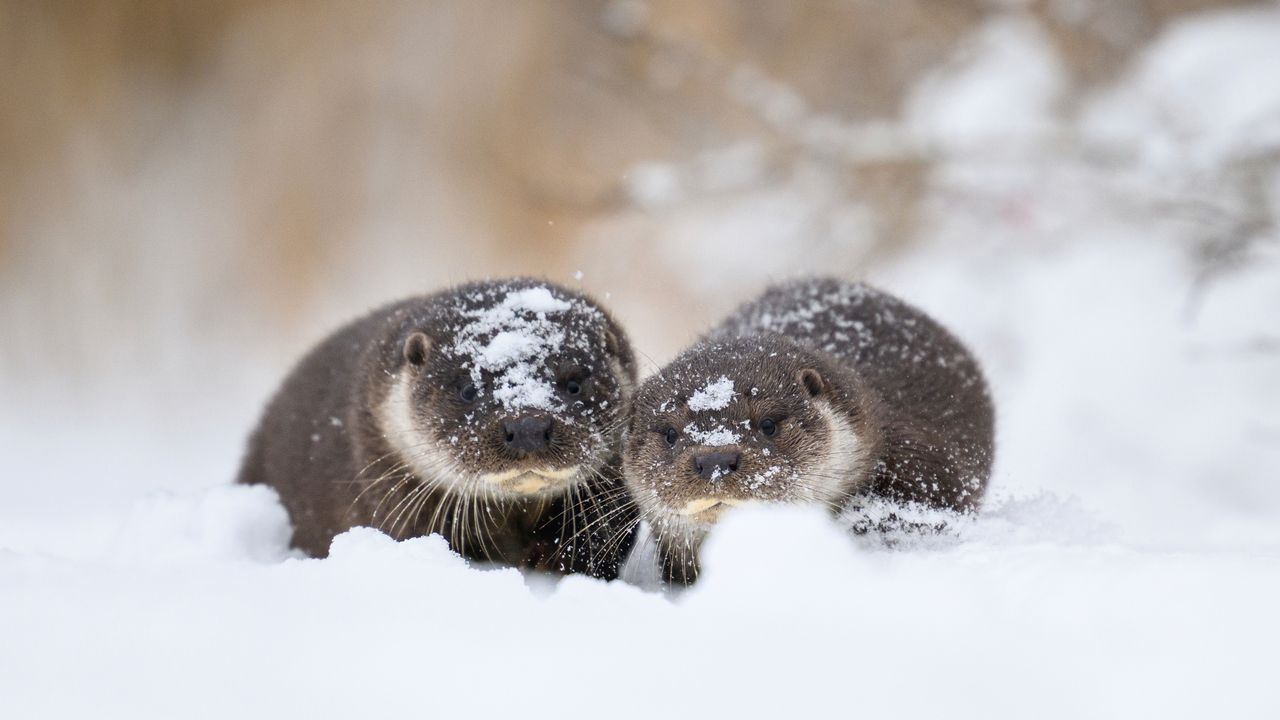
Eurasian otter and pup, Estonia
© Sven Zacek/naturepl.co
Eurasian otters
The clue isn't the tracks in the snow—it's the frosted faces peeking out like they've just discovered winter. Estonia is one of Europe's best places to spot Eurasian otters, thanks to its clean rivers, wide wetlands and snack-filled coastline. This protected species was named Estonia's Animal of the Year in 2024. While globally considered near threatened, their population here has grown substantially, reaching an estimated 2,000 in recent years, up from a historic low of just 300 before the turn of the millennium.
From Soomaa National Park's flooded forests to Matsalu National Park's calm shallows, these mammals—with their streamlined bodies, webbed feet and long tails—weave through the country's waters with ease. Their thick fur traps warm air, allowing them to dive into cold Baltic currents without hesitation. While they look cute, their hunting skills are sharp: they track fish, frogs and crustaceans with precision.
Unlike their sea otter cousins, Eurasian otters tend to work solo, but in Estonia's wetlands, neighbours aren't far away. They communicate with whistles, chirps and occasional snorts. When pups arrive, the banks become playful classrooms where young otters learn to swim, eat and master the 'oops, did I splash you?' face.
Related Images
 Mount Rainier National Park in Washington state
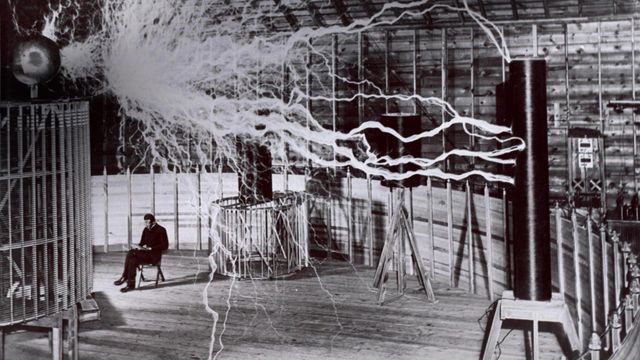 For Science Fiction Day, inventor Nikola Tesla and his ‘magnifying transmitter’
 Yunishigawa Kamakura Festival in Tochigi Prefecture, Japan
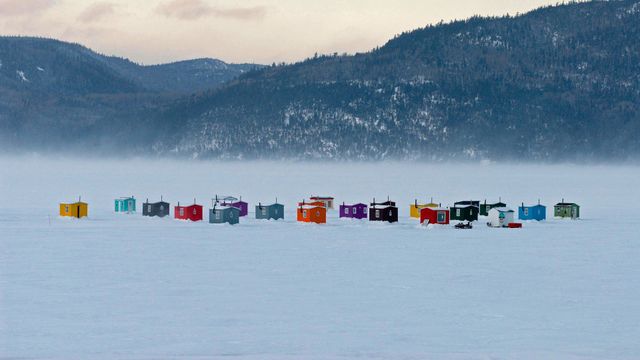 Ice-fishing village near L'Anse-Saint-Jean, Quebec, Canada
 Climbing Athabasca Glacier in Jasper National Park, Alberta, Canada as the Aurora Borealis glows
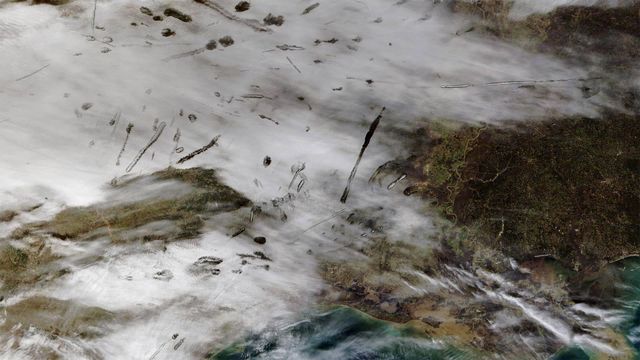 From NASA’s Terra satellite, an image of fallstreak holes in clouds over the southern United States
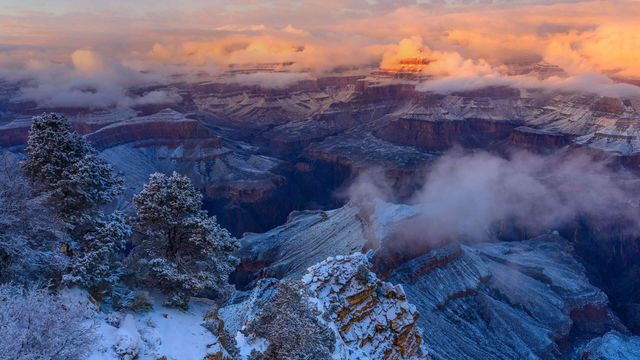 Winter at the Isis Temple in Grand Canyon National Park, Arizona
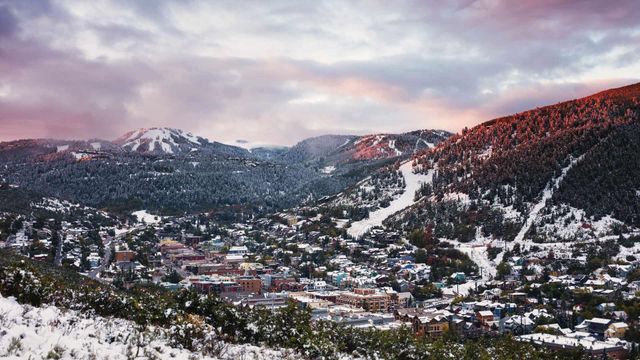 Park City, Utah, for the Sundance Film Festival, which begins today
Bing Today Images