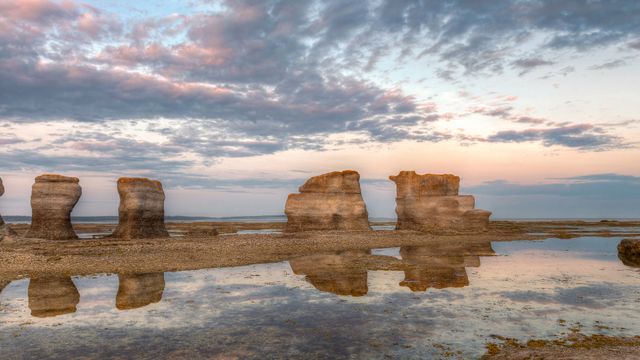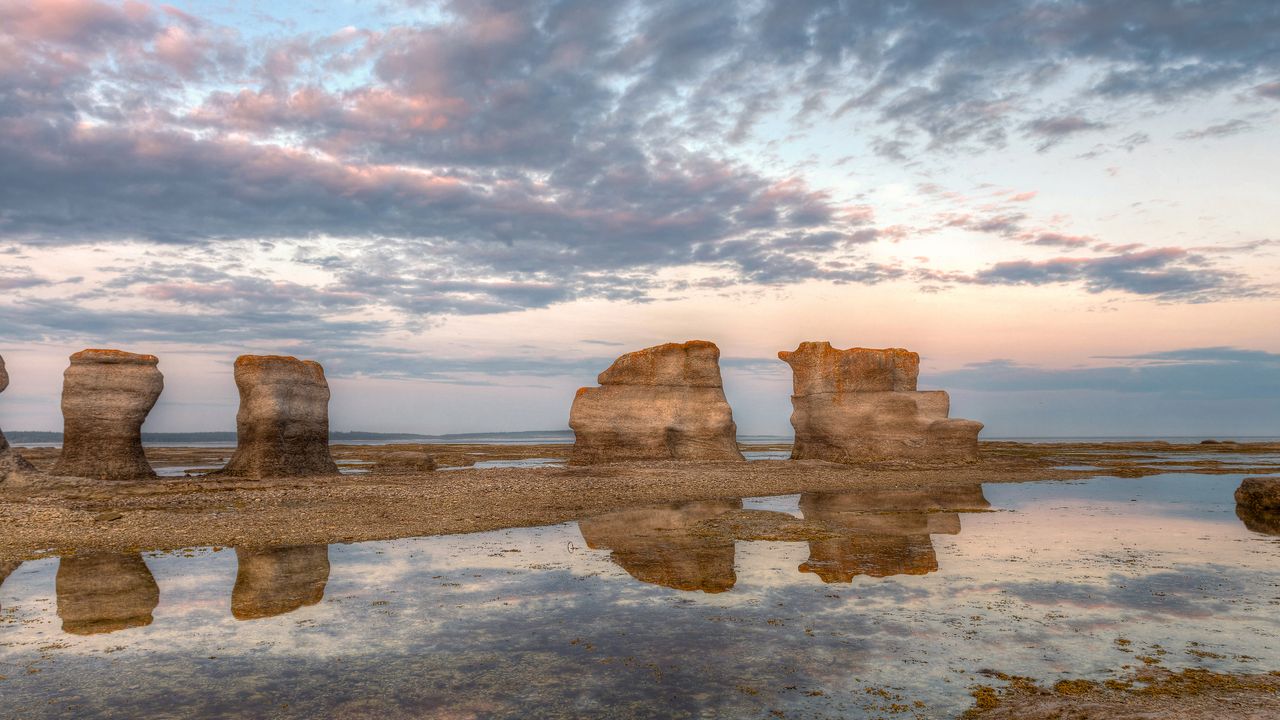
Monoliths of the Mingan Archipelago, Quebec
© David Boutin Photography/Getty Image
Carved by sea and time. Monoliths of the Mingan Archipelago, Quebec
They may resemble ancient statues, but the monoliths of the Mingan Archipelago weren't carved by human hands. These limestone formations began taking shape over 450 million years ago by the power of sea spray, waves and wind. The result? Towering stone pillars that now rise along Quebec's coastline, standing firm as the tide continues its slow work. The surrounding tide pools come alive at low tide, revealing starfish, sea urchins and other marine life. The Mingan Archipelago National Park Reserve, where these formations are found, is a quiet haven for wildlife established in 1984. The area is a seasonal stop for Atlantic puffins, which arrive between late May and August to breed and raise their chicks on the cliffs and grassy spaces. The park is also known for its seabird colonies, seal sightings and plant life adapted to harsh coastal conditions. It's a landscape that quietly speaks of time, tide and resilience.
Related Images
 Toronto sign in Nathan Phillips Square by the City Hall, Toronto
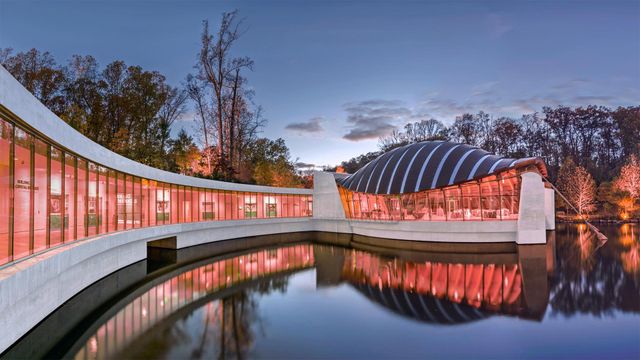 The Crystal Bridges Museum of American Art in Bentonville, Arkansas
 The Harbin Ice and Snow Festival in China
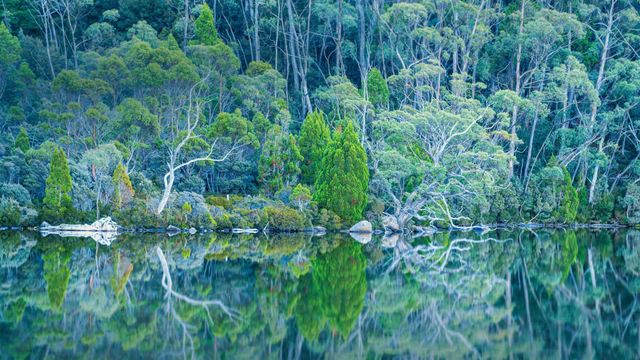 Lake Dobson in Mount Field National Park of Tasmania
 Trillium Lake in Mount Hood National Forest, Oregon
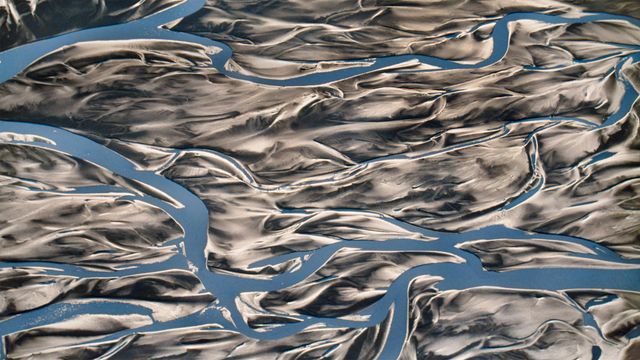 The Copper River Delta in Wrangell-St. Elias National Park and Preserve, Alaska
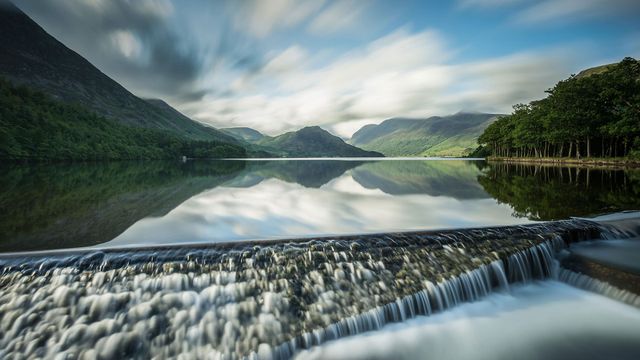 Reflections on Crummock Water in the Lake District, Cumbria, England
 Minnestimma Lake, Banff, Alta.
Bing Today Images