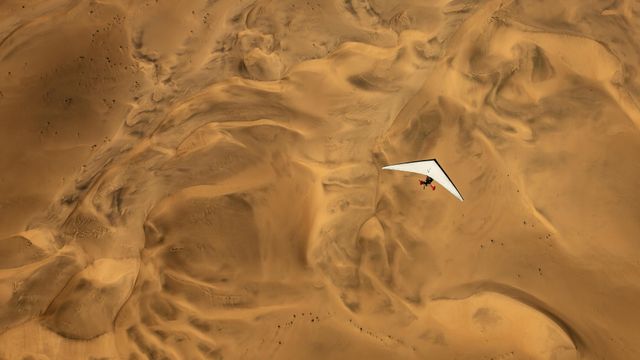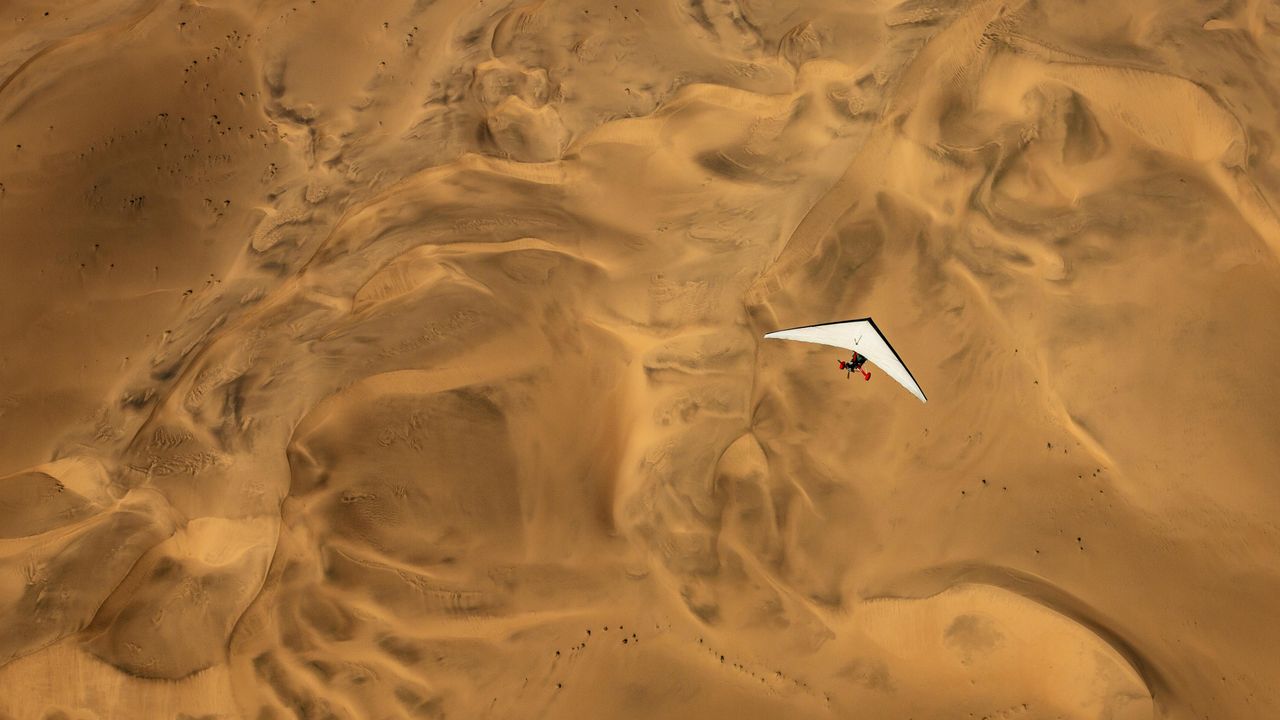
An ultralight aircraft flying over the sands of Namibia
© Burt Johnson/Alamy Stock Phot
Not your average desert trip. An ultralight aircraft flying over the sands of Namibia
Imagine soaring through the skies in an ultralight aircraft, the wind rushing past as you take in the picturesque views. Below, the world's oldest desert, the Namib, stretches endlessly, shaped by winds over 55 million years. This is Namibia—a surreal landscape of towering dunes, dry riverbeds and shifting sands.
Unlike traditional aircraft, ultralights offer an unmatched sense of freedom. Also known as microlights, these small planes are designed for low-altitude, slow-speed flying. Their weight and speed limits vary by country; in the United Kingdom, they must not exceed a maximum take-off weight of 600 kilograms for landplanes and 650 kilograms for seaplanes. The stall speed (minimum speed at which the aircraft can remain in controlled flight) must not exceed 45 knots (approximately 52 miles per hour). With open or semi-enclosed cockpits, ultralights provide breathtaking panoramic views, making each flight an immersive experience. Ultralight aviation emerged in the late 1970s and early 1980s, revolutionising recreational flying. With minimal regulations and lightweight design, these aircraft offer an accessible and exhilarating way to explore some of the world's most remote and beautiful places, like the one we see in today's image.
Related Images
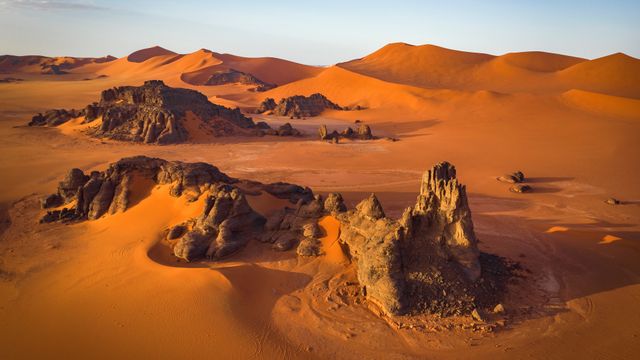 Rock formations and sand dunes in the Sahara, Djanet, Algeria
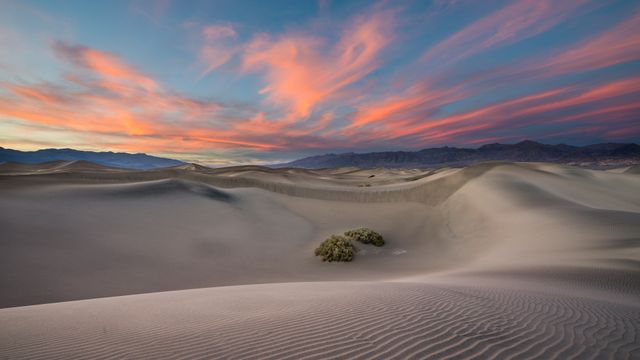 Mesquite Flat Sand Dunes in Death Valley National Park, California, United States
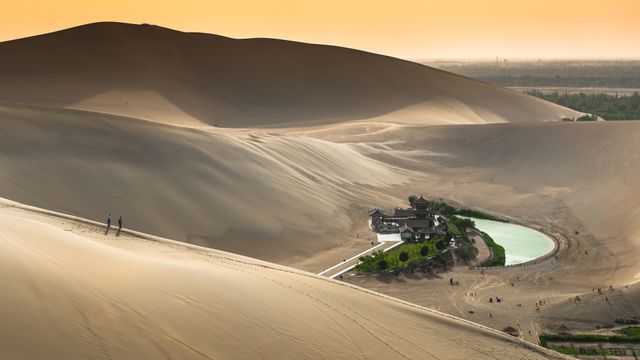 Crescent Lake near Dunhuang, Gansu Province, China
Bing Today Images