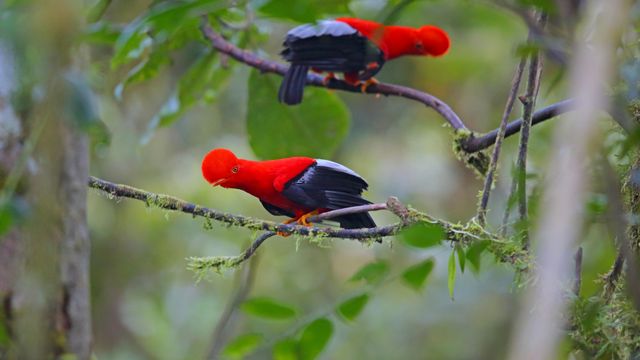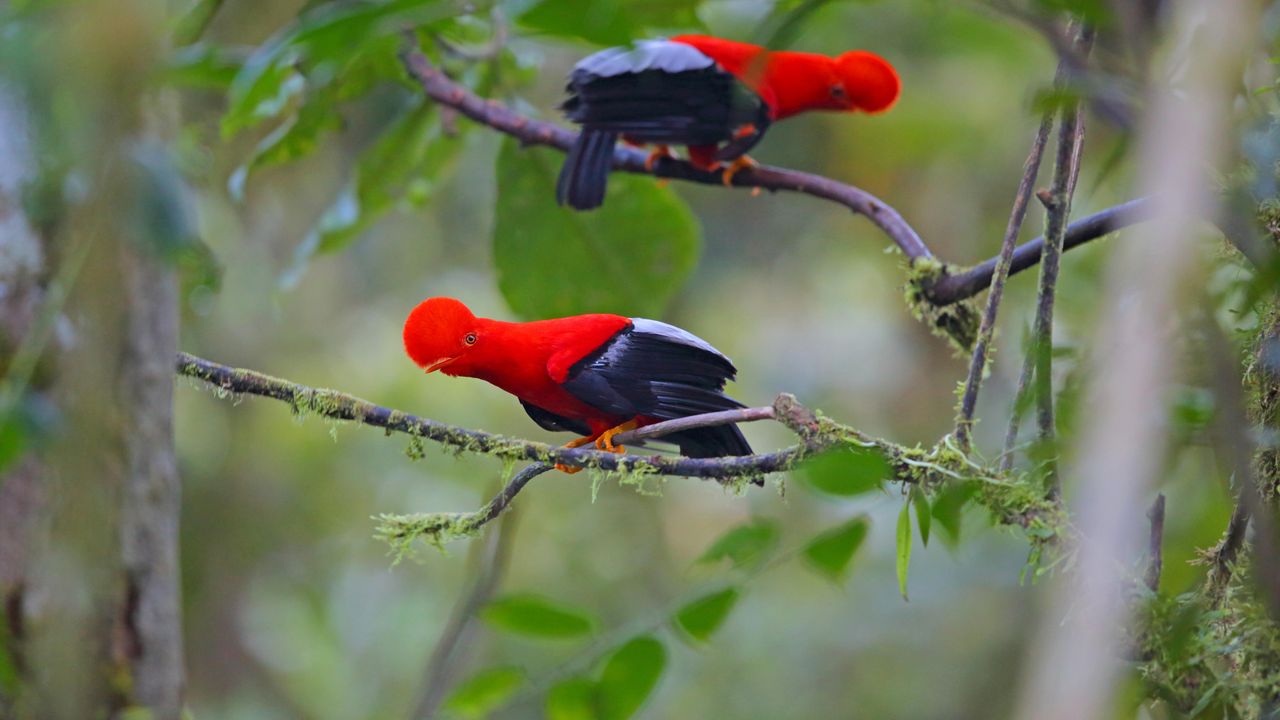
Andean cocks-of-the-rock, Ecuador
© Kit Day/Alamy Stock Phot
Double the drama. Andean cocks-of-the-rock, Ecuador
If fashion had a bird ambassador, the cock-of-the-rock would steal the spotlight. The males look like they're wearing a bright orange-red costume, complete with a huge crest that almost covers their beak. With its bold colors, this native South American bird isn't just about looks—it's got the moves too. The Andean and Guianan cock-of-the-rock are renowned for their theatrical courtship dances, making them true head-turners of the feathered kingdom. Females are far less flashy, with brownish feathers that help them stay hidden. During the mating season, males gather in leks—noisy display arenas—where they hop, squawk, and shake their heads in an effort to impress a female. She watches, picks the best dancer, mates, and then flies off to build a concave, cup-shaped mud nest on a rocky surface.
The female typically lays two white eggs and incubates them for 25 to 28 days, raising the chicks on her own. The Andean cock-of-the-rock thrives in the cloud forests of the Andes, favoring dense, fruit-rich areas in Venezuela, Colombia, Ecuador, Peru, and Bolivia. As a frugivore, it primarily eats fruit and helps spread seeds throughout its habitat. It occasionally consumes insects and small vertebrates.
Related Images
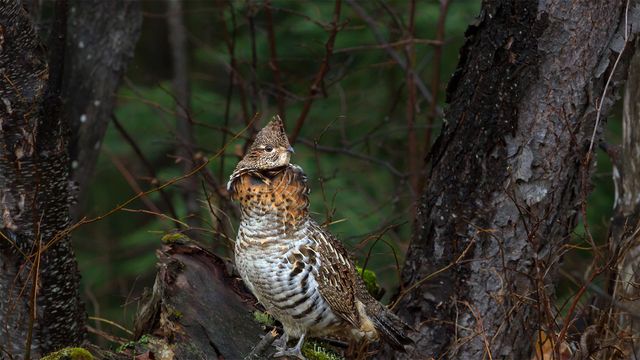 Ruffed grouse in Algonquin Provincial Park, Ontario, Canada
 Male mountain bluebird in Yellowstone National Park, Wyoming
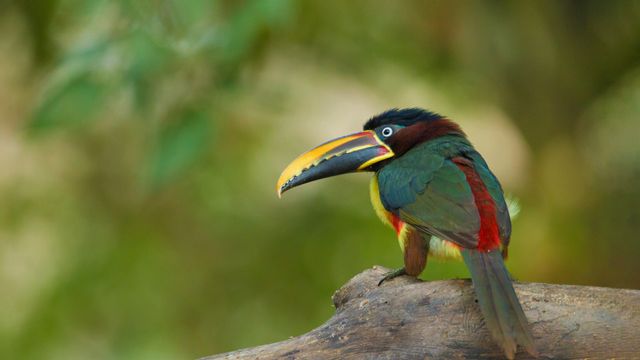 Chestnut-eared aracari in the Pantanal region of Brazil
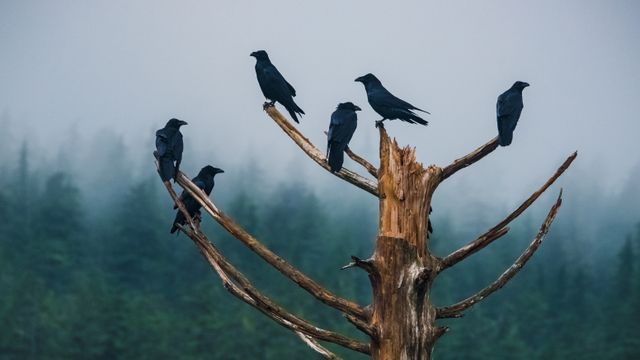 Ravens in Juneau, Alaska
 Giant panda cub at Bifengxia Panda Base, Sichuan, China
 Red squirrels in Cairngorms National Park, Highlands, Scotland
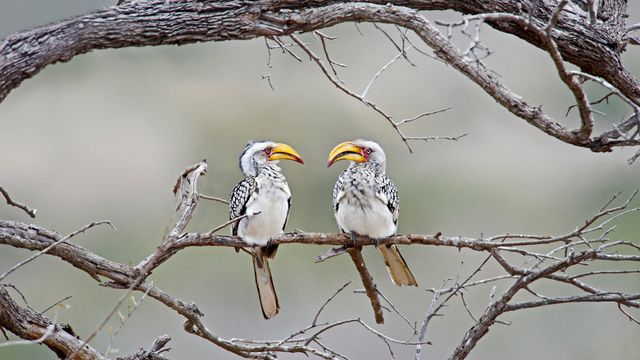 Southern yellow-billed hornbills in Kruger National Park, South Africa
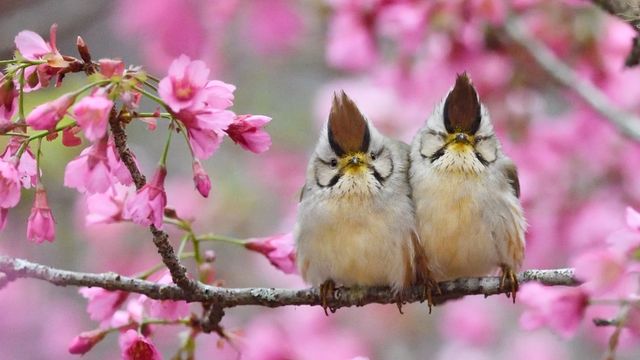 Taiwan yuhina pair, Alishan National Scenic Area, Taiwan
Bing Today Images