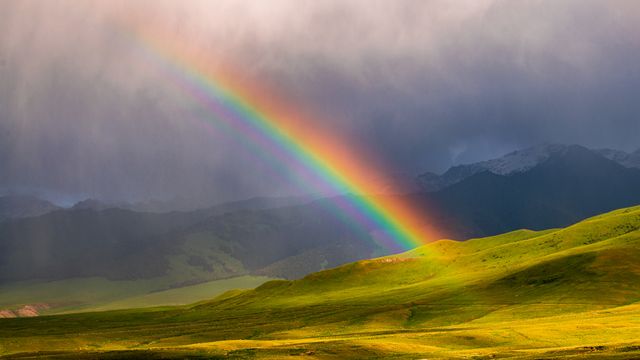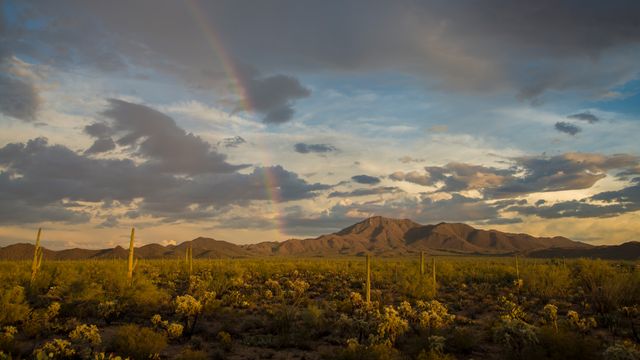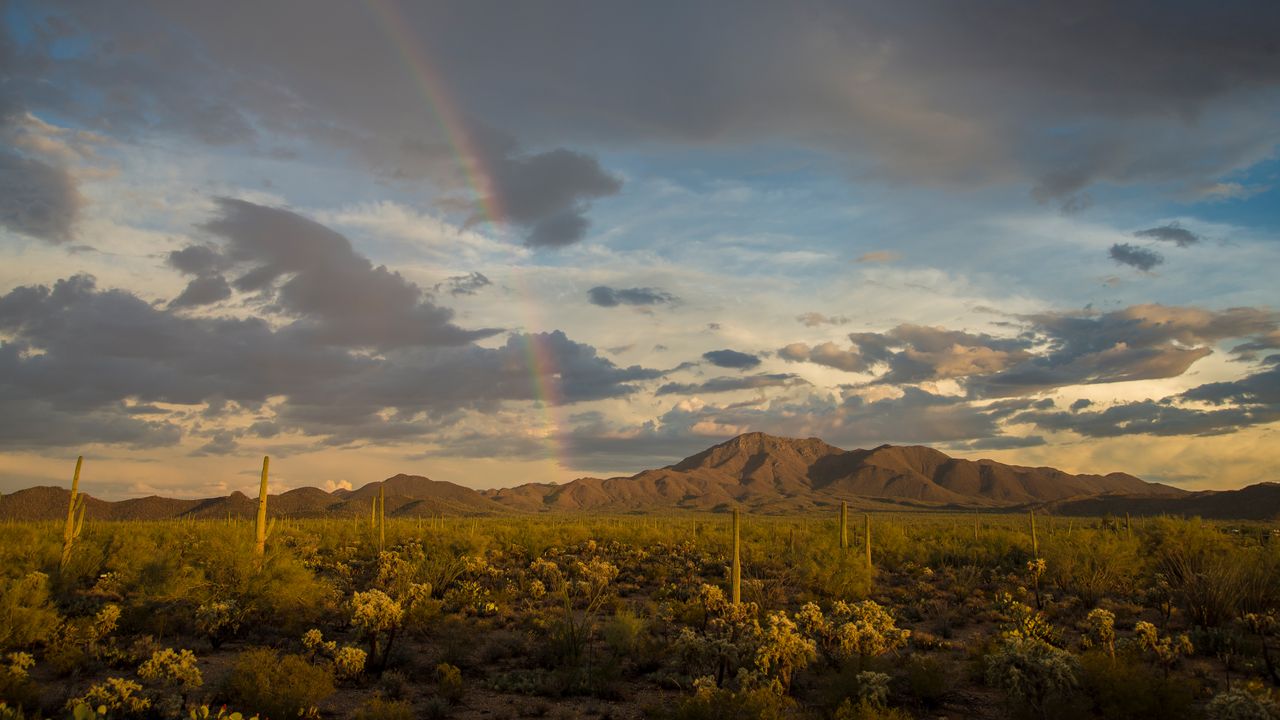
Rainbow over Wasson Peak, Saguaro National Park, Arizona
© Frank Staub/Getty Image
The sky is the limit. National Find a Rainbow Day
Have you ever spotted a rainbow and felt a little lucky? National Find a Rainbow Day, celebrated today, is all about looking to the sky for that magical mix of sun and rain. Nature's color wheel has long been linked to myths and legends, from Norse gods to the Irish leprechaun's pot of gold. But beyond folklore, the science behind rainbows is just as compelling. The first real explanation came from Theodoric of Freiberg, a German physicist, in 1304. He discovered that rainbows form when sunlight enters a raindrop, bends, reflects inside, and then bends again as it exits. This process splits light into its colors, creating the spectrum we see. The classic 'ROYGBIV' (red, orange, yellow, green, blue, indigo, and violet) doesn't tell the whole story—rainbows contain millions of colors blended together.
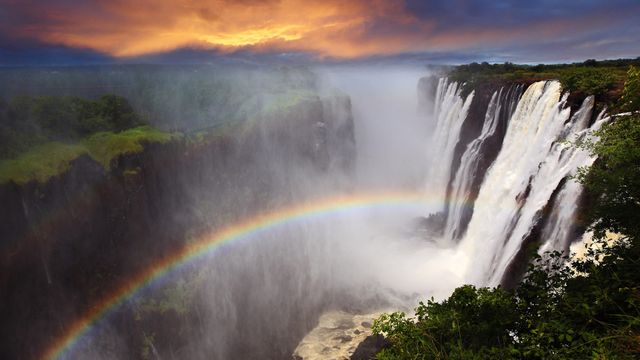
Not all rainbows look the same. Double rainbows occur when a fainter, reversed arc appears above the main one. Moonbows happen at night when moonlight refracts through water droplets. The rare supernumerary rainbow features extra pastel bands inside the primary arc. Today's image features a rainbow over Wasson Peak in Saguaro National Park, Arizona. Against a backdrop of desert cacti and rocky slopes, the vibrant arc stands out in a place where rain is scarce, proving that even the driest landscapes can surprise you.
Related Images
 Leopard snoozing in a tree in Namibia for National Napping Day
 For International Beaver Day, a beaver swimming in Grand Teton National Park, Wyoming
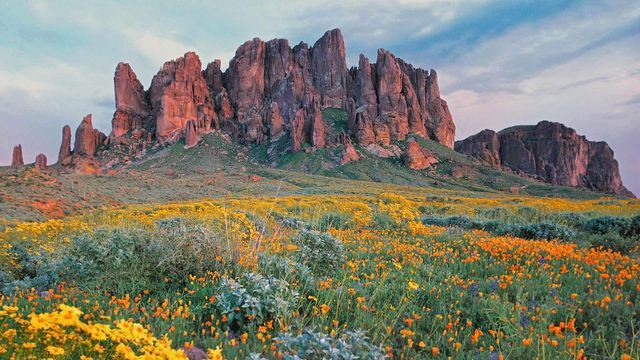 Wildflowers in bloom at Lost Dutchman State Park in Arizona
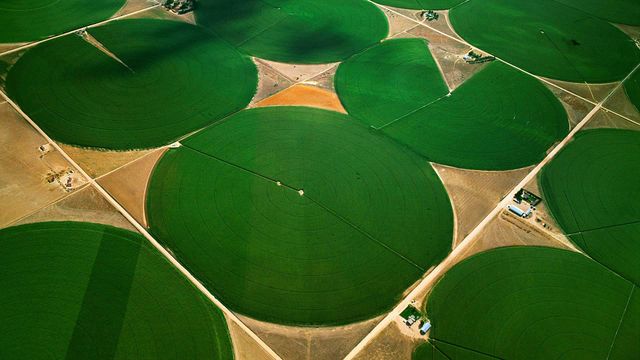 Circular agricultural fields in Morgan County, Colorado
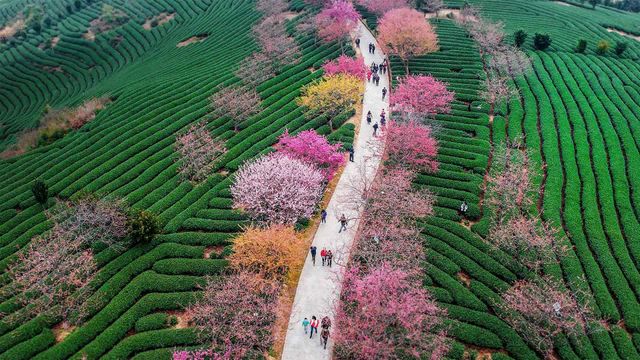 Blossoming cherry trees at a tea plantation in Longyan, China
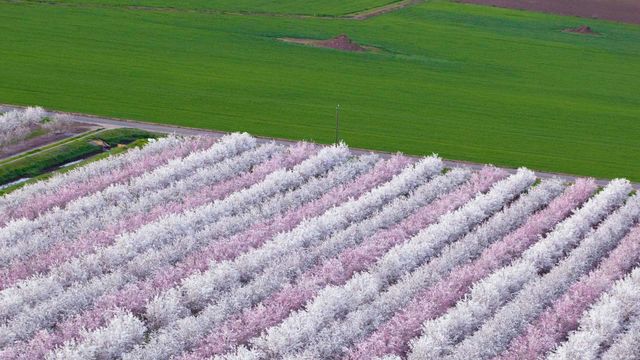 Almond orchards in bloom, Sacramento Valley, California
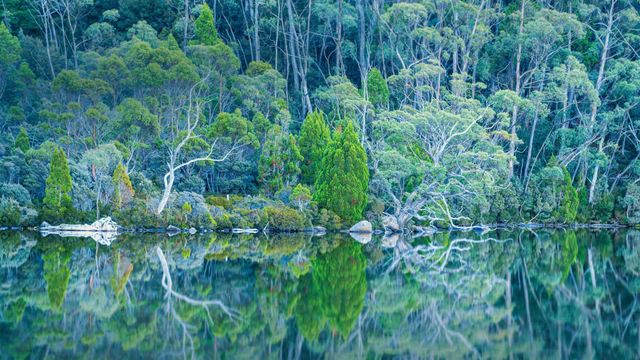 Lake Dobson in Mount Field National Park of Tasmania
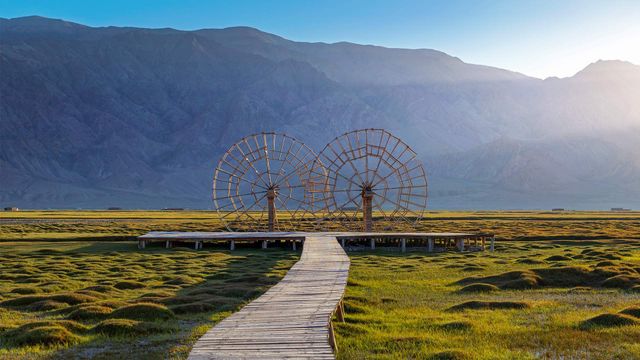 Water wheels in the Tashkurgan Grassland, Tashkurgan Tajik Autonomous County, Xinjiang, China
Bing Today Images