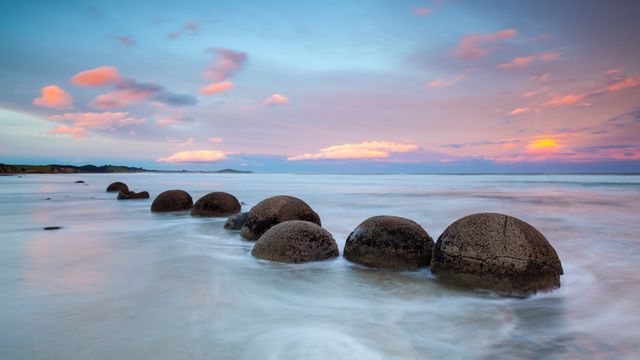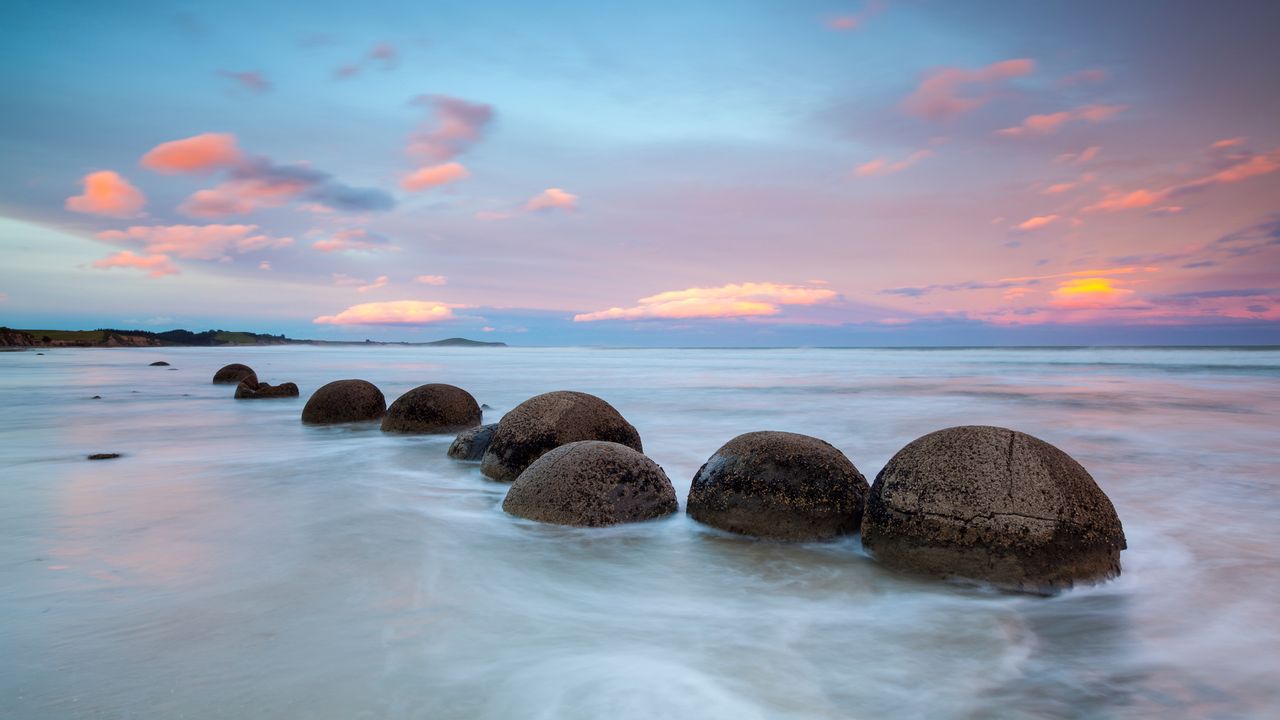
Moeraki Boulders, South Island, New Zealand
© Douglas Pearson/eStock Phot
Rocks and rollers. Moeraki Boulders, South Island, New Zealand
Are you ready to rock the new year? Today is Old Rock Day, a day for celebrating and learning about old rocks and fossils. Although rocks are common, few of us take the time to consider how amazing they are. Forged in volcanoes or moulded by millennia of pressure, these solid masses of minerals hold the key to understanding how our planet formed. Rocks can also contain fossils, the remnants of long-extinct organisms, which give scientists clues about what creatures and plants have lived on Earth during its 4.5-billion-year history. The United Kingdom, with its rich geological diversity, provides a front-row seat to the ancient forces that shaped our planet. On the Jurassic Coast in Dorset and East Devon, rocks over 180 million years old tell tales of dinosaurs, ancient seas and volcanic activity. And don't forget the Giant's Causeway in Northern Ireland, with its impressive columns of basalt.
One of the world's most curious rock displays can be found on Koekohe Beach in New Zealand. The Moeraki Boulders, some of which are more than 2 metres in diameter, have been shaped by nature over millions of years. Each boulder started as a pebble on the seabed around 65 million years ago. Over time, layers of mud and silt built up around them, cemented together by calcite. Thanks to erosion and the movement of the sea, the boulders eventually emerged. Today, new boulders are still appearing, while the elements are slowly breaking down existing ones.
Related Images
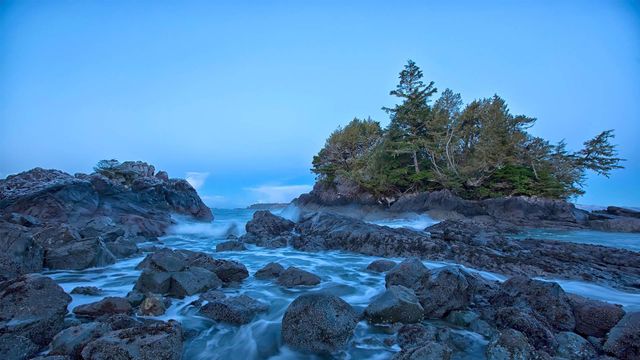 Shoreline near Tofino on Vancouver Island, British Columbia, Canada
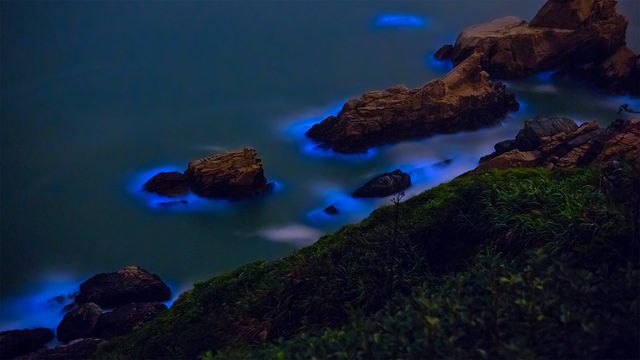 Bioluminescent algae along the shores of the Matsu Islands off the coast of Taiwan
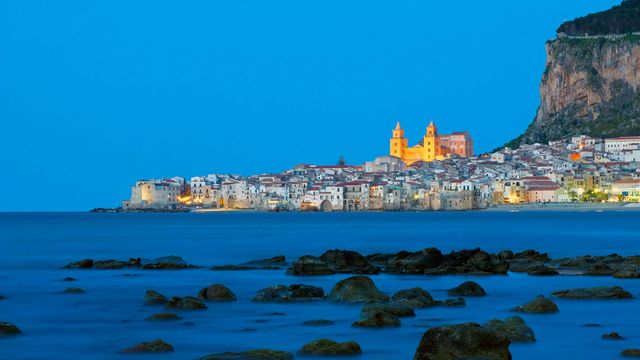 Cefalù on the Tyrrhenian coast of Sicily, Italy
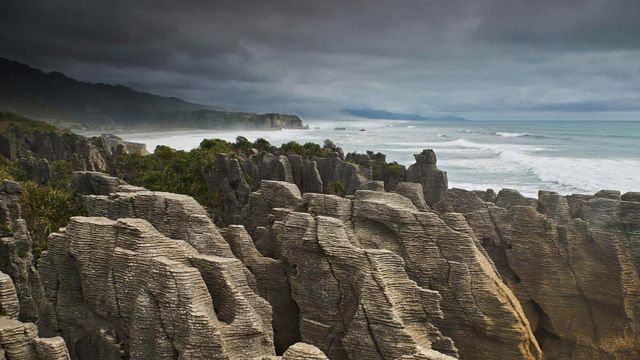 For Waitangi Day, the Pancake Rocks on New Zealand’s South Island
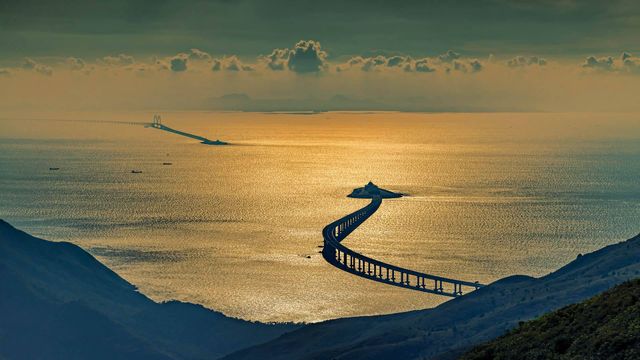 Hong Kong-Zhuhai-Macau Bridge, China
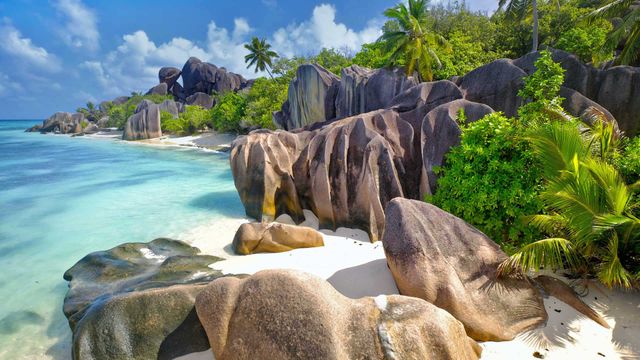 La Digue, an island in the Seychelles
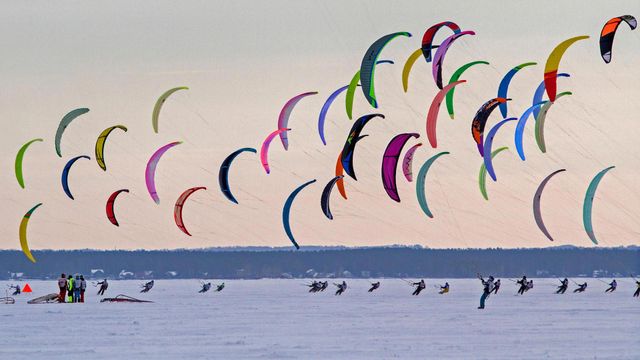 Siberian Snowkiting Cup in Novosibirsk, Russia
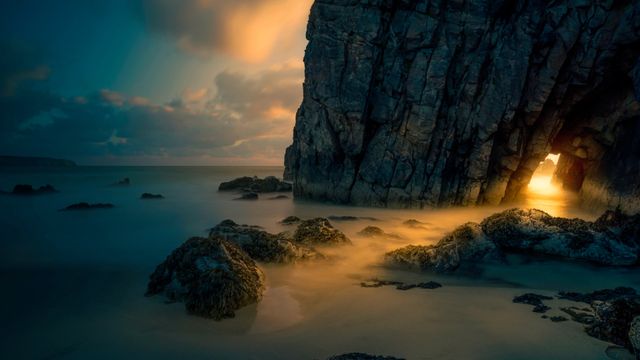 Light from sunrise through a sea cave on the Isle of Skye, Scotland
Bing Today Images