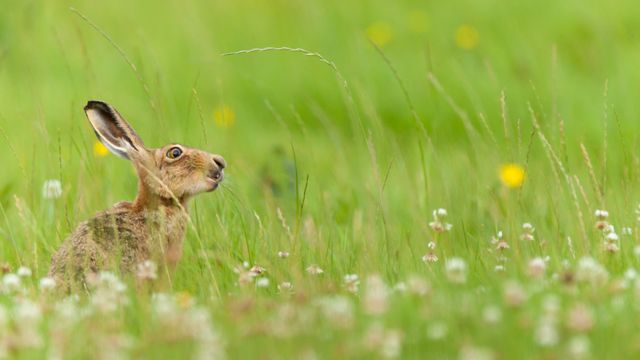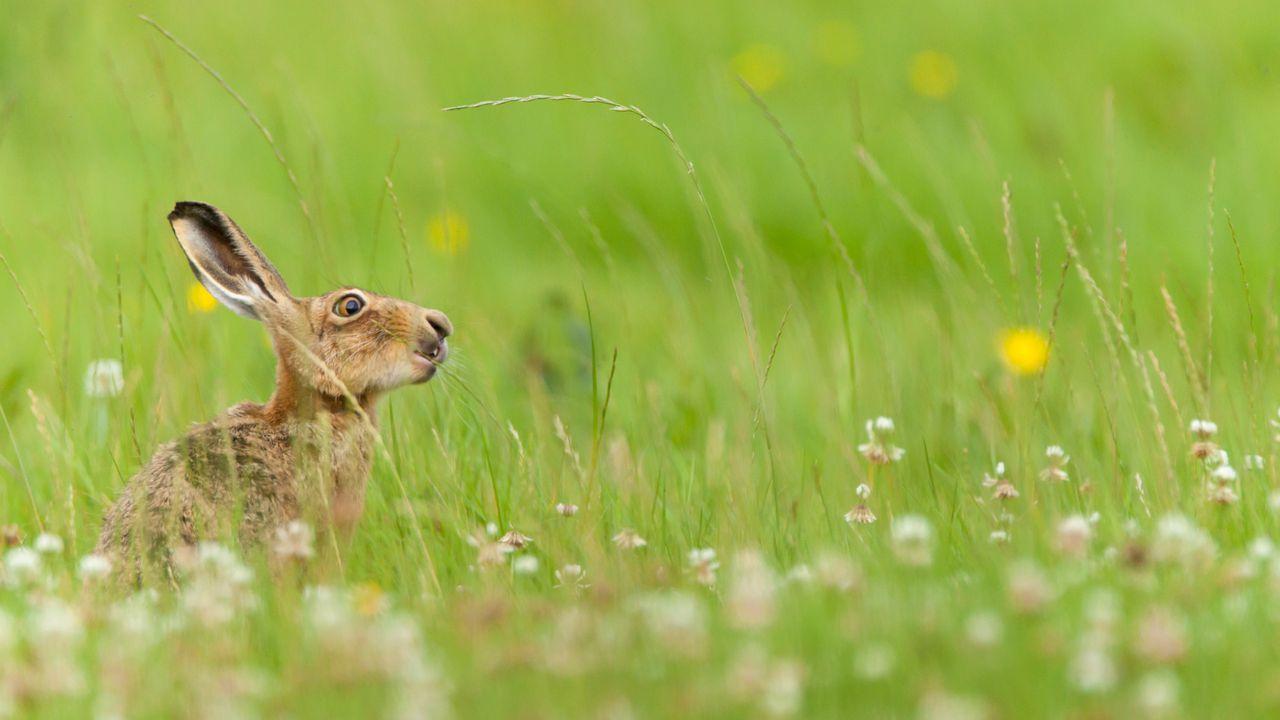
European hare, West Midlands, England
© Jake Stephen/Moment/Getty Image
Have you been 'hare' before?. European hare
Springtime brings a whirlwind of activity across the European meadows. The European or brown hare bursts into a frenzy of what is dubbed 'March madness.' Britain's fastest land mammals become a captivating sight, chasing and 'boxing' in the fields. Native to Europe and parts of Asia, these hares' tawny coat is perfect camouflage for the temperate, open landscapes they favour. Their diet of grasses and herbs, and in winter, twigs and bark, fuels their remarkable bursts of speed, essential for outrunning predators. Unlike their burrow-dwelling rabbit cousins, hares bear their young, known as leverets, above ground. From birth, these youngsters are on the move—furry, wide-eyed and precociously active.
While listed as 'least concern' by the International Union for Conservation of Nature, experts warn that hare populations have been waning since the 1960s, largely due to intensive farming practices. As wanderers of the wide-open lands and protagonists in countless myths and works of art, European hares continue to leap through our cultural fabric and across our fields, embodying the wild and unpredictable spirit of nature itself.
Related Images
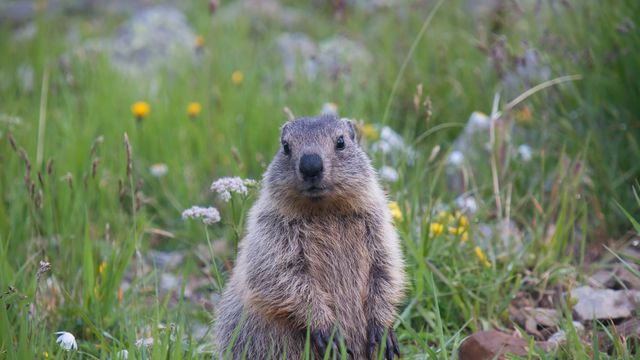 Young alpine marmot
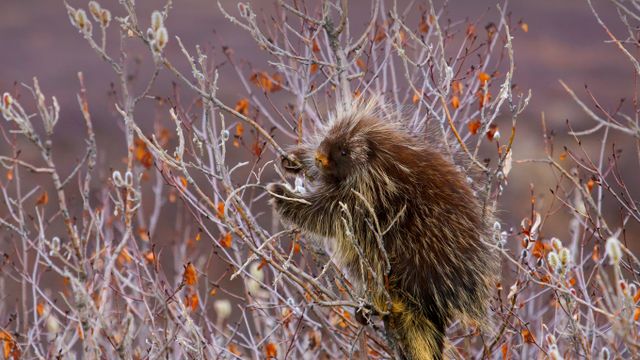 Porcupine hangs on a willow tree branch, Alaska, USA
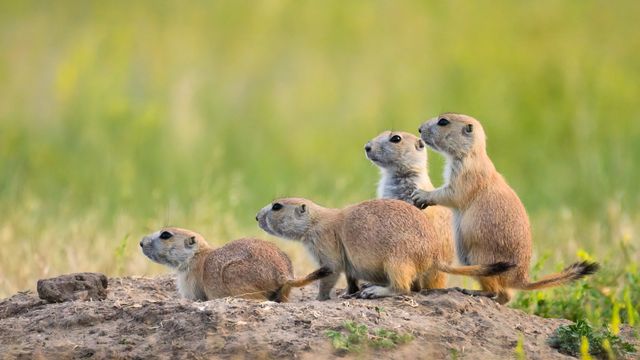 Black-tailed prairie dogs at Roberts Prairie Dog Town, Badlands National Park, South Dakota, USA
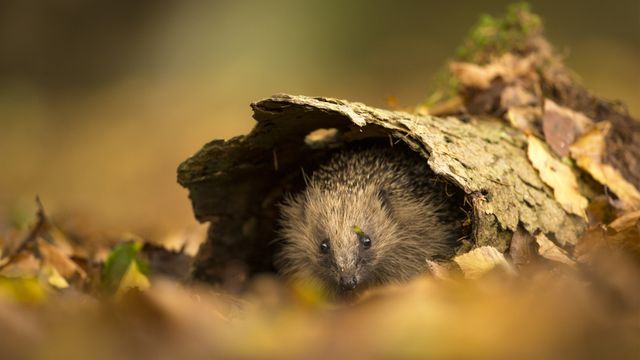 European hedgehog sheltering in tree bark, Sussex
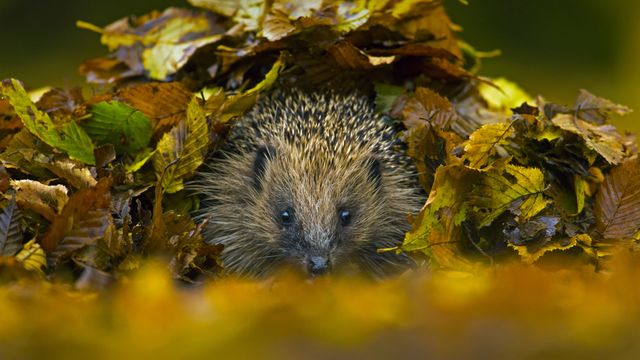 Hedgehog (Erinaceus europaeus) sheltering in a pile of fallen leaves, Sussex
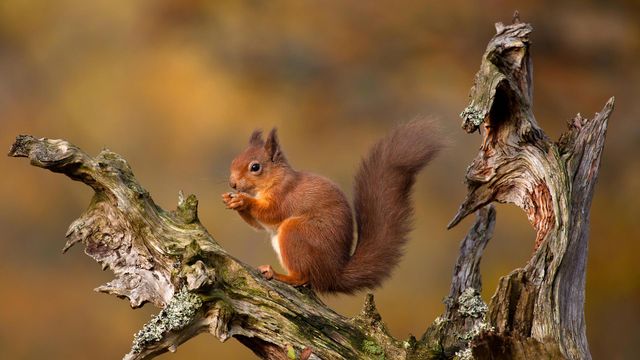 Eurasian red squirrel in the Cairngorms
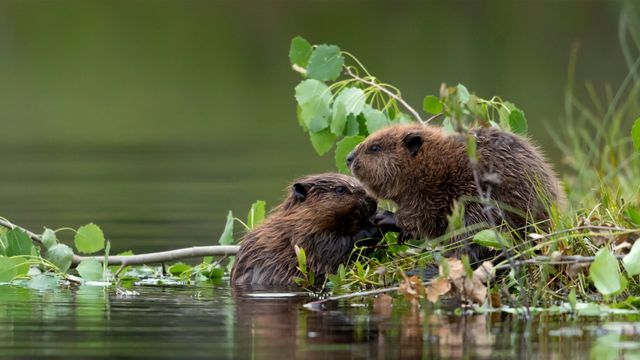 Baby Eurasian beavers, Finland
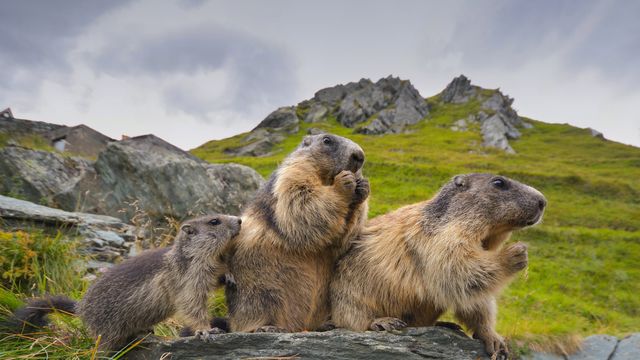 Alpine marmots in Hohe Tauern National Park, Austria
Bing Today Images