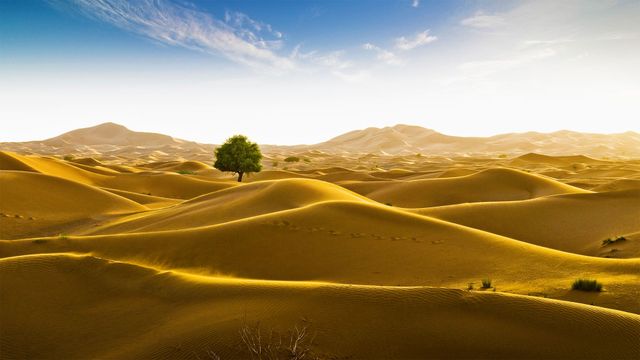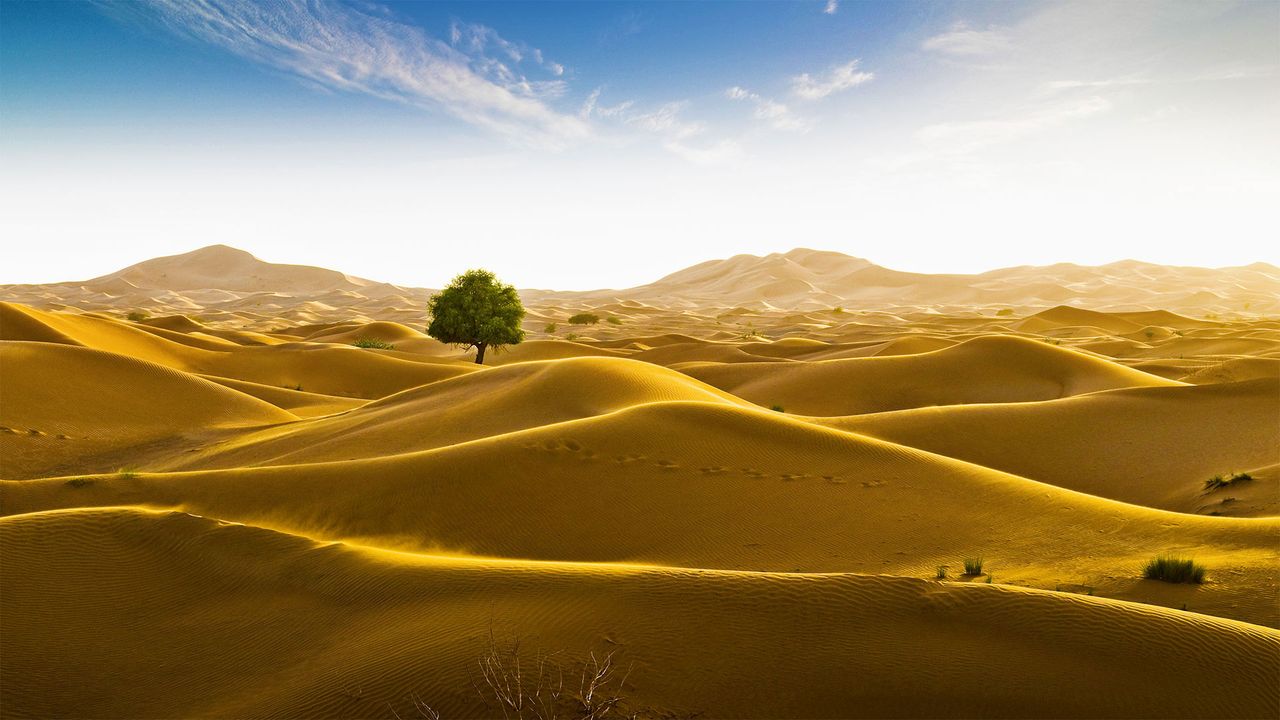
Rub' al Khali desert on the border of Oman and the Emirate of Dubai
© Daniel Schoenen/Offset by Shutterstoc
Signs of life in the 'Empty Quarter'
An unlikely tree stands amid the seemingly endless dunes of the Rub' al Khali desert in the Arabian Peninsula. The Rub' al Khali, meaning the 'Empty Quarter,' is a vast sea of sand. Spreading across 650,000 square kilometres, it's the largest contiguous sand desert in the world, covering most of southeastern Saudi Arabia, with smaller portions in Yemen, Oman, and the United Arab Emirates. One of the driest places on Earth, almost no one lives in Rub' al Khali, and much of the desert remains unexplored. Some of the dunes tower more than 200 metres, and the depressions in between—called sabkhas—can be so soft that vehicles, camels, and people can easily get stuck.
The Rub' al Khali wasn't always so forbiddingly dry. At various times between 2,000 and 6,000 years ago, 'cataclysmic rainfall,' like modern-day monsoons, formed shallow lakes in the spaces between the dunes. Most of these lakes were temporary, but some lasted hundreds of years and supported a variety of plants and animals, even large creatures like hippopotamuses, water buffalo, and long-horned cattle. Rain isn't unheard of today, either. In May 2018, Cyclone Mekunu brought enough rain to once again form lakes in the Rub' al Khali, reportedly the first time that had happened in about 20 years—it was the rare occasion when the 'Empty Quarter' wasn't looking so empty after all.
Related Images
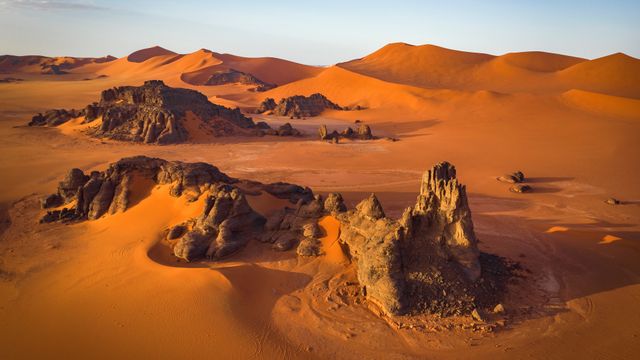 Rock formations and sand dunes in the Sahara, Djanet, Algeria
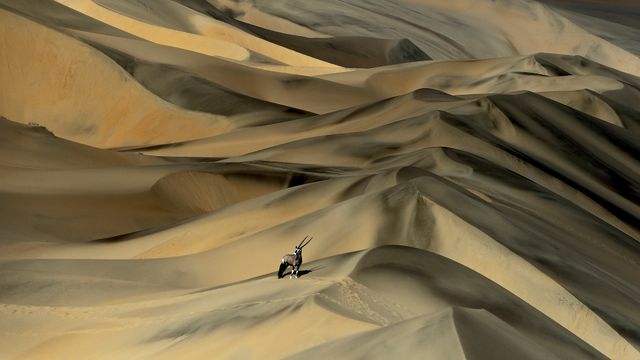 Gemsbok (Oryx gazella) in sand dunes, Namibia
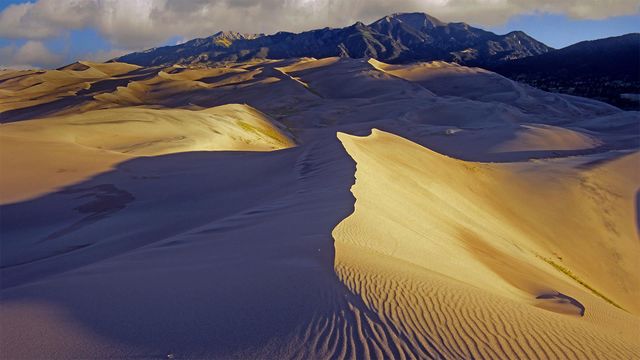 Sand dunes with Sangre de Cristo Mountains in the background, Great Sand Dunes National Park and Preserve, Colorado
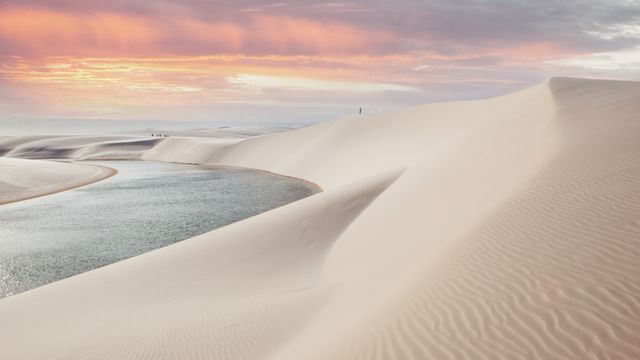 Sunset in Lençóis Maranhenses National Park, Maranhão, Brazil
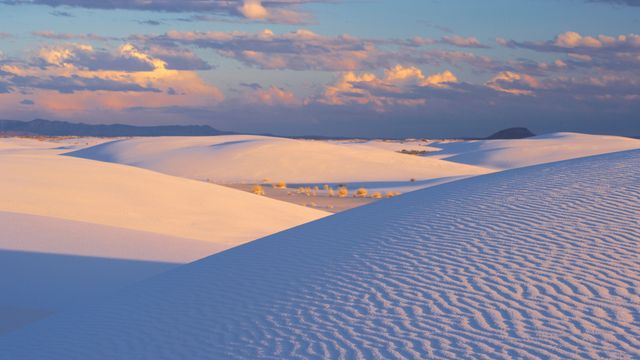 Sunset at White Sands National Park, New Mexico, USA
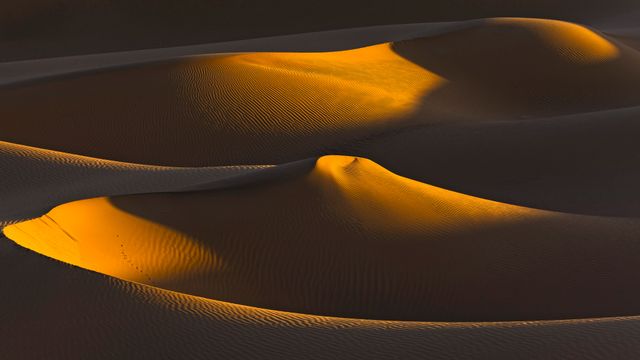 Last rays of sun on a group of dunes, Sahara, Algeria
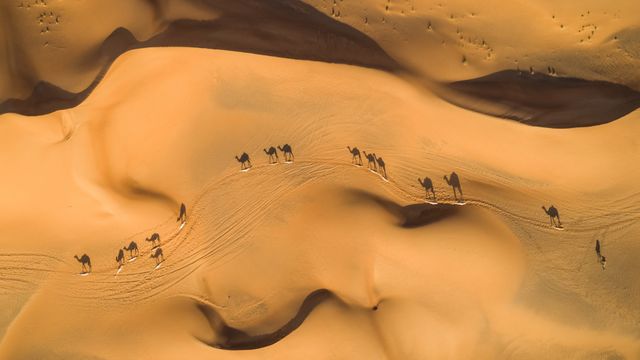 Camels in the desert, United Arab Emirates
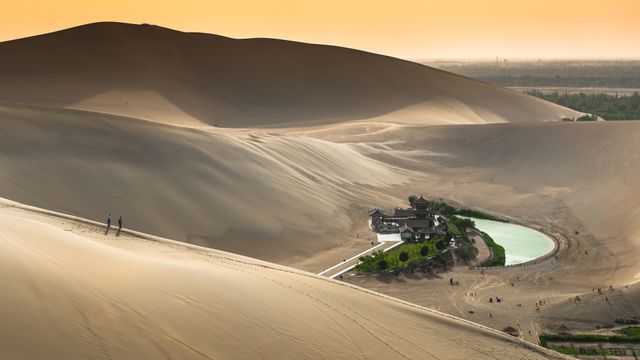 Crescent Lake near Dunhuang, Gansu Province, China
Bing Today Images