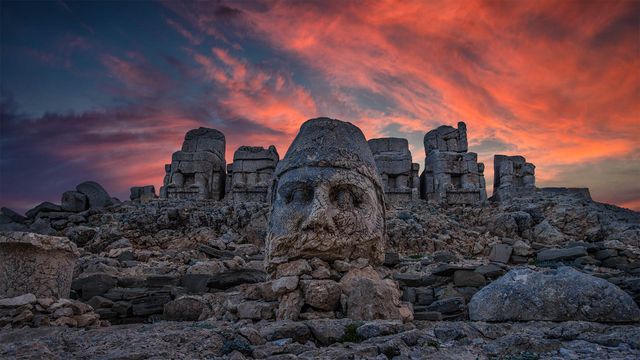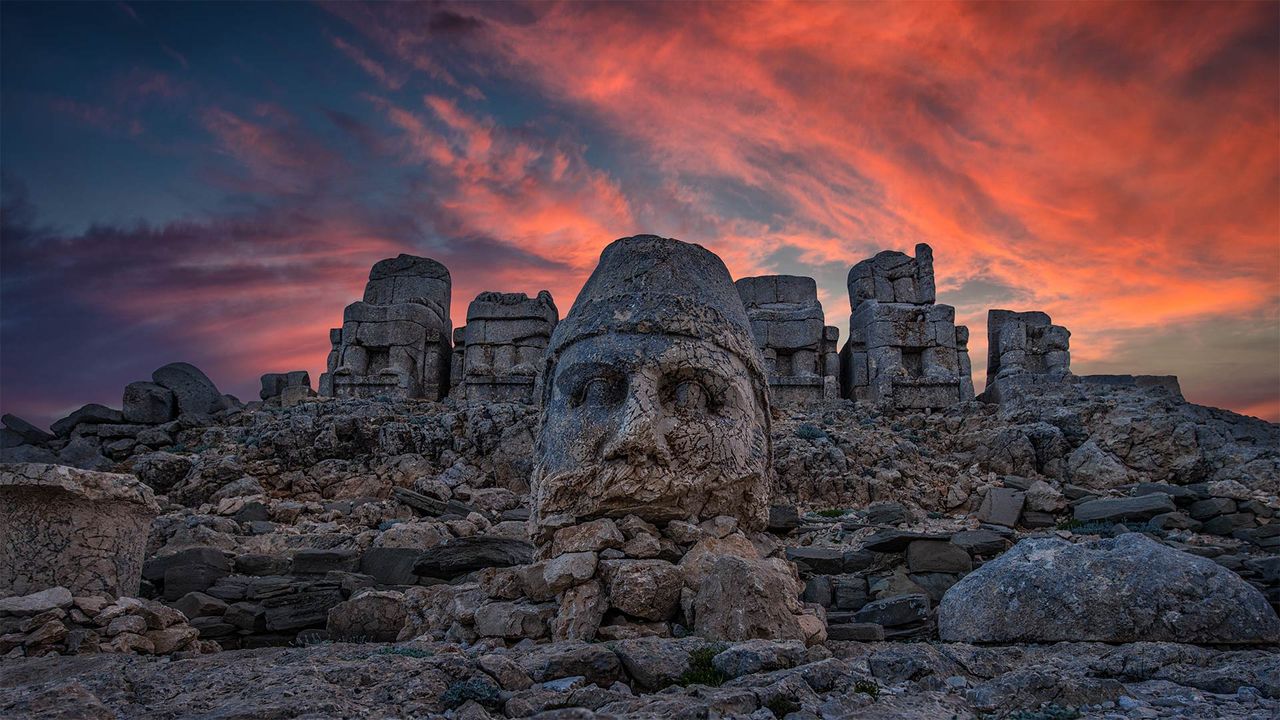
Colossal limestone statues on Mount Nemrut, Adıyaman, Turkey
© Peerakit JIrachetthakun/Getty Image
The mountaintop of toppled gods
The ruins on Mount Nemrut depict a gaggle of gods from both Greek and Persian traditions, plus a few deities that King Antiochus I made up himself. The range of spiritual faiths represented in the statues found near the 7,000-foot summit reflects southeastern Turkey's long history as a crossroads of cultures. Today, the derelict statues are protected as a UNESCO World Heritage Site.
In 70 BCE, Antiochus took power here in Commagene, one of several small onetime states formed from the shambles of the Seleucid Empire. Looking to unify his populace, he synthesized a mythology that hailed Greek and Persian figures, from Ares to Zarathustra—plus the king himself and his family. Antiochus' claim to godhood wasn't eternal, as he was deposed in 31 BCE, but sometime before that he cemented his customized state religion in history by having its partial pantheon—including, of course, himself—carved into stone statues on the peak overlooking his kingdom.
Related Images
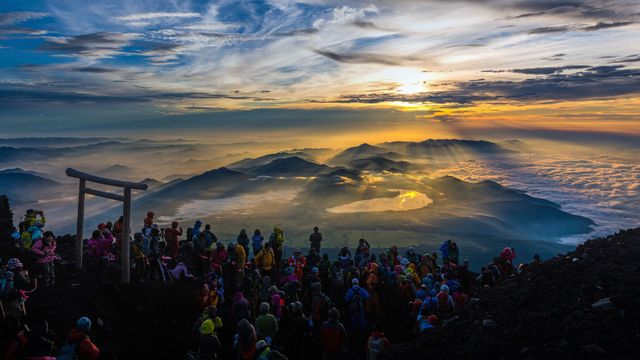 At the top of Mount Fuji in Japan
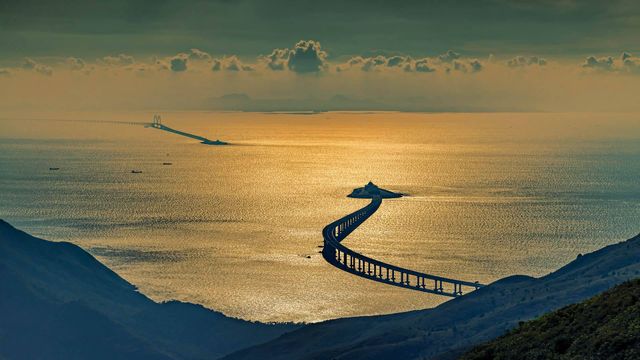 Hong Kong-Zhuhai-Macau Bridge, China
 Wildflowers in bloom at Lost Dutchman State Park in Arizona
 Midnight sun at North Cape, Norway
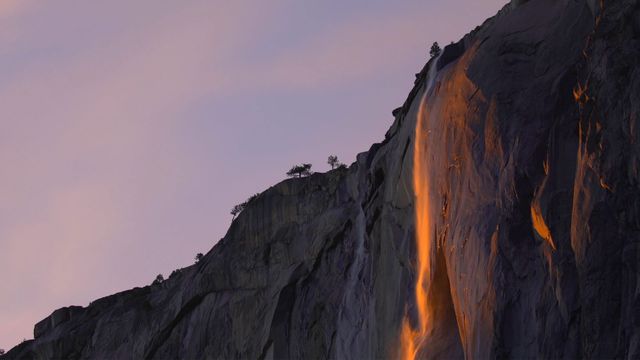 Firefall at Horsetail Fall, Yosemite National Park, California
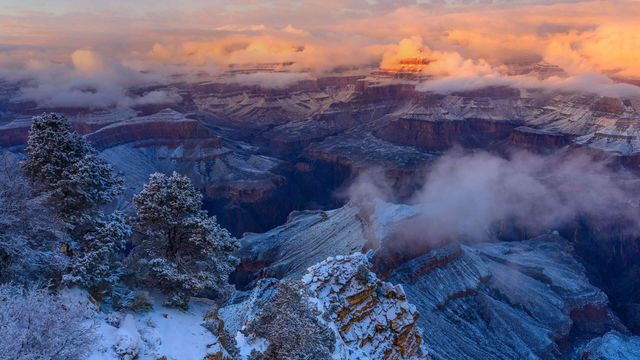 Winter at Isis Temple in Grand Canyon National Park, Arizona
 Paepalanthus flowers at sunset, Chapada dos Veadeiros National Park, Brazil
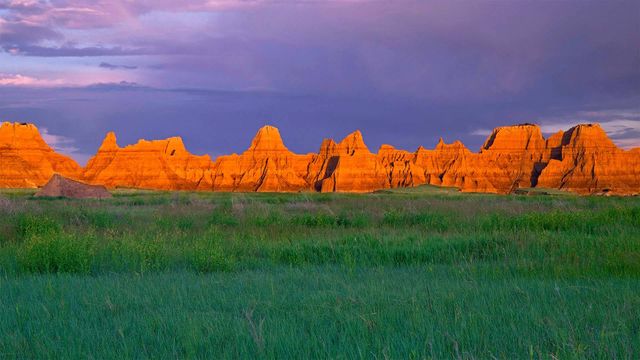 Prairie and pinnacles near Castle Trail in Badlands National Park, South Dakota
Bing Today Images