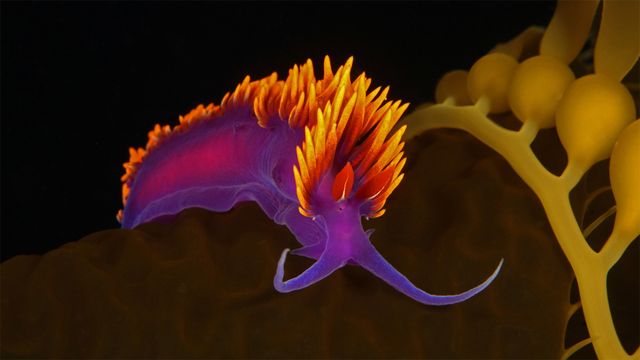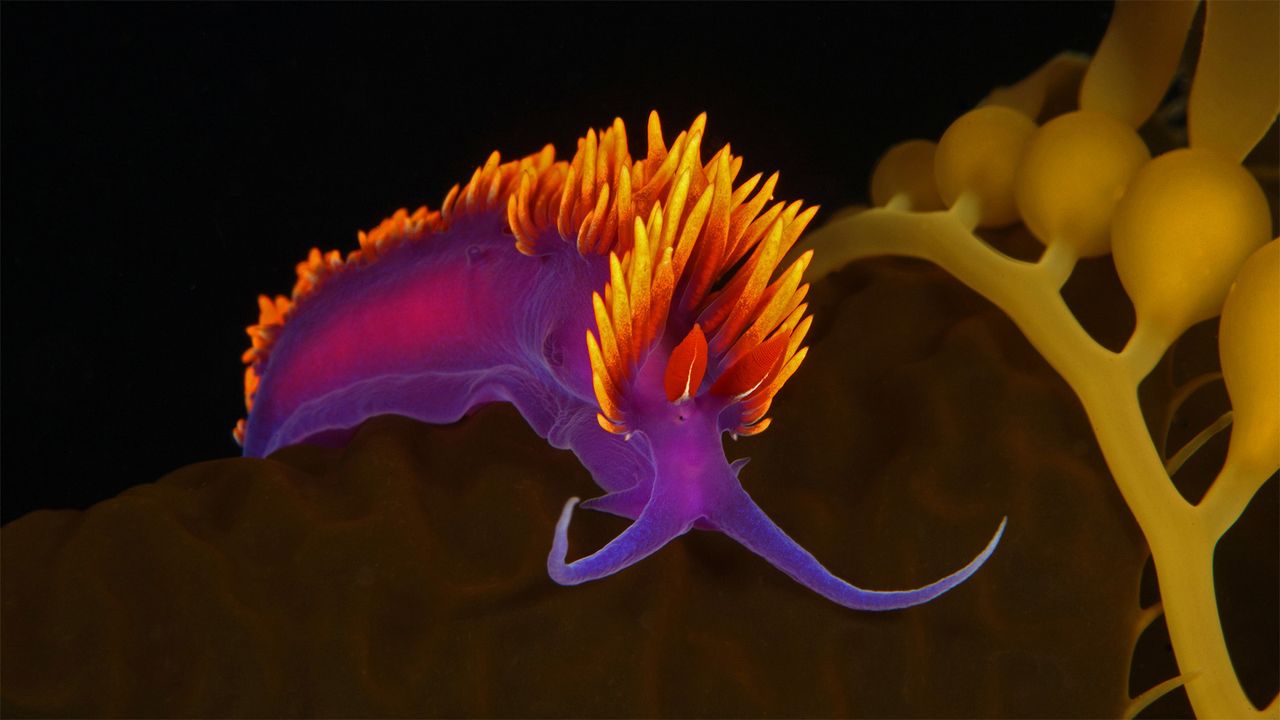
Spanish shawl nudibranch on kelp off Santa Catalina Island, Channel Islands, California
© WaterFrame/Alam
One stylish slug
Today we're meeting one of a motley group of sea slugs called the nudibranchs (rhymes with 'thanks'), known for their unique, often complex shapes and neon-bright colours that help discourage predators. The Spanish shawl's fire-orange mane is made up of tendrils called cerata that mainly act as gills. But that mane also retains venom from the slug's prey—sea anemones—treating any would-be devourers to a painful sting. Should a ravenous sea star disregard these defenses and get too close for comfort, the Spanish shawl has a Plan B: By flapping its whole 5- to 7-centimetre body like a gelatinous wing, the nudibranch can flutter into open water for a quick escape.
Related Images
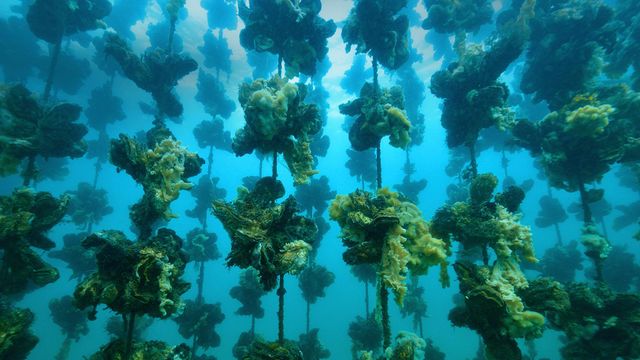 Oyster farm offshore from Notojima Island, Ishikawa Prefecture, Japan
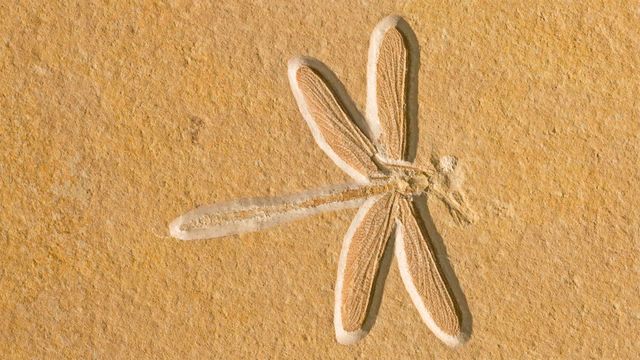 Dragonfly fossil, about 150 million years old, in Solnhofen, Bavaria, Germany
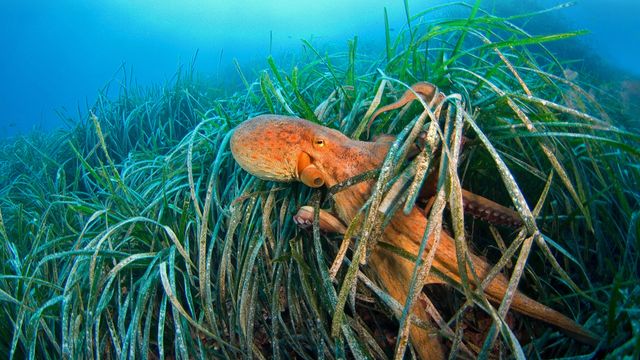 Common octopus in sea grass off the coast of France in the Gulf of Lion in the Mediterranean Sea
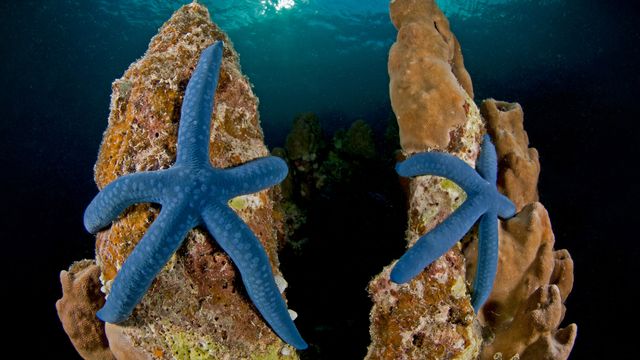 Blue linckia sea stars at New Ireland in Papua New Guinea
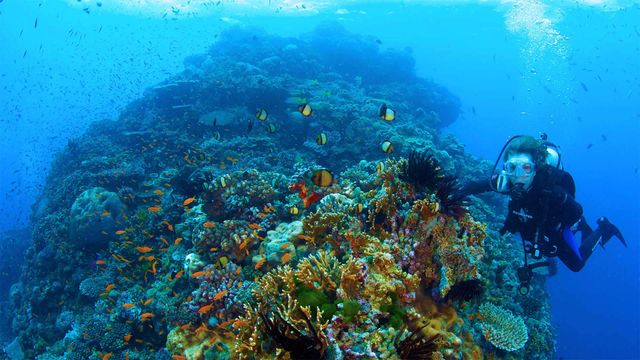 Dr. Sylvia Earle explores the Great Barrier Reef in a scene from 'Mission Blue'
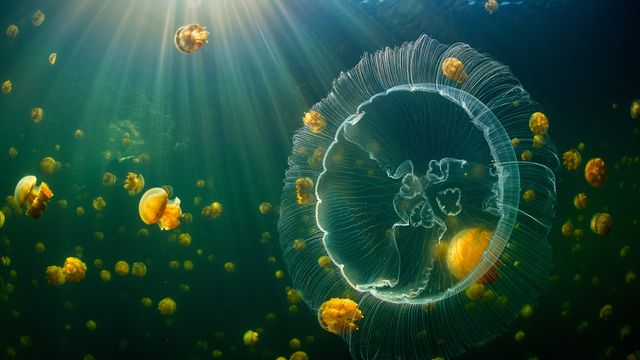 Moon jelly and an aggregation of stingless golden jellyfish in a landlocked marine lake, Raja Ampat, West Papua, Indonesia
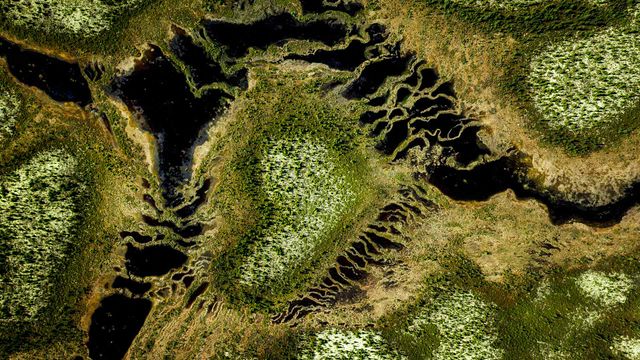 Boreal forest at Trans-Taiga Road region in Northern Quebec
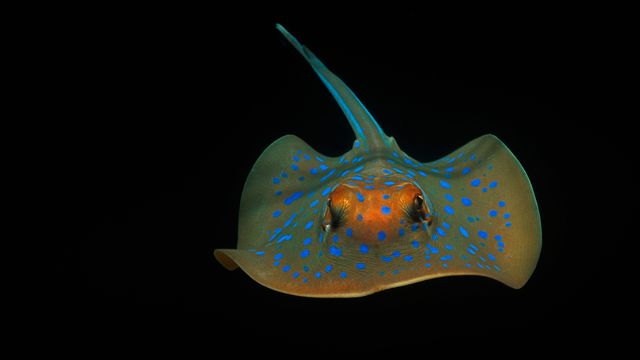 Bluespotted ribbontail ray near Perth, Australia
Bing Today Images


Sossusvlei sand dunes, Namib desert, Namibia
Jan 09, 2025


Bison in Wind Cave National Park, South Dakota
Jan 09, 2023
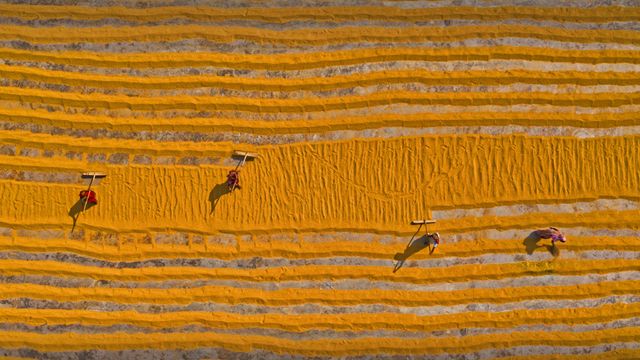
Rice laid out to dry in Dhamrai, Dhaka, Bangladesh
Jan 09, 2022

Ice hockey sticks in snow, Banff, Alta.
Jan 09, 2020

Mua Caves in the Ninh Bình province of Vietnam
Jan 09, 2019
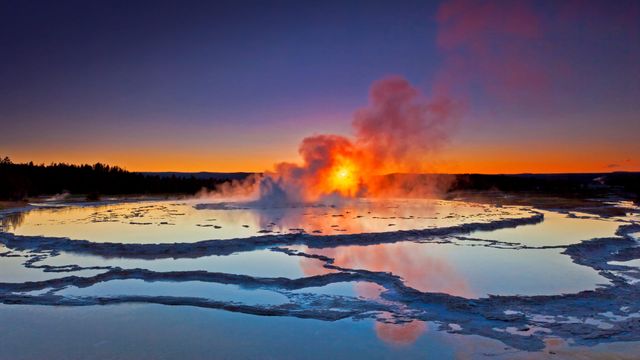


The Alberta Rockies in Kananaskis Country, Canada
Jan 09, 2016